


As the city’s older population swells, seniors who can no longer live at home face high costs, limited choices
EDITOR’S NOTE: See full profiles of the seniors interviewed by clicking links within the story.
A panoply of health issues, including slow-moving Parkinson’s, and kidney disease, prompted Jody Reiss, a retired therapist and AIDS educator, to move into an assisted living facility – at the relatively young age of 68. Most residents are 75 or older.
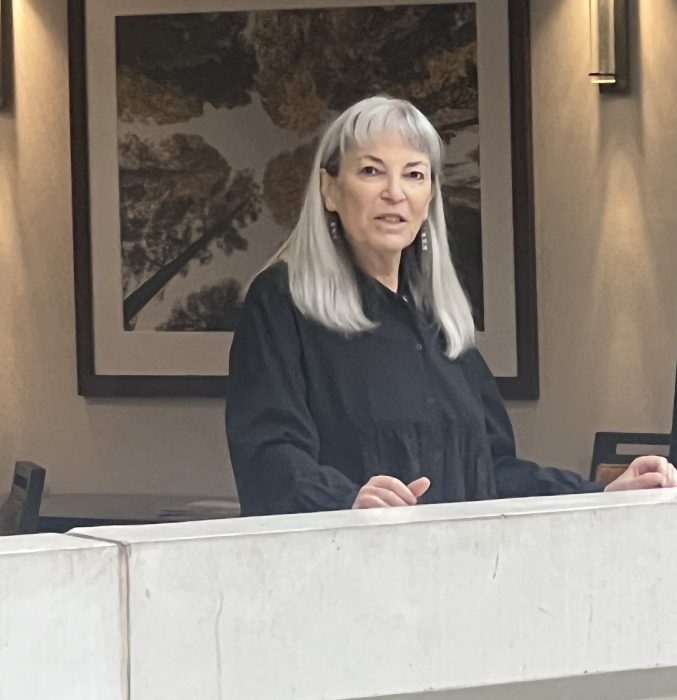
She was looking ahead; she didn’t want to have to relocate in the middle of a health crisis. (Click here to read Jody’s story)
Assisted living facilities, also called residential care facilities for the elderly, provide help with such activities of daily living as bathing, dressing, and/or medication management. Some offer additional levels of care – from independent living that includes three meals a day, weekly cleaning and laundry service to memory or skilled nursing care – in one location.
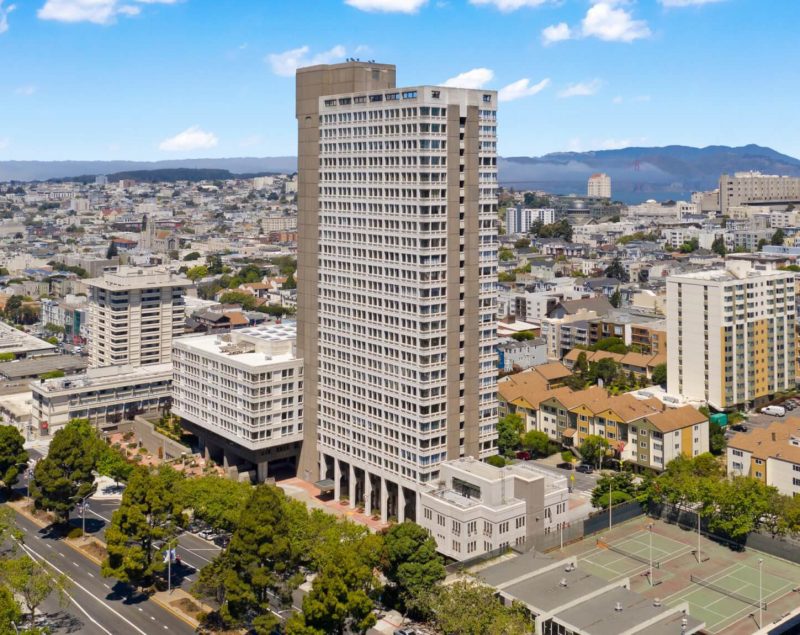
Reiss, who is still active, is now settled in a 15th-floor apartment at The Sequoias, near Japantown. The 26-story building has 400 units, many with sweeping views. There’s a huge library, five gardens, a rooftop deck, a wealth of activities and fitness classes as well as a gift shop, woodshop, and beauty salon. She said life is good.
Yet her independent living arrangement came at an eye-watering price few could pay: an entry fee of $409,000 and a monthly charge of $6,000. A home sale and an inheritance made it possible.
Over the next five years, as the Boomer generation hits their mid-60s, 70s, and 80s, swelling the population of seniors here and across the country, many may need assisted living housing, but few will be able to afford it – and there may not be enough for those who can.
With or without entry fees, the average monthly cost of assisted living in San Francisco is $7,777, which is significantly higher than the national rate of $4,459 and the California rate of $4,946, according to assistedliving.org, a senior care information and referral website. Those with higher care needs may pay even more.
Reiss’s brother-in-law, who’s in a facility in Alameda County that doesn’t require an entry fee, pays $13,000 a month, she said. “He’s in a wheelchair and has some cognitive impairment. He’s such a big guy he needs two or more people to move him.”
The Sequoias is one of two of the city’s 50 assisted living facilities with an entry fee. Depending on the size of the accommodation and the level of care, that can climb to a million or more. But they offer a modicum of control over monthly charges. When Reiss needs assisted living, she’ll pay about $10,000 a month, or $13,000 for memory care.
Many assisted living facilities add fees for each additional service beyond the original contract. Called “point pricing,” it varies widely, but can frustrate financial planning.
The missing middle
At those prices, even reasonably well-off residents can run out of money and have to find a cheaper facility. Some people have been known to spend down their assets to qualify for Medi-Cal, which pays for a spot in a nursing home – that is if their income is no more than $21,600 a year and assets less than $130,000. Medi-Cal also has a waiver program for assisted living, but few facilities participate. And that program is expected to go away with Trump administration cuts to Medicaid.
Otherwise, there is no government assistance for assisted living.
Aside from the continuing care communities, there are a range of options. But few run below what you might pay for a market-rate apartment. They include large establishments with hundreds of units, from studios to three-bedroom apartments, and smaller facilities that house dozens of seniors.
The most affordable are Board & Cares, converted single family homes that can service six to a dozen or more people. For $2,000 to $5,000 a month for a shared or private room, residents get meals and help with daily living activities along with some activities and entertainment. Many of their residents are the fragile elderly or those with dementia.
What’s available today runs a “huge gamut from those serving the affluent to those with nothing,” said John Edmiston, who works for the San Francisco Longterm Care Ombudsman, a federally mandated program that monitors and advocates for assisted living and nursing home residents. “The further down the economic ladder you go, the less you get.”
“There are no options for middle class people in San Francisco,” said Reiss.
The Sequoias is one of only two facilities in the city – the other is The San Francisco Towers – that have entry fees. Called continuing care communities, they offer the widest range of care, from independent and assisted living with round-the-clock medical care all the way up to short- and long-term skilled nursing. In most facilities, when skilled nursing is needed, residents are sent out for care.
Both, run by nonprofits, also have benevolent funds for qualifying residents who run out of money. And The Towers still offers a Lifetime plan, which with entry fees from $300,000 to $900,000 secures a stable monthly rate of around $7,000. There’s also an option with an entry fee of $6,500 for a small one-bedroom. It starts at $6,000 a month, but additional services are ala carte.
They’re among the Cadillacs of assisted living, with pristine accommodations and hotel-like environments. Some boast spectacular city views or locations near museums, theaters or the waterfront. Gourmet dining, a wide range of cultural activities and entertainment, wellness and education programs are common. They may have swimming pools, spas, salons, computer labs and/or indoor cafes.
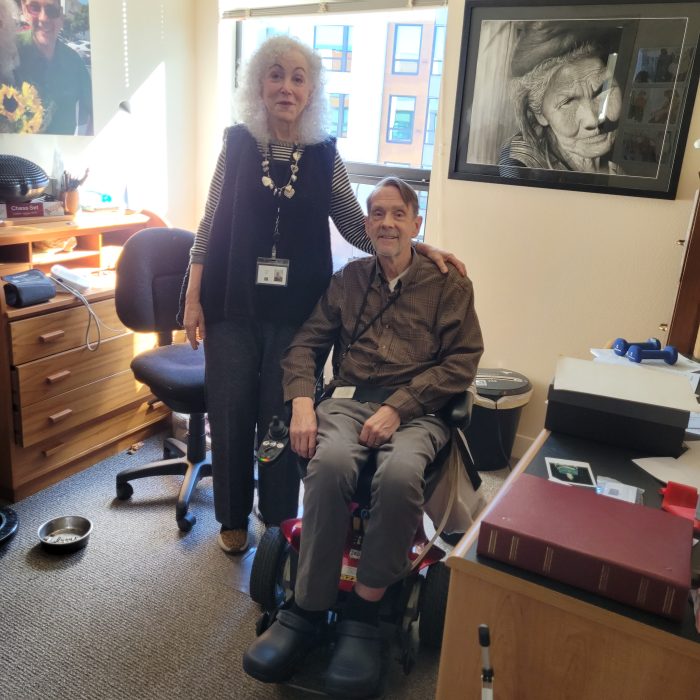
“It’s senior living in San Francisco for the most elite people,” said Allison Rodman, director of sales and marketing at the upscale Rhoda Goldman Plaza, which opened in 2000 with 155 apartments. It was a joint project of the Jewish Family and Children’s Services and the Mount Zion Health Fund to address a shortage of quality assisted living options for older adults who needed support but not full nursing care.
Having money helps
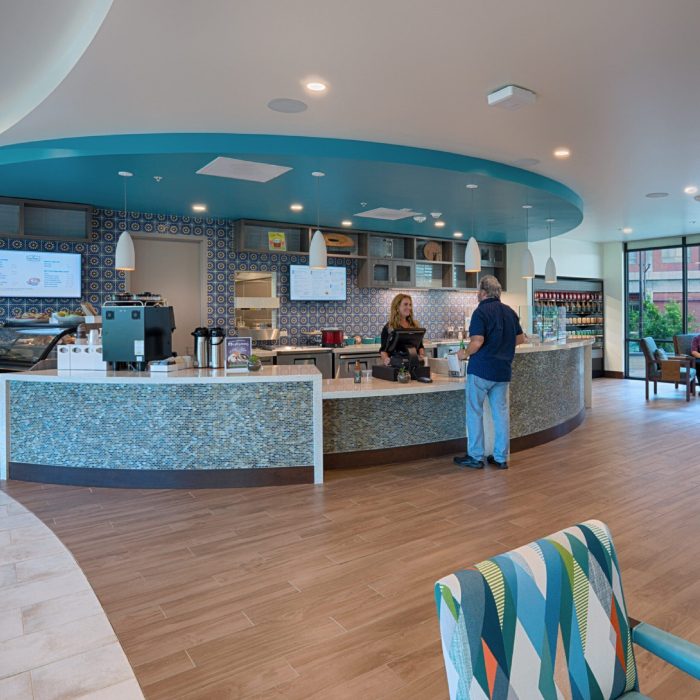
Greg Myers, a retired robotics engineer, and his wife, Lonnie Lebin, a former teacher, didn’t have the luxury of planning ahead like Reiss. Healthy, in their early 70s, and happily retired, they faced a momentous decision when Myers was unexpectedly diagnosed with blood cancer. (Click here to read their story.)
They would have to make their home accessible and hire 24-hour care – at a cost of around $6,000 a month, according to the 2023 Genworth Financial Cost of Care Survey. Instead, they moved into the Frank Residences then sold their home.
There was no entry fee, but their monthly charge – for two people in a two-bedroom – is roughly $15,000. There is a skilled nursing facility on the campus but not in the Frank Residences. Built in 2020 on the Campus for Jewish Living in the Excelsior District, it’s the newest assisted living facility in the city.
Supply shortage
On top of the affordability gap is the pending availability gap.
Vacancies are already hard to come by. Among the country’s 31 metropolitan markets, the San Francisco Bay Area has the second highest occupancy rate, 90.9 percent – just behind Boston, said Lisa McCracken, head of research & analytics at the National Investment Center for Seniors Housing & Care, a nonprofit that provides data to members. Many facilities have waiting list. At The San Francisco Towers, for example, it’s three-to-five years, said Linda Barden, sales and marketing manager.
The cost of opening and operating assisted living facilities has led to closures and a stock that hasn’t been replenished since the 220-bed Frank Residences opened. It’s also led to point pricing as facilities try to keep up with rising operating costs. That’s one of the biggest complaints fielded by the Ombudsman’s Office.
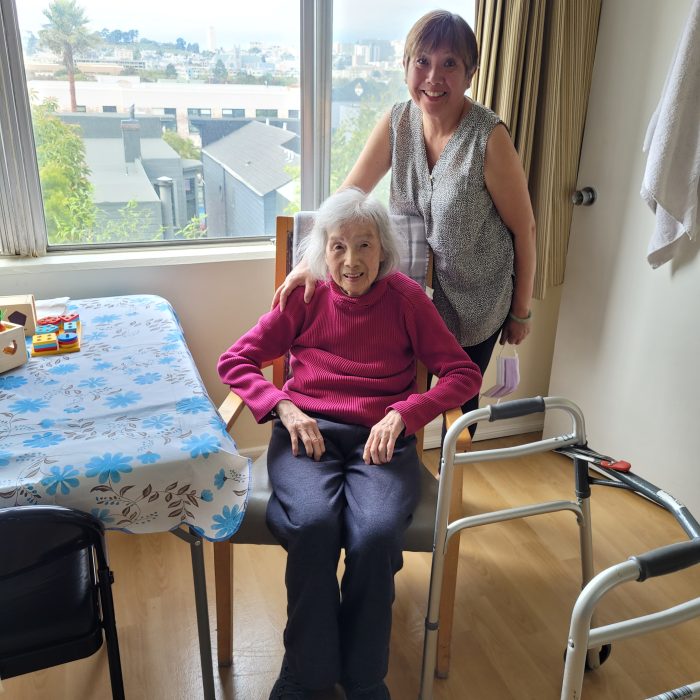
Gretchen Lee spent the last year of her life at the Victorian Manor in the Western Addition. Though she was in a private room whose prices range from $9,000 to $12,000 a month, her family didn’t feel nickel and dimed, like they did in a previous facility. That place, said her daughter, Karen Yee, charged a new fee every time the carpet needed cleaning, for a bath more than once a week, and a haircut “when she didn’t need it. (Click here to read Gretchen’s story)
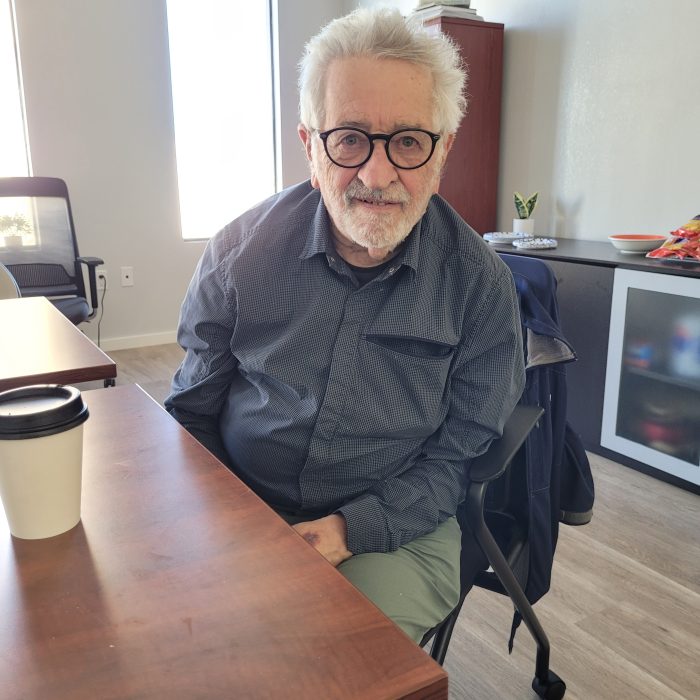
Ombudsman Program Director Benson Nadell recalled intervening when a resident feared eviction because he couldn’t afford an extra charge tacked on for care of an alleged new health condition. It was rescinded when the office showed that his falls were not a “new” condition but one listed in his admission contract. (Click here to read Benson’s story.)
Together, the city’s assisted living facilities have beds for 3,528, people, a number that shifts as some close. Even with the city’s planned construction of 159 new, supportive units for low-income seniors 62 and older at Laguna Honda Hospital and Rehabilitation Center, the supply-demand gap will only get tighter.
By 2030 in San Francisco, the number of people 65 and older will grow to nearly 213,000 from more than 142,000 today, outpacing a projected overall population increase of 9 percent – not because of an influx of older residents but the aging of current ones, according to local and California Department of Finance data. Those seniors will represent a quarter of the city’s more than 850,000 residents, up from the current 17 percent.
This all means more pressure on services to the elderly, including in-home health care, senior housing and especially assisted living, that is, senior housing with extended care.
That will be particularly true for those 75 and older, who will make up 11 percent of the population in the next four years, up from 7 percent. Many seniors in their 80s will have difficulties staying in their homes without assistance, according to a January 2025 report by the Public Policy Institute of California,
‘Woefully unprepared’
“We’re in the first year of the silver tsunami, where people 80 and older are the fastest growing population in the country, and it’s only going to go faster,” said Al Oliveros, an advisor for the San Francisco Bay Area at seniorly.com, a resource for senior housing with extended care options. “I think the whole infrastructure as it stands now, if we don’t build for another 20 years, we’ll be woefully unprepared.”
High costs have discouraged the mostly private, for-profit companies that develop such facilities, particularly in California, where a less than one percent growth in inventory is projected, said McCracken. “It’s this strange dichotomy or tension: The cost is expensive and the regulatory environment is difficult. California can be tough to develop in because of requirements, earthquake areas, etc.”
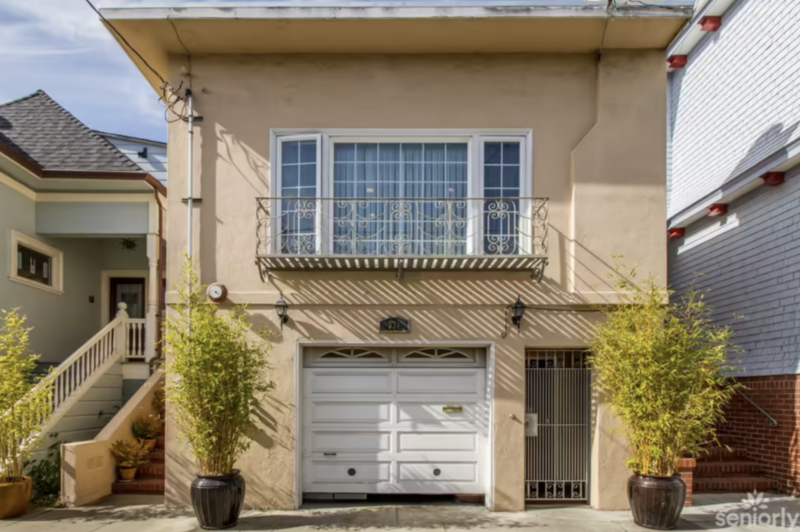
If there is development, it’s mostly happening in Marin, Sonoma, Contra Costa, Alameda and the South Bay, said Rodman.
And they’re built by private, for-profit companies with multiple holdings, like Oakmont Senior Living, Rodman said. Oakmont owns hundreds of properties across the state, including three in San Francisco. One is The Carlisle, a combination condo and continuing-care community where one-bedrooms cost over half a million dollars and two bedrooms more than a million. There are also monthly fees for care.
“Real estate is too precious in San Francisco,” she said. New facilities are generally built or older buildings remodeled “through some sort of church or hospital purchase.”
“It does cost more to do business in San Francisco, she said. “It’s the perfect storm of being a limited peninsula with limited space.”
Just like home
Board & Cares might be the quickest and most cost-effective fix for growing demand, said Oliveros, noting that it’s easy to get a residential care license to open one. While they may not have luxury amenities or scads of activities, the attraction for some is the familiarity and intimacy of a home environment.
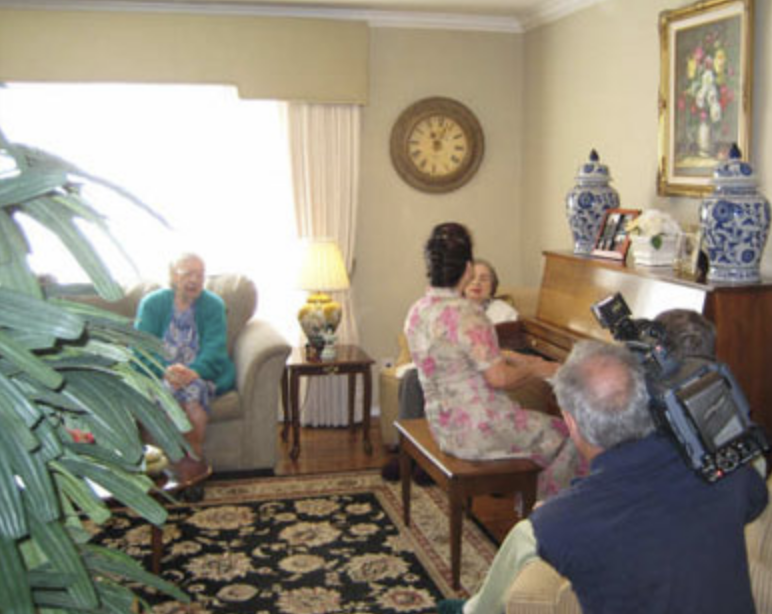
Nikki Montilla was 11 and learning to play the piano when her family converted the upstairs of their Richmond District home into board and care rooms. She ended up being the entertainment. Now, almost 30 years later, she and other family members run three Damenik’s Homes, including in Daly City and South San Francisco. (Click here to read about Damenik’s Homes.)
Yet, Olivero cautioned, Board & Cares are not practical here. “San Francisco is one of – if not the least – senior-friendly places in the country for Board & Care because of the number of steps to get to homes built on hillsides.”
It’s also not inexpensive to make homes compliant with disability regulations, he added. And fewer people are willing to do so when homes are selling so much over market. Board & Care numbers have been declining for years, said Edmiston, of the Ombudsman’s Office.
Back in the 1990s, there were 130 assisted living facilities in the city, with Board & Cares in the majority, he said. Today there are around 24, with a total of 300 beds. “Their demise is a simple real estate story. Some were nice, some were crummy and went out of business, but when the price of homes escalated, people just sold their property and moved out.”
Another factor was the trend in federal housing assistance toward keeping people in their homes as long as possible. But the reality, as shown in a 2022 SeniorBeat series, is that in-home care has become too costly for the average family, even those in San Francisco, where the median income is roughly $140,000. The only government assistance for in-home care is through Medi-Cal. Moreover, the supply of in-home caregivers is already falling behind demand.
Filling the gaps

Nonprofits, charities and government agencies offer some help when it comes to housing.
Yvonne Frazier, eager to retire but worried about covering the $3,000 a month rent on her North Beach apartment, shaved off a thousand dollars a month by moving into independent living in church-owned, senior housing in the Cathedral Hill neighborhood. Martin Luther Tower, with 121 units, has laundry facilities, a lounge and computer lab, and hosts a variety of activities, including pastoral care. (Click here to read Yvonne’s story.)
San Francisco’s Adult Protective Services and Catholic Charities came through for Alba Aguilera, 70, an émigré who’d worked hard to add U.S. credentials to her Mexican university psychology degree. She was aiming for a Ph.D. when a car accident shattered her mobility – and ability to work. Catholic Charities pays half her $1,400 rent at a South of Market apartment building. She lives there with her daughter and grandson. Her Supplemental Security Income pays the rest. (Click here to read Alba’s story.)
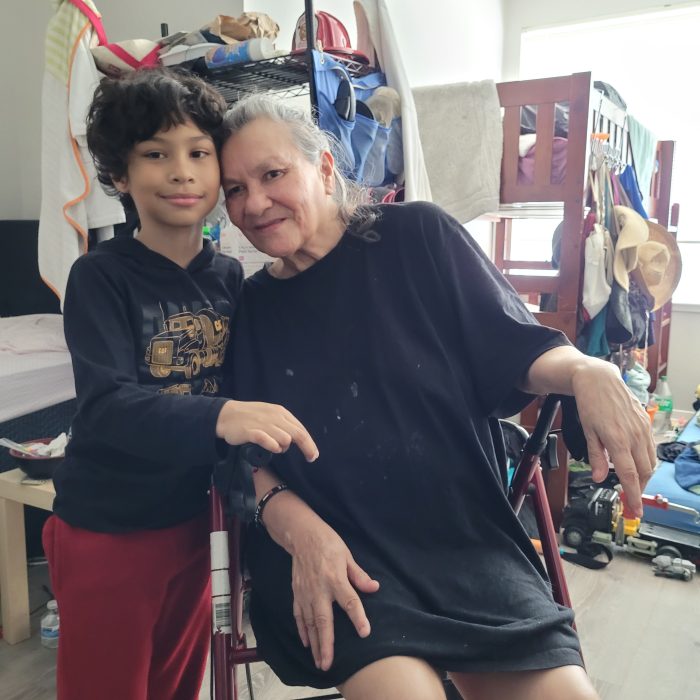
Her other option might have been city-subsidized housing for seniors with disabilities. San Francisco continues to create affordable housing for active seniors as well as those with disabilities, paid for by voter-approved bonds in 2019 and 2024. Over the next three years, 970 units will be added to the current crop of 14,000. They are wheelchair accessible, have visual doorbell and fire alarms, and teletype systems for the deaf and hard of hearing. They may also offer health, wellness and/or case management services.
But they don’t provide the extra health care and support with daily living activities that many aging seniors will need. And they’re not easy to get, said Orlando Sanchez, who helps clients of On Lok Senior Health Services find affordable housing through its Aging & Disability Resource Center.
Limited by the lottery
“It takes a while to get into affordable housing because it’s a lottery,” he said. One of his clients was on a wait list – they’re limited to 300 people – for five years, Sanchez said. His client died three months after moving in. Another client had been sleeping in hospital waiting rooms, on the street, and in shelters for 10 years before getting a spot.
While few envision life in assisted living, for those who can afford it, it’s a place to go when living alone is not possible. And it’s a respite for families unable to meet the exceptional care needs of elderly family members.
“The big question going forward his how we are going to provide necessary care,” said Sam Brooks, director of public policy for The National Consumer Voice, which advocates for long-term care consumers on the national level. “I’m not sure the solution is more assisted living facilities unless we find a way to allow everyone to access it. Now, most people can’t afford it.”