

City’s ombudman has been keeping an eye on seniors in residential care facilities for the past 40 years
A 78-year-old man moved into an assisted living facility after signing a contract covering supervision and care. He fell several times over three years and complained that on the last occasion, it was an hour before staff responded his call for help.
Alarmed by the delay, he and his daughter, who helped pay for his care, filed a complaint with the San Francisco Long-Term Care Ombudsman. The free, federally mandated and funded program monitors assisted living and nursing care facilities to ensure they maintain proper health, safety and welfare standards
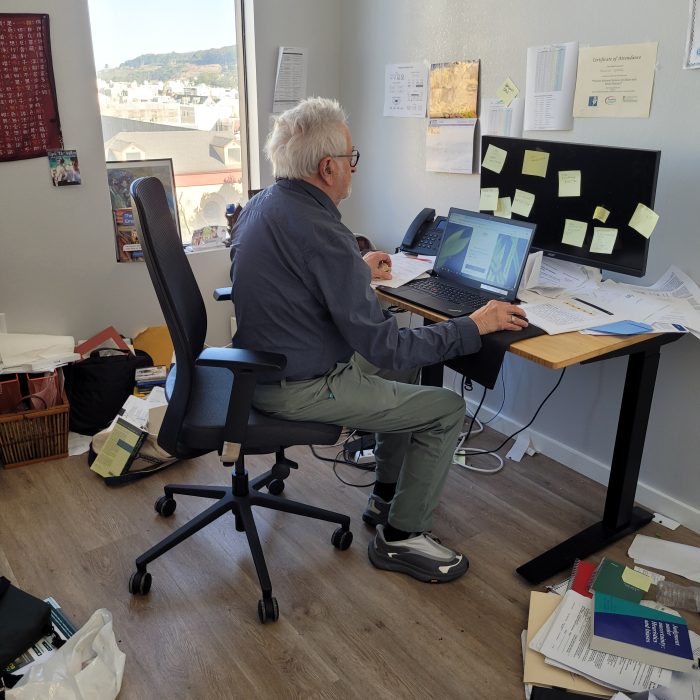
The case above, though it happened years ago, is just one example of the kind of complaints the local office, funded by the San Francisco Department of Disability and Aging Services, has fielded since the mid-‘80s, when Benson Nadell, program director, came on board.
While facility administrators admitted the delay was unacceptable, they responded by raising his monthly fee, insisting the falls represented a “change of condition” requiring more care and monitoring.
“In this case, we challenged their rationale for the higher fees,” Nadell said. The falls were not a new condition. A review of the man’s admission records and care contract indicated he had been having falls before he moved in. The fee increase was rescinded, and the facility developed a more responsive protocol for night supervision.
Volunteer watchdogs
“Ombudsmen are the eyes and ears of the residents and their families in an institutional setting where there is an inherent imbalance between the provider of services and the consumer,” said Nadell, who manages a five-person staff housed augmented by a team of state-certified volunteers based in the Felton Institute.

Its services are free and confidential. Volunteers and staff make frequent, often weekly visits to the facilities, developing relationships with the residents, their families, and the staff. The office hears about unanswered calls, inadequate and/or unappetizing food, boredom, insufficient or poorly trained staff, poor treatment and even abuse.
Sometimes, the issue is simply not being included in decision-making. Nadell recalled a resident with significant hearing loss who said a nurse who came into his room discussed his care with his family while ignoring him. At a subsequent meeting that included the resident, the ombudsman, his family, the nurse, and representatives of the facility, Nadell said, “Our volunteer ombudsman stressed that residents are in the drivers’ seat and should not be left out of ongoing care discussions,” a message that was reinforced on subsequent visits.
It takes time and trust for residents and their families to voice their concerns, which is why much of the ombudsman’s work focuses on outreach, speaking to residents and earning their trust. In many ways, ombudsmen also perform a social role. “Some residents are all alone, without family or friends in the area, Nadell said. “If it weren’t for the ombudsman, no one would visit them.”
The personal touch
When an ombudsman discovered that a resident missed going to art galleries, the two started visiting together. “Getting to know the people is a favorite part of the job,” Nadell said.
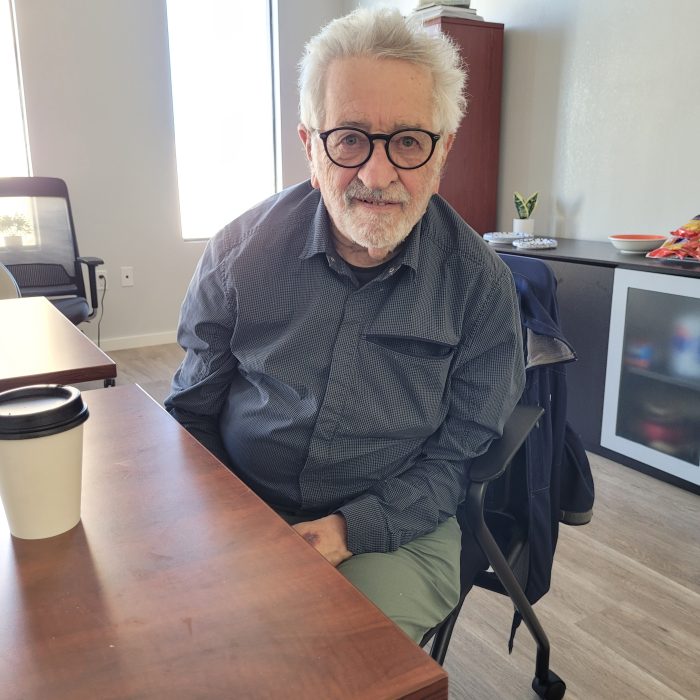
Nadell was born in Worcester, Massachusetts, during World War II, but spent most of his childhood in Brooklyn, New York. His father was a leading psychoanalyst, and Nadell fondly remembers participating in some intellectually stimulating conversations over the dinner table and with his fathers’ friends. “I learned the psychoanalytic lingo which stood me in good stead.” For a while he thought of becoming a doctor, but science was not his strength.
He attended graduate school in anthropology at the State University of New York at Buffalo with the intent of receiving a doctorate and living an academic life. The job he now holds did not even exist when he was in college.
But those were the years of Vietnam War protests, and Nadell became involved in the small, student-run communities that sprang up to educate people about the war, the economy, and the role of young people in righting the world. “Those years were extremely synergistic – and distracting in a good way,” he said. “We all learned the importance of involving people in decisions that affect them.”
His college field work took him to a small village in Japan where he spent much of his time with seniors. His interest in Japan has not flagged over the years, “though I find myself more reliant on a dictionary when reading articles and books in Japanese.”
While he enjoyed the experience, the need to support his wife and their two small children soon sent him back to Buffalo. Though he tried to cobble together his notes to write a dissertation, he dropped the effort, deciding he hadn’t gathered enough material.
Meanwhile, his parents had moved from Buffalo to Lake County in California, and Nadell and his family joined them.
Research and advocacy
One of his first jobs in the area was at an independent residential care facility for clients with developmental disabilities, a “total antithesis to academic life,” he noted.
From there, he moved up a ladder of “unrelated rungs,” gaining the program experience and management skills that qualified him for his current position.
Though in his early 80s, he’s past the “typical” “retirement age, he’s not ready to retire. “It’s an exciting and fulfilling job,” he said. “I do this work because it brings all parts of me together – research, interest in people and advocacy.”
When not working, Nadell is a Warriors fan and enjoys watching their televised games. A self-described intellectual and avid reader, he can often be found with his nose in a philosophy book or keeping up with the research on aging. He also likes photography, he said, because “it gets us to see things we don’t usually pay attention to.”
Much like the work of an ombudsman, whose weekly visits also make it easier to recognize problems that warrant intervention. But ombudsmen “only pursue problems and remedies our clients want us to pursue,” he noted. “Sometimes we see problems that the resident does not want to pursue for fear of increasing their fees and/or incurring the wrath of the staff.”
Most assisted living facilities, particularly those owned by private, for-profit companies, charge for care on a point or ala carte system: Each new need for additional care or service comes with a extra fee. New owners may alter the point system, but not the resident’s original care contract, Nadell pointed out. Only assisted living facilities that call themselves continuing care communities offer lifelong contracts that limit additional charges.
If a resident runs out of money, and doesn’t leave willingly, a facility may file for eviction in Superior Court. Aware that could happen if her father’s condition deteriorated faster than his ability to absorb increased costs, the daughter of the man who fought a “change of condition” fee increase, began looking into less expensive facilities and nursing homes, which would be covered by Medi-Cal when his funds ran under the poverty level.
Fighting evictions
Though they cannot represent residents in court, ombudsmen can investigate the circumstances of an eviction and help mediate the outcome. Nadell said that in his experience, judges who oversee eviction hearings “are typically reluctant to cast a 95-year-old out on the street.”
Assisted living facilities are licensed by the California Department of Social Services, which mandates staffing ratios, training requirements, health and safety codes, emergency preparedness and individualized care plans for residents. (See the California Code of Regulations, Title 22, Division 6, Chapter 8.) The state collects data on evictions from nursing homes, but not assisted living facilities.
Periodic inspections are meant to ensure compliance with state laws, but many senior advocates point out that private corporate ownership can make that challenging. In addition to investigating complaints and negotiating solutions, Long-Term Care Ombudsman’s representatives play a significant role in raising awareness of residents’ rights and improving the quality of services.
That makes the role of the ombudsman “even more important,” said Nadell. “We need more volunteers to get the word out and to protect residents.”
The training is free, and all skill levels are welcome. Interested applicants may call 415-751-9788.