

When the family’s upstairs was converted to board & care, her piano lessons were the entertainment
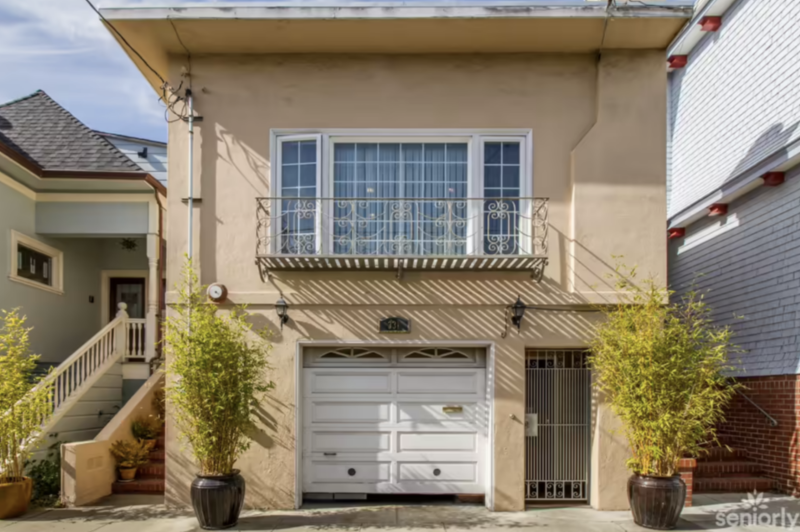
Nikki Montilla was just a child when her family added a chair lift and opened the second floor of their Richmond District home as a board and care facility. The family lived on the first floor.
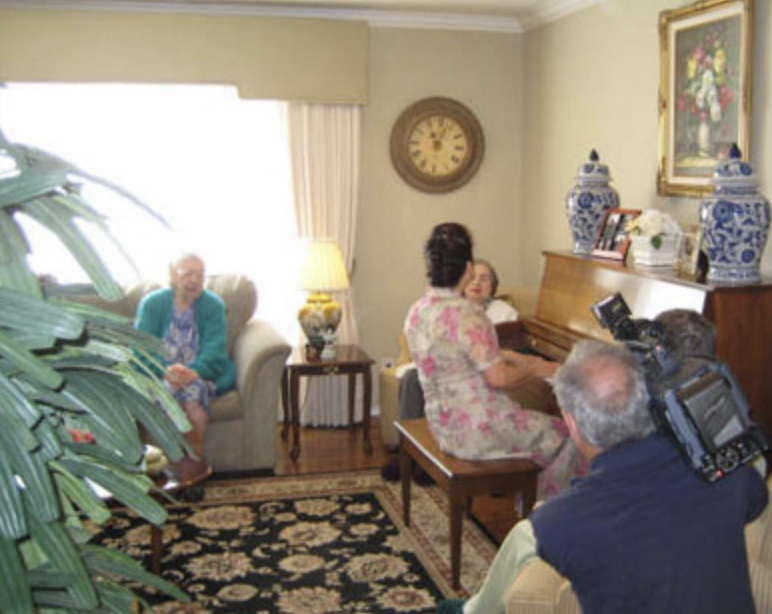
“I was only 11 when it opened in 1997,” she said. “We all contributed. I had been studying piano and I’d play for everyone. I was the entertainment,” she said
When it seemed that the business would be successful, the family moved out and converted the garage into bedrooms for additional residents.Her extended family has since purchased and remodeled a four-room board and care in Daly City and a South San Francisco home that can accommodate 15 residents. They are all called Damenik’s Home, an amalgamation of family names.
There are 12 people living in the Richmond District Home furnished in Early American style. Five are on the first floor and seven on the second. There’s a well-equipped kitchen on the second floor as well as a community room that was once the living room. A patio with chairs and benches allows residents to relax outdoors in good weather.
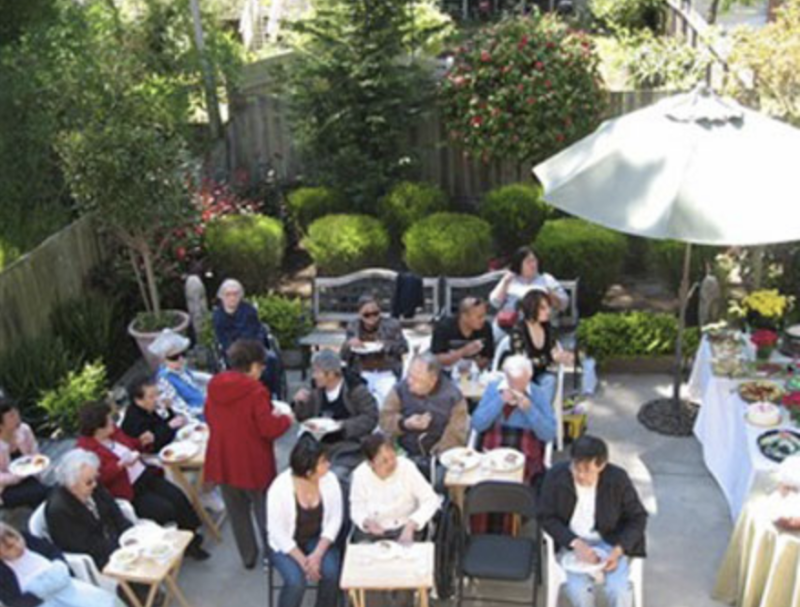
Board and cares are the “mom and pop” operations of assisted living. They are small, usually repurposed single-family homes tucked away in residential communities. Many are family-owned and house anywhere from three to 15 people.
Many board and care facilities cater to people with some form of dementia. That’s true of Damenik’s, said Montilla. “We are a family business,” she said.” Families turn to us when the challenges of caring for their elderly loved ones becomes overwhelming.”
The age of residents ranges from one who is 75 to a few over 100. A 106-year-old woman who had lived there for eight years recently passed away. Another had lived in the home for 10 years.
A last residence
“Most residents remain with us until they die,” said Supervisor Teresa (Tessie) Alday, who emigrated from the Philippines 18 years ago and has worked with Damenik’s ever since. “We work closely with palliative care and hospice.”
During the day, the always-on television provides background noise; on a recent visit no one was watching. Four residents were waiting in the community room for the exercise class to start. The rest were in their rooms, sleeping or resting in bed.
Board and care homes represent about half of the city’s approximately 50 assisted living facilities, providing about 300 of a total of about 3,000 beds, according to records provided by the San Francisco Ombudman’s Office, the federally mandated agency that monitors them. Most are in the Sunset and Richmond; others are scattered across downtown, the Mission and Ingleside districts and Cole Valley, according to Ombudsman John Edmiston.
The board & care business has changed since Montilla’s father turned their second-floor bedrooms into senior housing. “Back then,” Montilla said, “there were more small board & cares. There’s been an increase in larger, more commercial facilities. Small facilities offer more intimate care; everybody knows each other’s name.”
While larger assisted living facilities, which house dozens to hundreds of people, may offer a multitude of activities, exercise programs, chef-prepared meals or other exclusive amenities, board & care homes emphasize the more personal care possible in a small home environment, where staff may play multiple roles. In addition to supervising four of the home’s four staff members, she also leads the exercise program, facilitates Bingo nights and is the head cook.
While board and cares can be less expensive than the larger facilities, they are still costly. A private room in Damenik’s San Francisco home costs $7,500 a month; shared rooms are $6,500/month. “Our homes are private pay, although some residents’ fees are supplemented by long-term care insurance,” Montilla said.
Bingo’s a hit
With minimal exceptions, these fees cover the cost of all their services: meals, an exercise program, housekeeping and services, assistance with the activities of daily living, including storing and administering medications, transportation and escort service to medical appointments, and 24-hour supervision. When there is room, Damenik’s also offers temporary respite care.
But that’s not to say it’s a dreary environment. Birthdays receive special attention, with cake and flowers and a hearty “Happy Birthday” song. The chief monthly entertainer these days is a singer. On occasion, students from The California Conservatory of Music perform.
But the frequent Bingo games, where the prize for winning the most games in a month is a favorite meal, is the most popular. “Last month, they brought me a hamburger from In-n-Out Burger,” said the winner for this and last month’s prize. “Last month, it was a pizza which she shared with the other residents.
Damenik’s receives most of its referrals from hospital social workers and nurses. Some come through self-referrals. Falls often lead to referrals as the older person and/or their family realizes their vulnerability.
“Some intend to stay for only until they recover,” she said. “But as they come to appreciate the ease of living here, these short-term stays evolve into permanent residence.”