

Robert Wachter, the doctor who is pioneering the use of artificial intelligence to treat patients
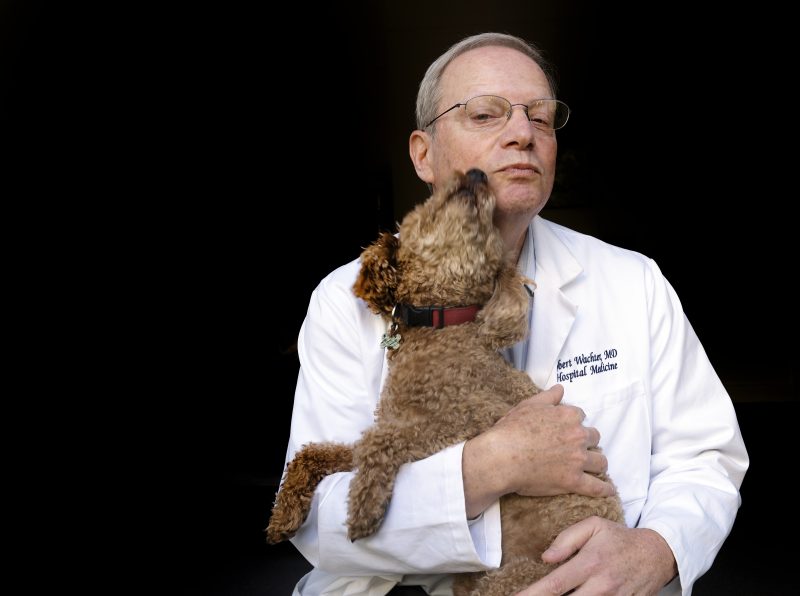
Robert Wachter is the doctor who oversees all the other doctors at the University of California, San Francisco. He’s also one of the country’s leading voices on artificial intelligence in medicine, as well as an author and YouTube host, a sports enthusiast, and a musician who plays Elton John on the piano.
He’s published two books on digital doctoring, the latest about AI in medicine.
As chair of the department of medicine at UCSF, he oversees 1,000 doctors and 3,000 staffers, a position he’s held for 11 years.
AI isn’t about to replace all doctors said Wacher, 68, a Noe Valley resident. But he believes AI will quietly take over some of the most tedious parts of medicine, as well as possibly performing more complicated procedures like surgery, forcing them to rethink which parts of their work actually require a human.
“I am sure AI will replace certain doctors — like radiologists and pathologists, sometime in the next 5-10 years. Not all of them, but some. AI will also substitute for some primary care doctors,” he said.
He remembers the date he first used ChatGPT—November 30, 2022
“A lightbulb went off,” he said. “This is the technology we’ve been waiting for. It struck me that this tool might be able to both address the administrative burdens (by scribing notes or summarizing a patient’s chart) but also eventually help with diagnosis and treatment recommendations, for both doctors and maybe even patients. “The adoption of AI has been gradual because healthcare is complicated,” he said. “The stakes are high, the regulatory environment is constraining. But I can imagine a world where your healthcare is better, safer, and more convenient.
Wachter has always been attracted to journalism and has become a respected author. His second book, “A Giant Leap: How AI is Transforming Healthcare and What That Means For Our Future,” was recently published by Portfolio – Penguin Books.
Making doctors smarter
“When you have this kind of technology meeting healthcare, how does it change being a doctor, or a patient?” he posed. “I think it makes me smarter and more capable and also makes me happier if it takes non-productive work off my plate.”
A new law in Utah promises faster prescription renewals for chronic conditions by allowing patients to refill them through an AI web platform for the first time without a physician being involved. On his Substack, Wachter called it “the week AI crossed the line,” acting as a physician.
According to Wachter, the Utah website is limited to prescribing 190 relatively low-risk medications: “Personally, I’d have no problem using this system to refill my Lipitor.”
He said he would not be comfortable seeing AI refill toxic drugs like chemotherapy or immunotherapy agents and would not be comfortable seeing AI issue new prescriptions until he saw evidence of near-perfect performance.
But Wachter said he can foresee a time when AI could provide an initial prescription for cholesterol medications “and maybe even antibiotics to treat urinary infections.”
It will take time for doctors to get used to AI refilling prescriptions. But Wachter thinks eventually they’ll adapt, resulting in increases in efficiency and savings for patients.
“Why should you have to waste your time and maybe have a doctor’s visit? And have to pay a hundred bucks and drive and park to do that? It seems silly if the technology can replicate what I do and make it more convenient and less expensive.”
Wachter got hooked on medicine at an early age.
“I began shadowing a doctor who lived down the street from us when I was 10 or 12 years old and thought it was incredibly exciting.”
He was born in Brooklyn and grew up in Long Island, New York. His father and uncles ran a mid-sized women’s clothing company; his mother was a housewife. Neither of his parents went to college, but they wanted their son to get a higher education.
Beginning the road to becoming a doctor was plagued with doubt because of Wachter’s interests in less scientific subjects.
He decided to major in political science at the University of Pennsylvania after reading an article that said political science majors had a good chance of being admitted to medical school.
While earning his degree in political science, he put a good deal of thought into areas that would later mark his career: “people and systems and money and governance and how it all interacted,” he said.
The future doc as mascot
Towards the end of his college career, Wachter explored his interest in sports by becoming the mascot for the last Ivy League team to play in the Final Four in 1979. His Penn Quakers lost when they encountered Magic Johnson from Michigan State University.
He graduated from Penn in 1979, went to medical school there, and graduated in 1983. He started his residency at UCSF in 1983 and has been there ever since.
Wachter coined the term “hospitalist” in an article for the hospital’s newsletter in 1996 that was later published in the New England Journal of Medicine. Thirty years later, he’s proud that he is seen as the father of that specialty.
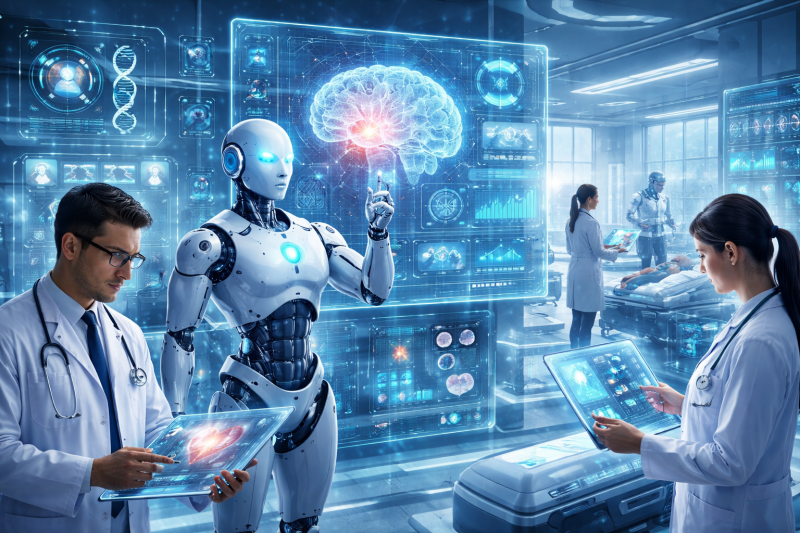
A hospitalist is a physician who cares for patients who are hospitalized. Many are internists specializing in the conditions for which people are commonly admitted, according to Yale Medicine. They know how to navigate hospital staff and protocols.
Wachter, who was fascinated by Watergate as a teenager, has expanded his journalistic ambitions, especially lately. In addition to his medical writing, he’s active on X, and during the COVID-19 pandemic, he ran conferences about the disease on YouTube, which attracted millions of viewers.
“I had this privilege of being able to ask anyone in the world, ‘Can you come on this week?’ It was immensely gratifying, and it kind of hit my sweet spot of things I like to do and things I’m good at.”
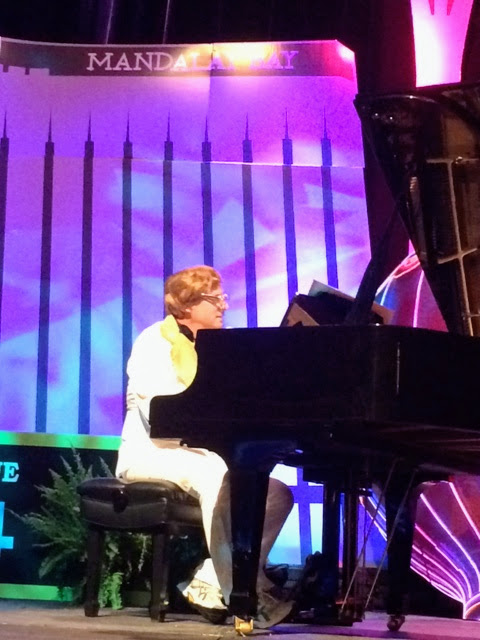
He also enjoys pop and show tunes on the piano, even performing at a hospitalists conference in Las Vegas in 2014, where he made up and sang new lyrics about hospitalists to Elton John’s “Your Song.” “It got a huge standing ovation and is one of the gutsier things I’ve ever done in my life.”
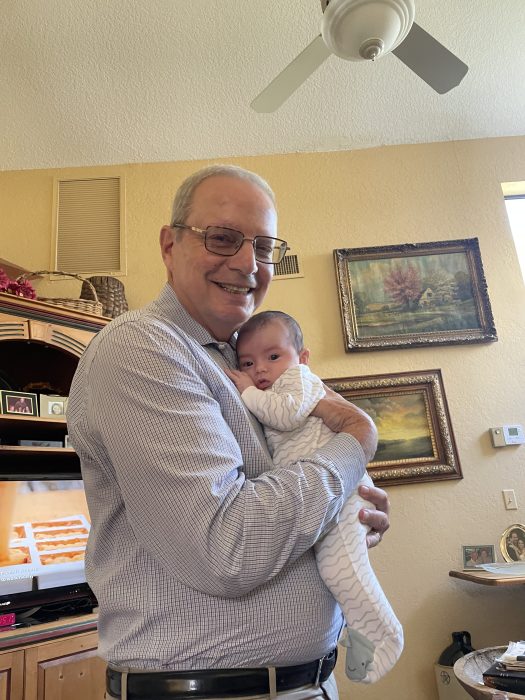
He loves golf and plays with his wife of 14 years, Katie Hafner, a journalist and author. He has two sons from a prior marriage and a stepdaughter who is a pulmonary fellow at UCSF.
For now, he’s still an avid proponent of the possible benefits of AI in healthcare.
“I’d say the dominant theme in healthcare is that the AI is good enough to be useful, but not perfect, and therefore we have to have a doctor or a nurse, or whoever it is, looking over its shoulder and watching.
“(But) I could see some straightforward surgeries being performed by AI in 5-10 years, with a human surgeon nearby in case of problems.”
There are serious risks in incorporating AI into healthcare, he warns.
“The stakes are very high in medicine, so a serious error can be fatal,” he said. “This means we have to be extra careful before letting it run by itself. Humans aren’t very good at remaining vigilant if they’ve come to trust a technology tool. And the humans will de-skill as they become overly dependent on the AI.”
Beware of the deepfake
“Deepfakes” and “hallucinations” in AI, as well as its tendency to be sycophantic to user biases, raise the possibility of false medical advice being confidently presented as fact. “I also am very worried about … the capacity to use what appear to be credible sources to spread misinformation.”
Wachter says the company that pitched the idea of AI prescribing refills to Utah legislators did their homework. “They took five hundred or one thousand cases and had the AI do its thing and had the doctors do their thing, and the degree of concordance was 99.2 percent.”
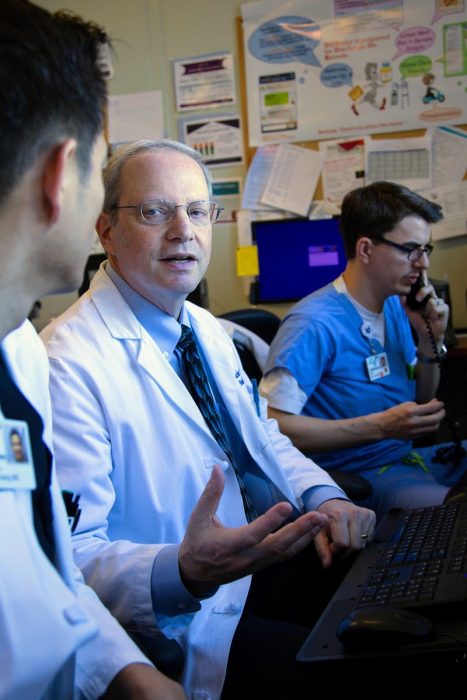
Wachter said physicians at UCSF are using AI in a variety of ways: “to help us with diagnoses or to access specialty-level knowledge; help with scheduling; contacting patients who are due for things like mammograms and colonoscopy; and for summarizing medical records.
“Some physicians don’t trust it, a few worry about it taking their jobs,” he conceded. “But most physicians at UCSF are enthusiastic about the thoughtful implementation of well-vetted AI tools.”
He has a tart rejoinder for people who say they can’t trust AI in medicine: “I get in a Waymo once a week.”