


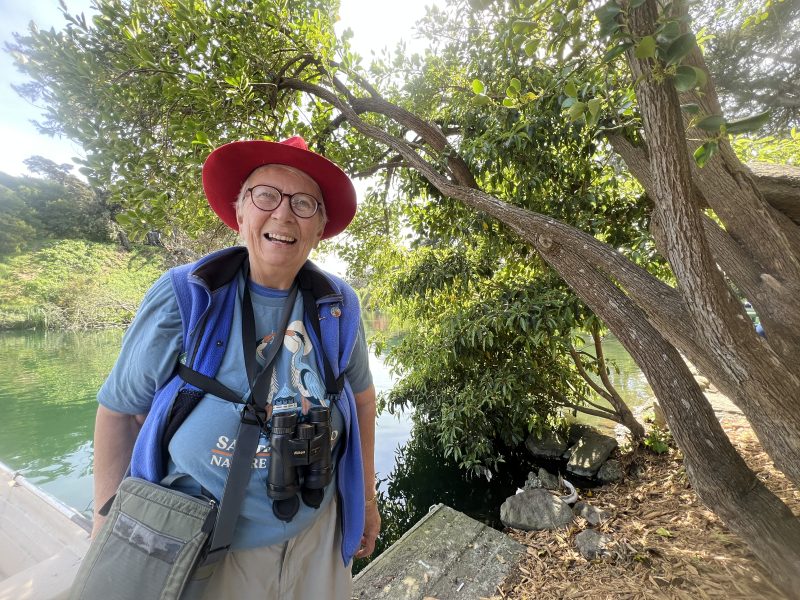
One day in 1993, on her daily walk from her Richmond District home to Golden Gate Park’s Stow Lake, Nancy DeStefanis spotted a Great Blue Heron in a nest with two gigantic chicks, standing up, beaks wide open, waiting to be fed by both father and mother.

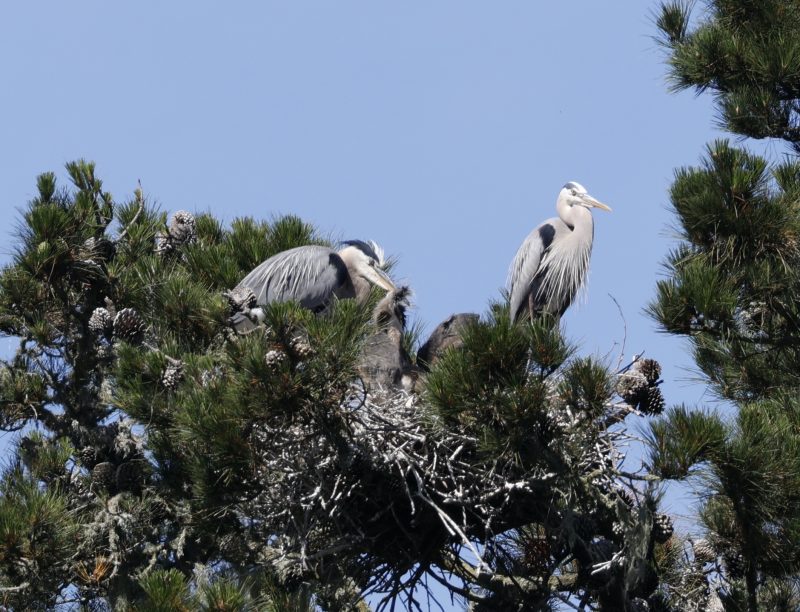
She was able to identify the wading birds despite standing at some distance – on a sidewalk path looking over the lake to the tree on a small island where they had set up residence.
“I did not have binoculars, but the herons were so big and tall I could identify them, she said. “Later, I checked the research and found that until 1993, Great Blue Herons had never nested in Golden Gate Park!”
“This was an epiphany which never left me,” she said. “The beauty and elegance of this moment stayed with me.”

It was also the first discovery and documentation of a colony of Great Blue Herons nesting in San Francisco, for which she earned credit. She had been a casual observer until then, but “from that point, I became obsessed.”

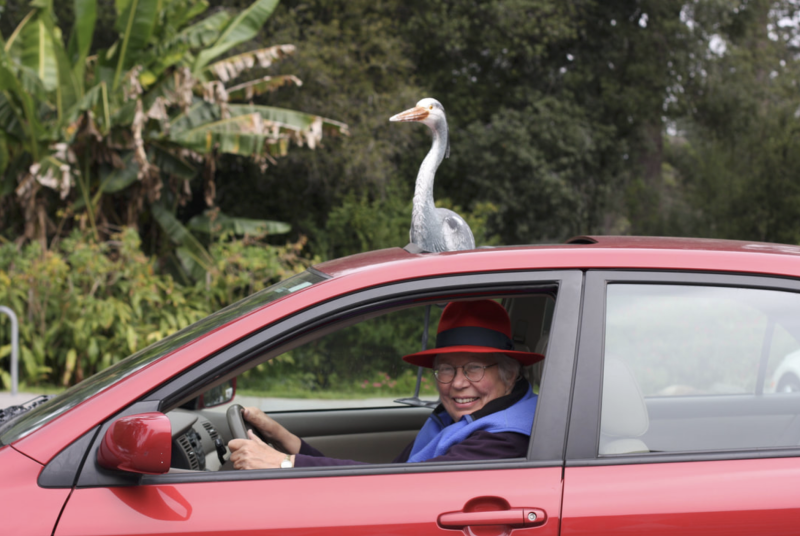
She began regularly monitoring them for the San Francisco Bay Bird Observatory, and eventually earning her the nickname “Heron Lady of Golden Gate Park.” And she still drives around town with a replica of a Blue Heron peeking through the sunroof of her red Toyota.
That first sighting so moved DeStefanis that she wanted adults and children everywhere to share the experience. In 2000, she founded and is executive director of San Francisco Nature Education (SFNE), a hands-on science program for children.
A song for the birds
The organization’s website includes a number of videos, one of which ends with a ditty called “My Blue Herons,” which DeStefanis wrote and sings.

Funded by grants, donations and some fees, SFNE offers programs, field trips, outings, and lectures with a mission to teach conservation and develop leadership among youth and adults. School children in the Mission, Chinatown and the Bayview districts are treated to outings to Blue Heron Lake and beyond.

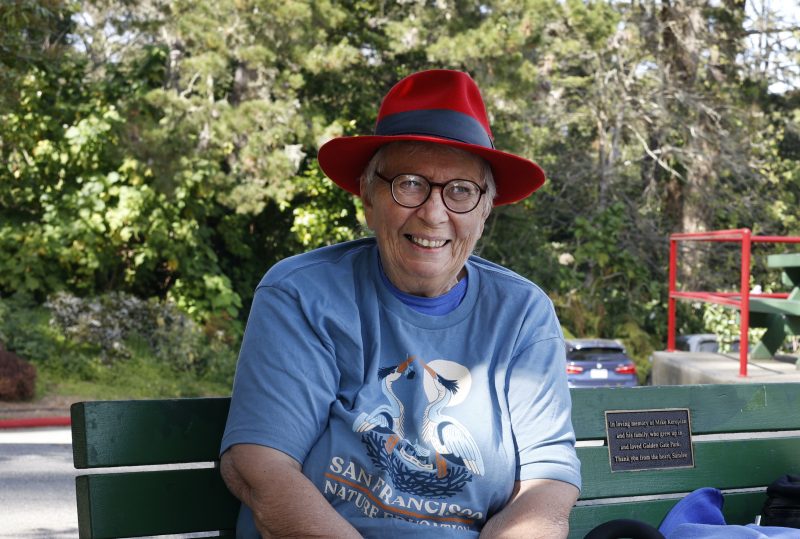
More than 300 middle and high schoolers have served as interns who assist on field trips, produce videos, photo essays and produce nature journals.
“Some of these kids have never seen the ocean, have never been on a hike,” DeStefanis said. “I know I’m doing a good job because many times children come to me and say things like, `This is the best day of my life,’ after they have been on a nature tour.”
Some have gone on to careers in biology and ecology, she said. In 2005, she received the Jefferson Award for public service.
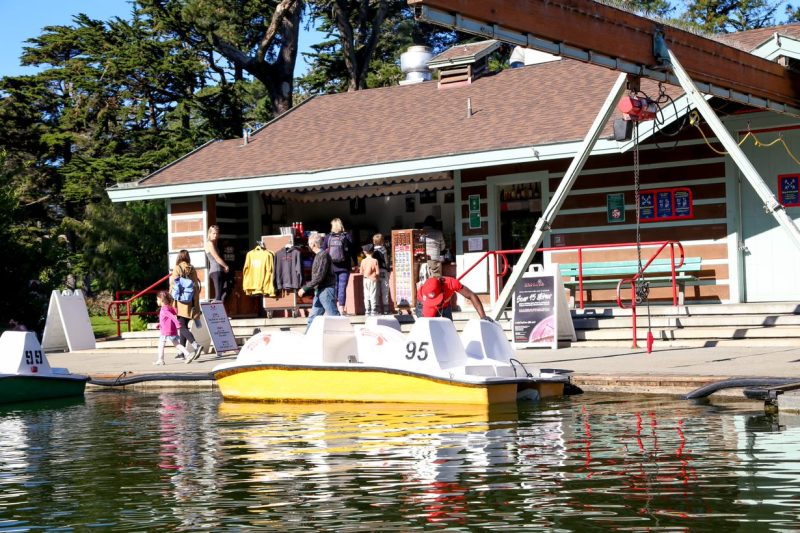
SEE THE GREAT BLUE HERONS:
Free guided, observations through a telescope will be offered on the following Saturdays: May 2, 9, 16, and 30. Meet at 10 a.m. at the Blue Heron Boathouse. The tour lasts till 1 p.m. (Photo courtesy of the Blue Heron Boathouse)

In 2024, the city’s Recreation and Park Commission voted to change the name of Stow Lake. Blue Heron Lake was selected out of 14 public submissions. “Our members and volunteers wrote in `Blue Heron Lake,’ and we got the most votes by far,” DeStefanis said.
On March 10, the San Francisco supervisors awarded her with a Certificate of Honor on SFNE’s 25th Anniversary celebration, held at the Josephine Randall Junior Science Museum.
DeStefanis, now 77, has a long history of protecting and promoting things. She sees SFNE as an outgrowth of all her years of work and community organizing.
The path to activism
She has been a civil rights attorney, educator, and volunteer social and environmental justice activist for many, including farmworkers, women, the homeless, and more recently, underserved children.
DeStefanis was born in Brooklyn, New York, in 1948, the fifth child of six in an Italian-Polish-English family. Her father was owner and operator of a moving and storage company in business with his brothers. To help support the family, her mother worked as a telephone supervisor at New York Telephone.
Neither parent finished high school; they had to work through the struggles of the Depression and together they stressed education to their children, she said. “The family apartment was filled with books.”
DeStefanis was 13 when she saw Edward R. Murrow’s 1960 broadcast “Harvest of Shame” on the plight of farmworkers. “That was the turning point toward understanding systemic injustice and becoming a lawyer,” she said.

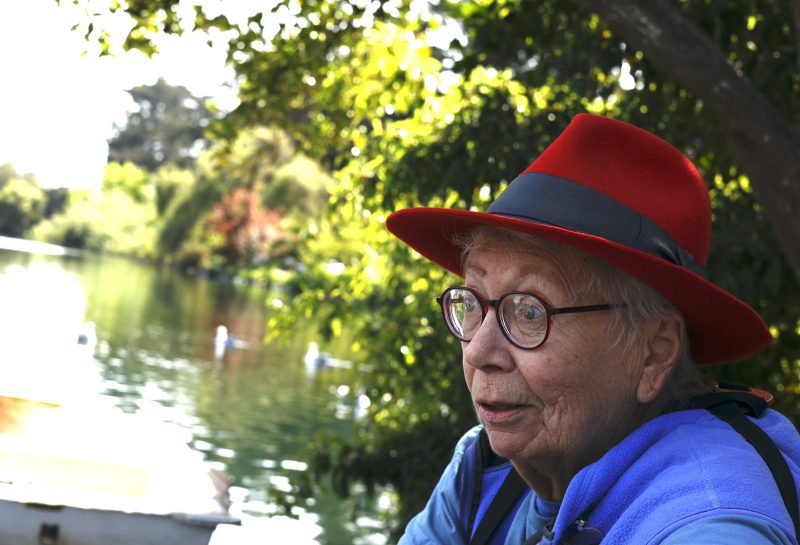
With a Regents scholarship in hand, she got her bachelor’s degree from New York City University’s Hunter College in 1970. She majored in communications and film production while also studying public speaking and had interests in Latin American history and cultural anthropology.
She moved to San Francisco after graduation and became immersed in the movement to improve farmworker conditions. Farm and domestic workers were left out of the 1935 National Labor Relations Act that gave most workers the right to engage in collective bargaining.
Inspired by activists she met at a poetry reading, she soon moved to Delano, California – farm country. There, she saw first-hand the miserable conditions: no port-a-potties in the fields, short-handled hoes that caused injury, over-crowding in dilapidated, plywood housing, and low wages for back-breaking work. At this point, she was driven to act.

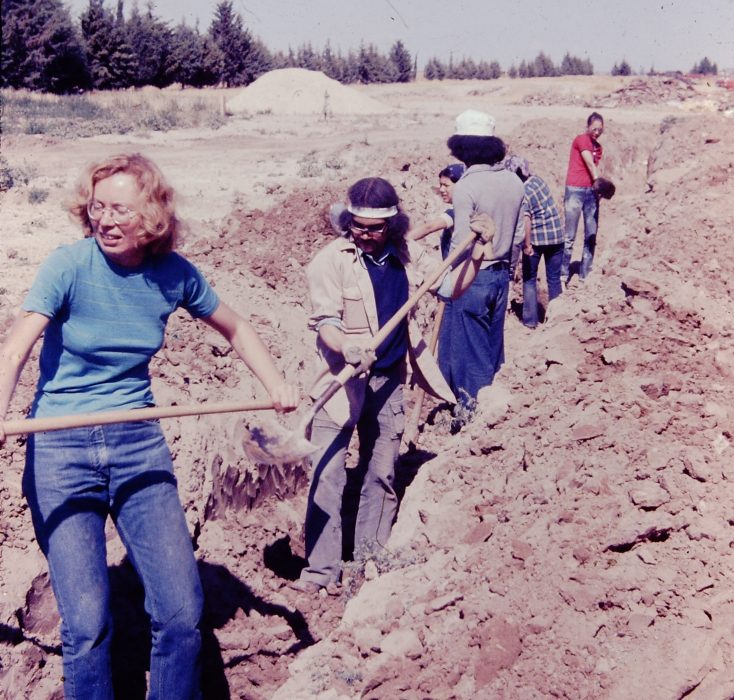
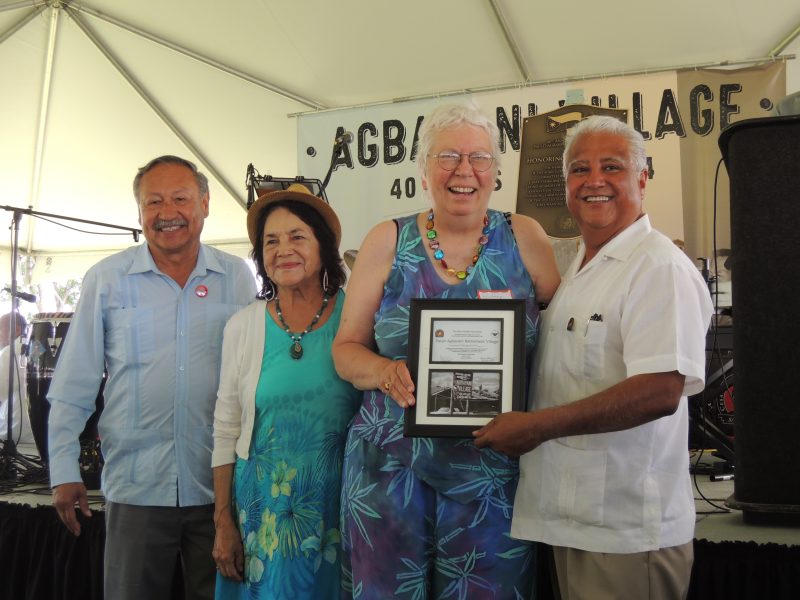
She worked with decision-makers within the United Farm Workers, Dolores Huerta and even the now-controversial Cezar Chavez, to institute the rights of farm workers in law. She picketed. She got arrested.
“The union asked us to picket the local Safeway in Delano, which limited the number of pickets outside the store to 10” she said. “So, 29 of us picketers were arrested. I spent three days in the Bakersfield jail on the Veterans Day weekend in 1973. The papers called us the Delano 29.”


That event was among a series of strikes, mass pickets and boycotts of grapes and lettuce beginning in 1970, collectively called The Salad Bowl Strike. They lead to passage of the 1975 California Agricultural Labor Relations Act, which gave farmworkers collective bargaining rights.
DeStefanis followed up at Lincoln University Law School and was admitted to the California Bar in 1980. Although charges against her in the Safeway picket were later dropped, she still had to get them expunged to be admitted.
Not long after becoming a lawyer, she and others from the Old St. Mary’s Housing Committee, now the Housing Rights Committee of San Francisco, rescued many folks from homelessness.
When Huckleberry House, a multi-service shelter for runaway and homeless youth, and another nonprofit were at risk of closing in 1982 due to cuts in city support, they organized some 200 religious workers, social workers and others to protest at a city hall hearing. That convinced then-Mayor Dianne Feinstein to restore the subsidies. Huckleberry House, founded in 1967, is still serving troubled youth.
‘Mostly Male; Mostly Stale’
In the ‘80s, women’s rights became her primary concern. As vice president of San Francisco’s chapter of the National Organization of Women and executive director of California Women Lawyers, she advocated for equitable representation in broadcast media.
She jumped into action again In the ’90s, tired of seeing so few women on public affairs shows on KQED. “All white men around the table except for Eleanor Clift,” she noted. “I called all my friends and helped organize a picket line up at the entrance to KQED with signs saying, ‘Mostly Male; Mostly Stale.’ ’’
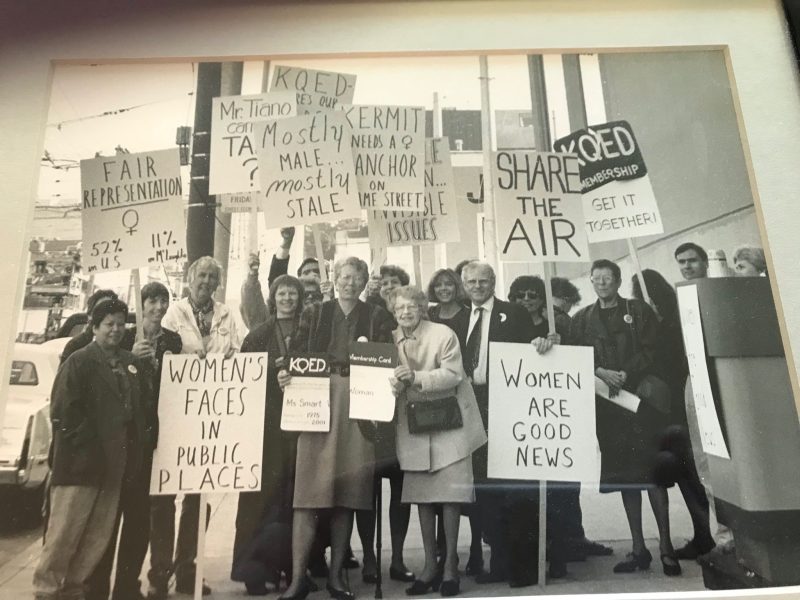
The event was reported by the Associated Press in media across the country, along with pictures and her demand that all news programming include 50 percent women and people of color. She campaigned across the U.S. and got valuable advice from Gloria Steinem, whom she called “the consumate organizer and kindest mentor I’ve had.”
“PBS had in place a commitment to diversity,” said DeStefanis,. “Gloria and I used that as a cudgel to force an agreement for 50 percent women and people of color, which KQED signed in November 1991.”
Her activism was not all pickets and meetings. From 1992 to 1996, she was a founder and bandleader of the musical group “Gospel Accordion to Women,” self-described as “five unrepentant, unabashed feminists” who played throughout the Bay Area.
“I co-wrote feminist polkas, and we won the San Francisco Main Squeeze Contest,” she said. “In 1996, we headlined in the Cotati Accordion Festival.” Nowadays, she plays the ukulele as a member of a group.
Her interests are as wide as her activism. She has traveled to the South American jungle to see birds and recently returned from Lapland, where she saw the Northern Lights. She also enjoys going to see foreign films or the theater with friends, or volunteering “some more.”
That includes advocating for rent-control tenants, AIDS patients, soup kitchen guests and the isolated elderly. These days, she’s focusing on the younger generation.
Bird talk
“Now I work with young adults and high schoolers, whom I love. I also enjoy our 3rd grade program with classroom visits and field trips. Those eight-year-olds really keep you young.”
DeStefanis routinely takes time out for teachable moments as she sits on a Golden Gate Park bench across from the nesting Blue Herons.

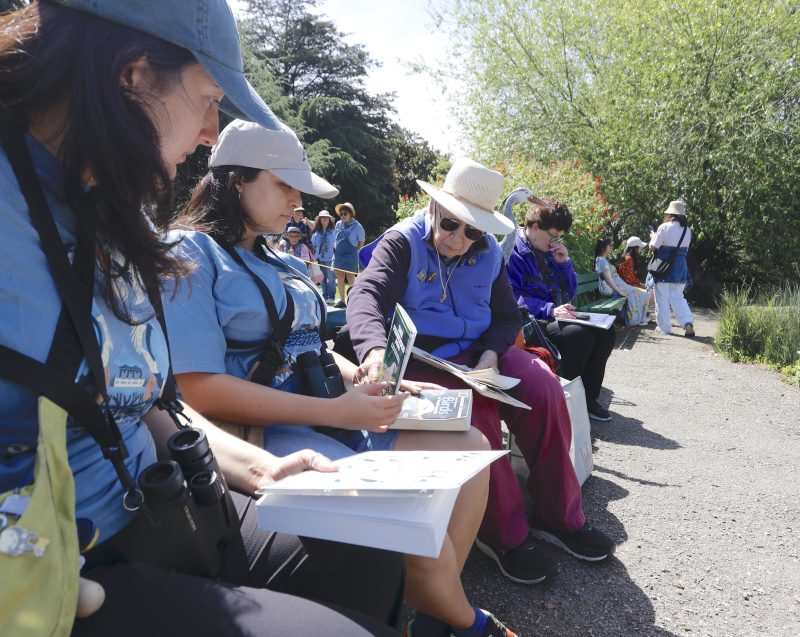
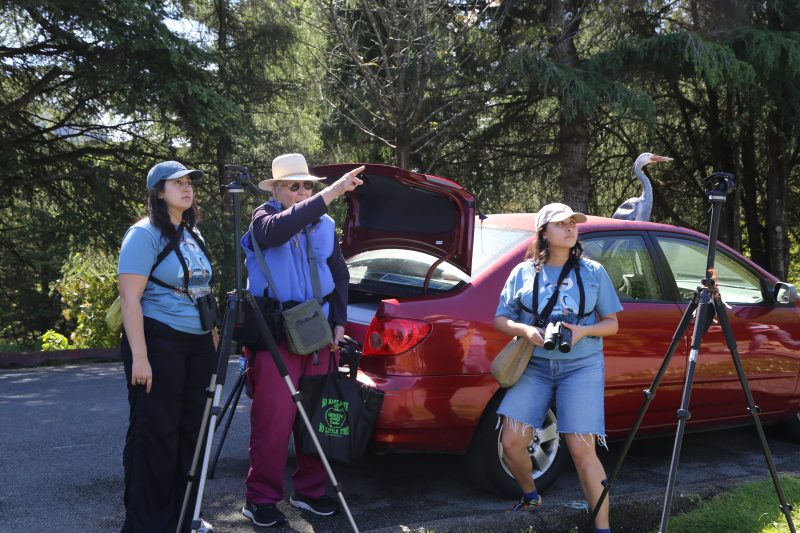
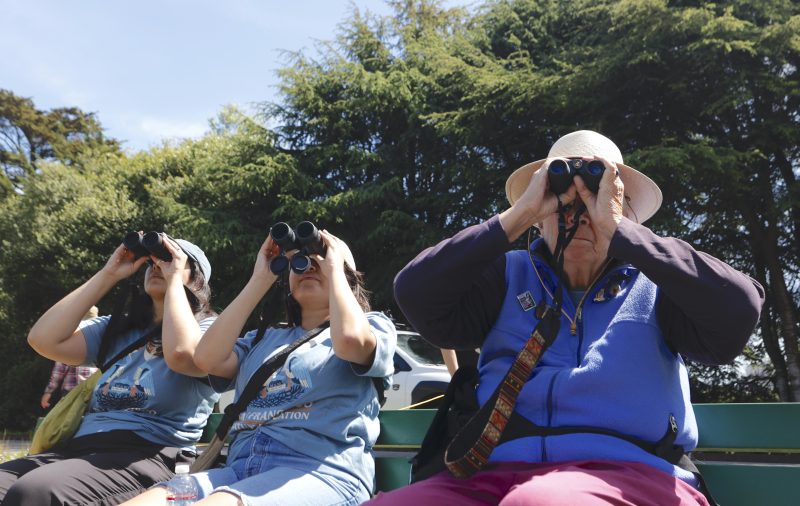
After the telescopes have been set-up and the binoculars are properly strapped on, she huddles with newly recruited volunteers. On a recent Saturday, she is mentoring Nini Bhat and Arushi Desai, both 27 and wearing the blue SFNE T-shirt.
She instructs them in the secret sauce of getting passersby to take a look through the telescope to see Blue Herons in their nest, mating or feeding their young, and sometimes see them spread their five- to six-foot wingspans in wondrous flight. And that starts a conversation about the birds and SFNE’s events and programs.

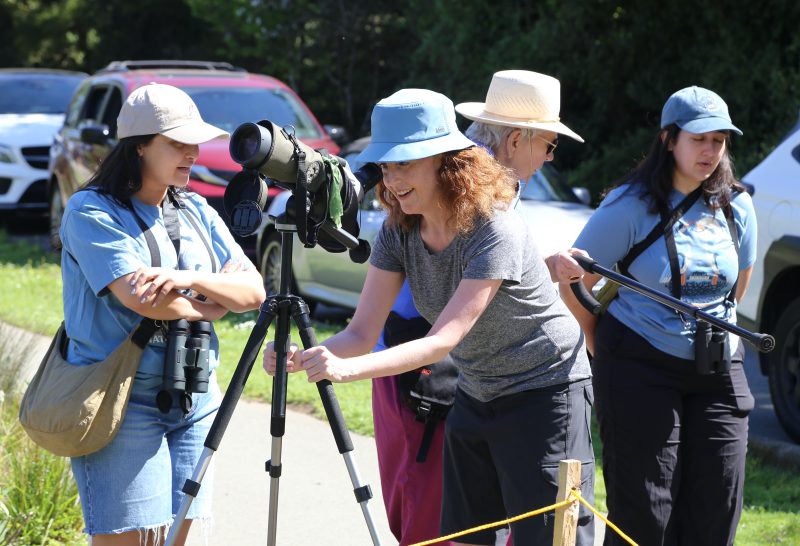
Said Bhat: “Last week as I walked through the park with my friend, Arushi; we were approached by Nancy and now I’m a volunteer for the next six weeks.
“It’s so joyful to get people involved in nature and observe these amazing birds.”
Contact Myra Krieger at myrakrieger@sfseniorbeat.com

