

Seniors and people with disabilities fight down to the wire to save programs that serve them
As Yogi Berra once said, “it ain’t over till it’s over.” The baseball legend was referring to sports, of course, but the adage may well apply to the fight advocates for seniors and the disabled are waging to head off — or at least reduce — funding cuts to programs that benefit some of the city’s most vulnerable populations.
Faced with a two-year deficit of $234 million, San Francisco Mayor Daniel Lurie has proposed cutting $8.9 million to programs that affect seniors and disabled.
The budget, a massive document of more than 1,000 pages, is now in the hands of the Board of Supervisors, the city’s highest elected body. But the board has only limited authority to make changes to the mayor’s proposal. Nerveless, opponents of the cuts are planning a series of lobbying and educational events in hopes of convincing the supervisors to “find money that will lessen the impact of those cuts on the vulnerable,” said Marie Jobling, co-chair of the San Francisco Dignity Fund. “Money can often be found,” she said, noting that the budget won’t be final until the end of the month.
On Monday, as the budget was released for the first time, advocates learned that $2.9 million of cuts to programs under the aegis of the Department of Disability and Aging Services will not be restored. They said they were disappointed, but vowed to continue their efforts.
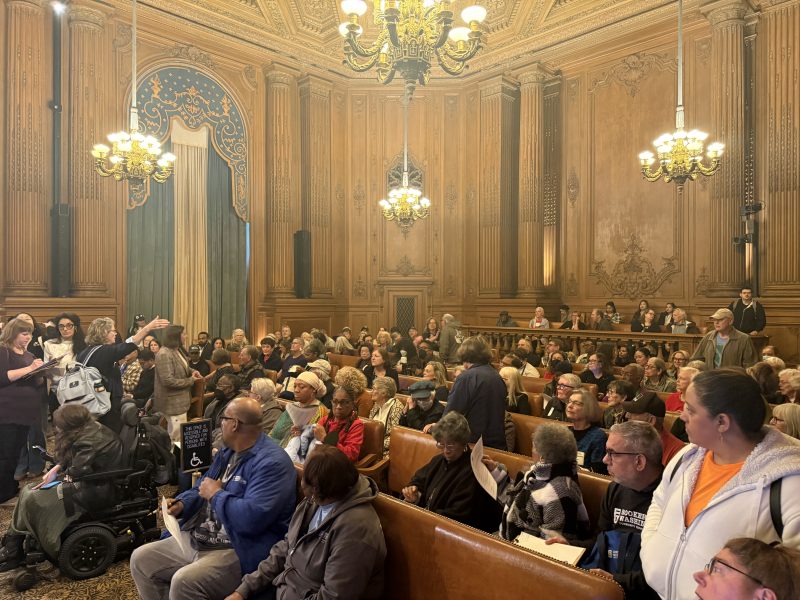
Opponents of the cuts plan to attend a City Hall meeting on June 10 when the Supervisors will hold a hearing on the budget. And on June 15, the mayor will be treated to a rewritten version of “Over the Rainbow,” in which advocates dressed as characters in the iconic movie will make their case to restore the cuts.
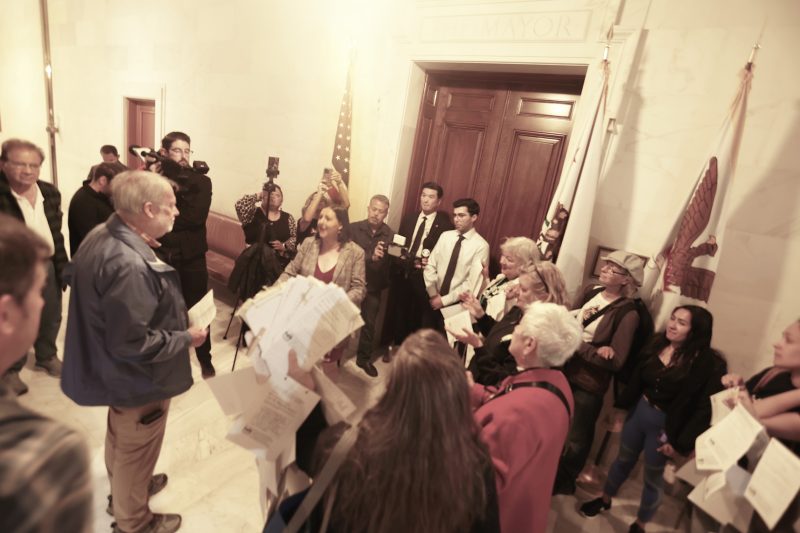
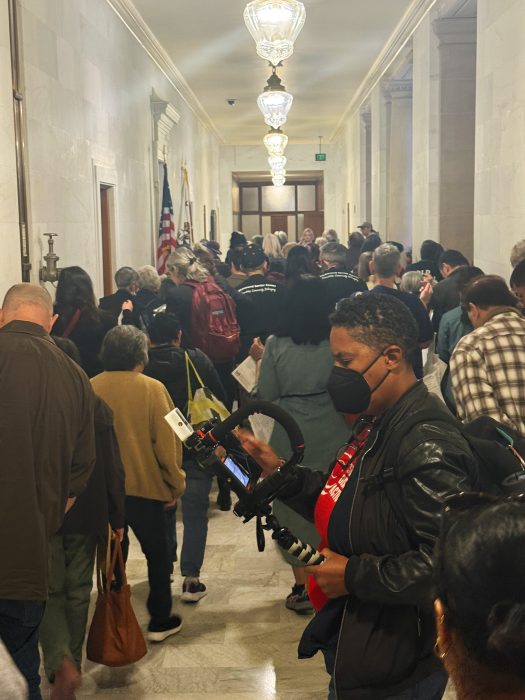
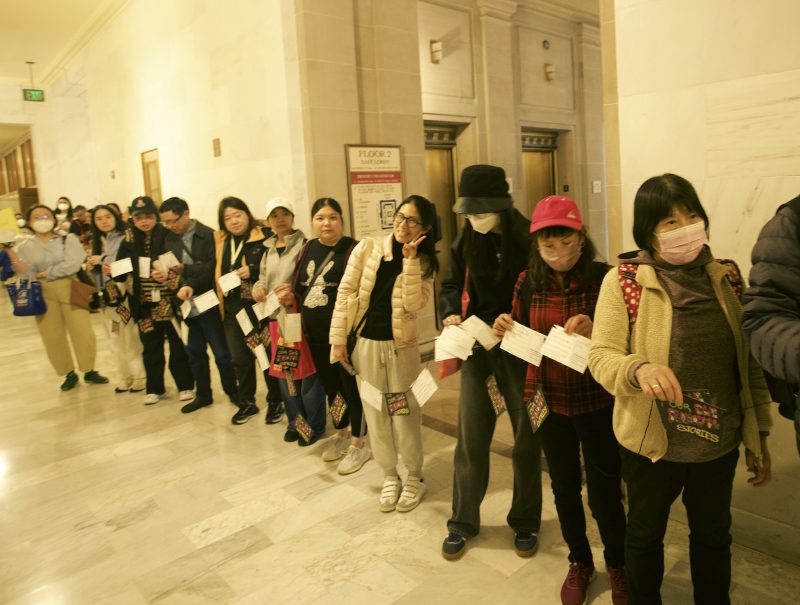
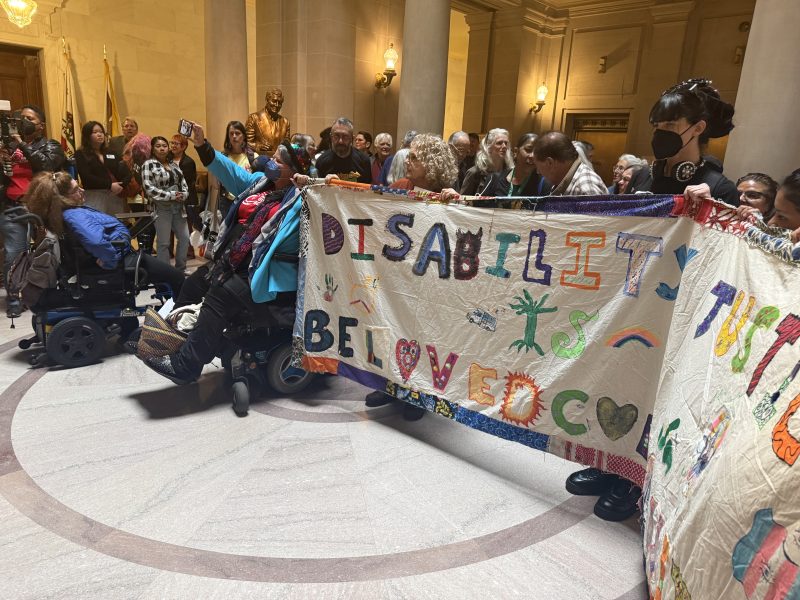
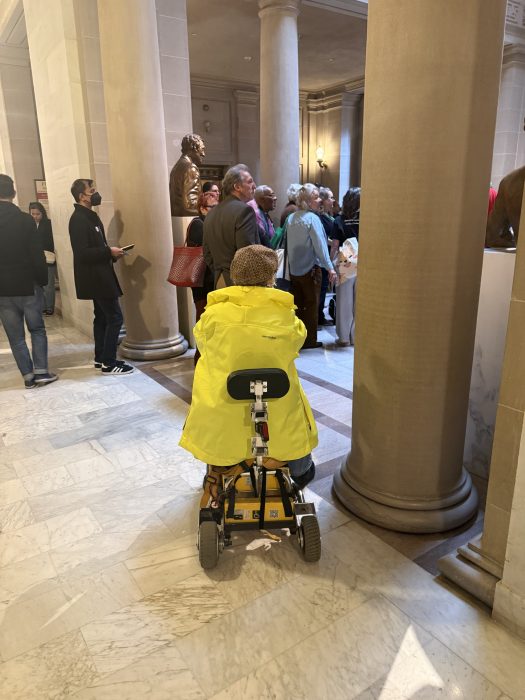
The fight has been conducted since the preliminary budget was announced earlier this year. Some 200 seniors and people with disabilities and their advocates swarmed City Hall April 7 in the second, heavily attended protest in less than a month to oppose $8.9 million in cuts to the Mayor’s budget that impact programs serving seniors and people with disabilities.
They are among $124 million in reductions Lurie has put forth to reduce the deficit.
While the initial blow prompting the first protest was $2.9 million carved out of Department of Disability and Aging Services, the People’s Budget Coalition, a group of nonprofits, unions, community groups, and advocates, has since documented nearly $6 million in additional cuts to programs impacting seniors funded by other departments.
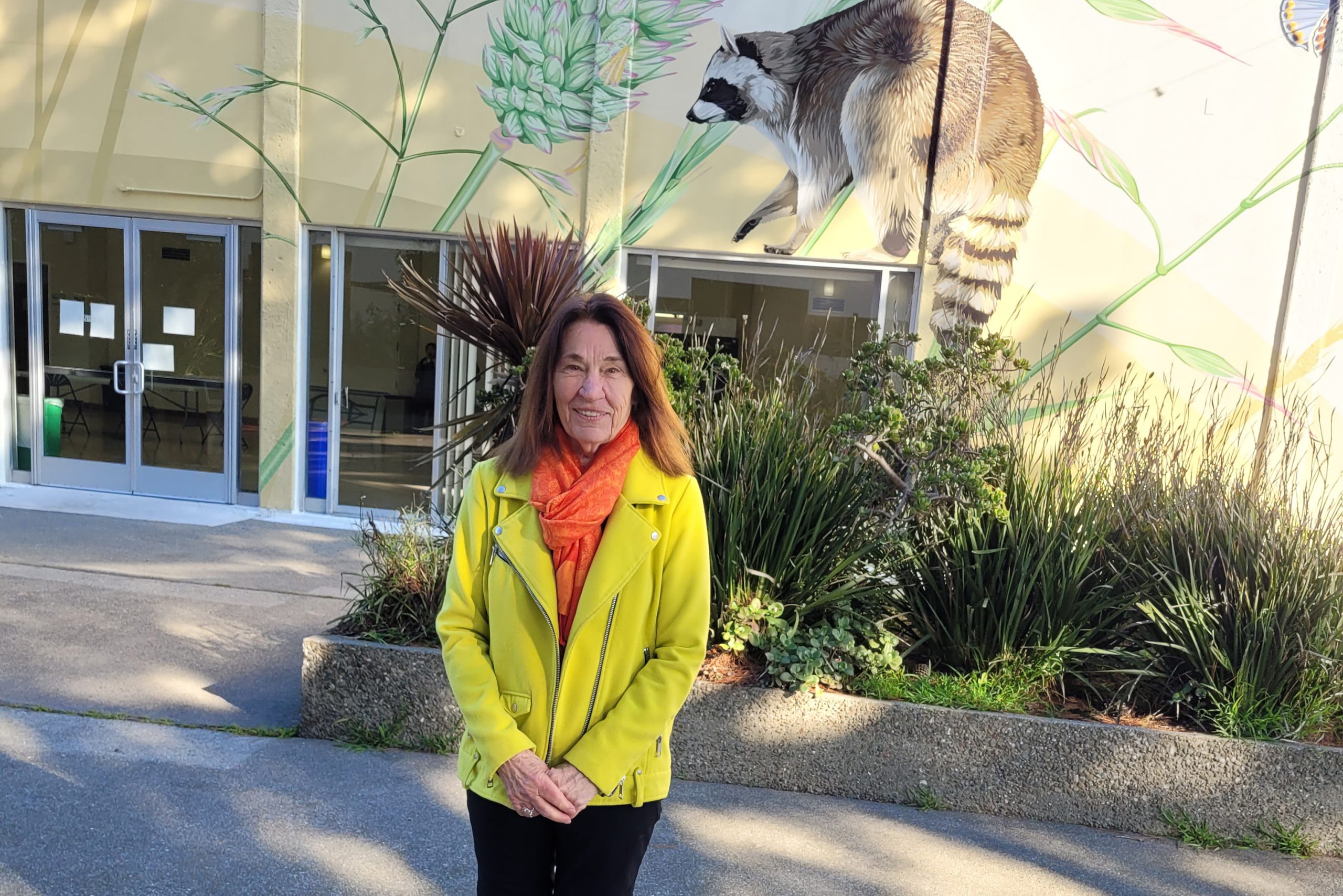
The proposed cuts have created a constant buzz in the affected communities. “When I go to my senior center, they’re talking about it,” said Carol High, whose job is largely paid for by one of the programs on the DAS chopping block.
We’re not done
“We won’t be going away,” Marie Jobling told protesters in front of City Hall that day. She’s co-chair of the San Francisco Dignity Fund, a program administered by DAS that supports services for older adults, people with disabilities, veterans, and caregivers, with the goal of helping them remain in their homes and communities.
In addition to DAS program cuts, the Public Health Department will close the Southeast Mission Geriatric Services, referring its 200 clients to other clinics, and eliminate some of its HIV prevention and substance abuse programs. The Mayor’s Office of Community and Housing Development is canceling funding for the Pomeroy Center, which hosts a number of programs for 100 individuals with disabilities. It’s one of 60 programs set to lose some $16.8 million in MOHCD funding, including neighborhood and ethnic community centers, a women’s shelter, Goodwill of the Bay Area, Swords to Plowshares, the California Domestic Workers Coalition, which represents 1,200 low-income workers, and the Community Tech Network, which provides low-cost broadband and some hardware, and trains seniors how to safely navigate the internet, order medicine and groceries, communicate with their doctors, families, and friends.
“What makes me really unhappy is that it disproportionately affects seniors and marginalized people in San Francisco, and according to the city’s own data and research, seniors and residents over 60 will be the largest demographic in four years,” said High, who joined the April 15 protest. “It doesn’t make sense to me and makes me very angry.”
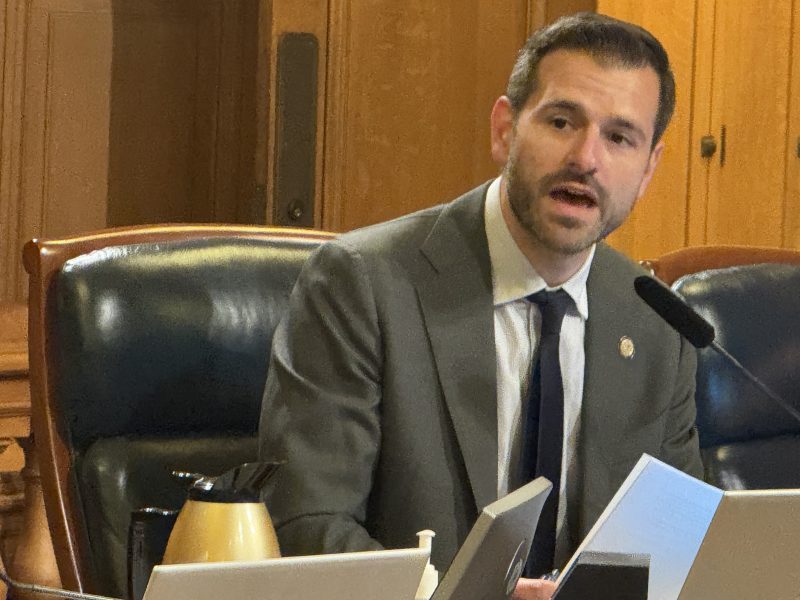
Beyond broad statements about his priorities, the Mayor has not been forthcoming about the thinking motivating the cuts. But this year’s budget is very much the work of the Mayor’s office, said Erik Greenfrost, executive director of the Senior and Disability Action. In the past, departments were told what their budget should be, but how the money was allocated was up to them. “This time the budget office has targeted specific programs and specific types of programs,” he said.
While decrying cuts impacting the vulnerable, opponents point to the Mayor’s stance on revenue-raising measures, such as Measure D, the “CEO Overpay” tax on the June ballot, and his support for halving the transfer tax on large real estate transactions – not to mention his $75 million increase to law enforcement budgets.
“The mayor clearly prioritizes arrests and incarceration,” Greenfrost said. “He’s using the rhetoric of shared pain and the loss of federal funding as an excuse to push out cuts to services.”
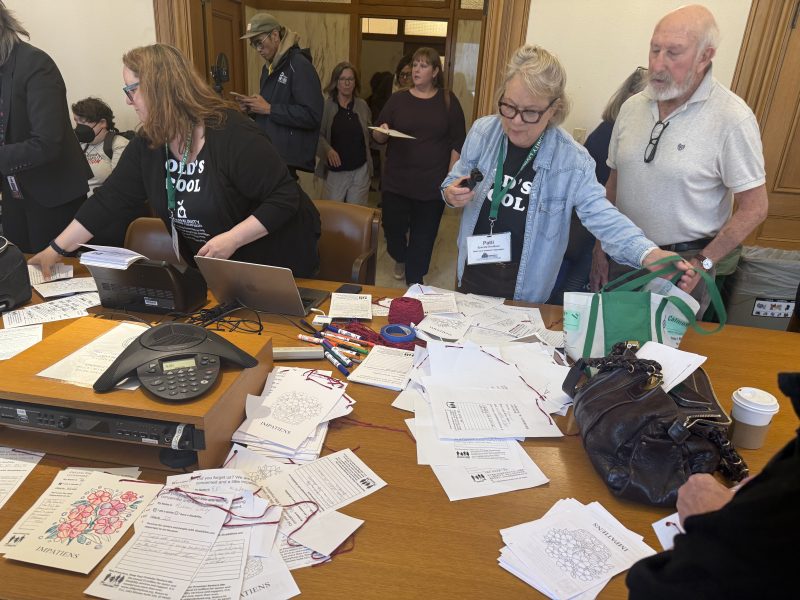
On Tuesday, Jobling, who is also co-executive director of the nonprofit Community Living Campaign, led a spirited crowd in a march around the perimeter of City Hall. “What do we want? A people’s budget?” When to we want it? “Now,” they chanted. The next stop was the Mayor’s Office on the second floor of City Hall, where members of Senior and Disability Action displayed written protest messages. The Mayor was not in the building at the time.
The Board of Supervisors has limited power to change the overall budget, but it can shift some allocated money from one program to another, Jobling said. Opponents of the cuts will likely focus on city Supervisors in the coming weeks.
Many people could lose services they depend on. And many, like High, 67, could lose their jobs.
A good deal for everyone
High works for the League of Women Voters of San Francisco through a DAS-funded program called San Francisco ReServe that is run by the Community Living Campaign. For the past seven years, it has been placing adults aged 60 and older, or those with disabilities, in part-time jobs at nonprofits and small businesses. ReServe shoulders most of the cost.
She’s one of three people on its communications team – “pretty much the chair, another woman and me.”
It’s a good deal for her and the organization. She brings years of experience – in the investment community, international marketing, and nonprofit management, and the local knowledge of a 50-year resident – to its mission of educating the public about the process of democracy and government policy.
“They tell me all the time that I would be a loss,” she said. For her part, she likes “giving back to my community, supporting a local nonprofit.”

SF ReServe supports community organizations with employment needs and finds jobs for people “who are often excluded from traditional workforce programs,” said Director Jamie Goddard.
ReServists are employed in many places, including as crossing guards at University High School, writers for San Francisco SeniorBeat, and employees at One Treasure Island who welcome new residents and visitors to the island community, help with the food pantry and emergency preparedness, and monitor the parks. “They have been game changers,” said Nella Goncalves, One Treasure Island’s executive director. Replacing them, she said, would entail “blowing a huge hole in my budget.”
Fighting poverty, isolation
For many ReServists, Goddard said, the extra money keeps them from living hand-to-mouth or exhausting retirement funds, if they have them, in the increasingly expensive city.

A little extra money is a hedge against poverty. And a place in the workforce is an edge against isolation, a documented health hazard for the elderly.
For High, who said she’s the more social one in her marriage, the job fills her need for interaction. “I’m meeting people from different parts of the city, people I would not meet – especially in this day and age; it’s not easy to meet people.”
SF ReServe’s $1 million funding is slated to be cut in half. Many of DAS’s other programs face total funding cuts, which in some cases could be fatal. Among them are:
Senior & Disability Action is an advocacy group;
Open Door Legal provides free service to low-income people on the city’s West side. (Possible cuts to other legal programs are pending.)
NEXT Village SF provides services and support to some 500 members in the northern side of the city who want to live independently in their own homes as they age. For example, it sends volunteers to help with household tasks. Even small ones that can seem overwhelming, like a stubborn computer glitch and a mattress too heavy to flip that were bedeviling 74-year-old Linda Ray.

It also hosts some 500, heavily attended social and cultural events each year under a program for people over 60 called District 2 University. Ray hopes the program will survive. “It enriches my cultural life and keeps me from being isolated,” she said.
Golden Gate Village, a program of the Richmond Senior Center, which serves 260 people, could lose half its city funding. Kevin Lee, 71, calls the center his “second family.” He has lunch there and attends its exercise classes. “It gives me the opportunity to socialize and get healthier.”
Volunteers help with transportation, errands, light household maintenance, and technology. When a power outage blacked out huge swaths of the city earlier this year, they made more than 300 calls to seniors, making sure they had food and that other needs were met, said Kaleda Walling, the group’s executive director.
Walling said she hopes to find a way to make do. “We can’t just abandon half of our village.”
Self-Help for the Elderly, provides a variety of services to seniors, including housing, home health care, employment assistance, house cleaning , counseling, and activities.
It’s about values
Opponents don’t doubt the deficit, as Lurie said, threatens the city’s long-term fiscal health, but argue his priorities are misplaced, particularly the increases to law enforcement budgets despite significant decreases in crime rates across all categories but larceny theft.
San Francisco Police will get an additional $36 million, a 6 percent increase, which will likely be spent to acquire additional military-style equipment, including drones, an armored vehicle, more firearms, and stun grenades. The Sheriff’s Department will get an extra $22 million, a 9 percent boost; the Probation Department, $4 million, or 16 percent more; and the District Attorney’s Office, $13 million, an 18 percent increase over last year’s budget.
Whether or not those increases improve city safety, the proposed cuts will “result in real suffering” for seniors, said Jobling.
“Every program slated for cuts serves low-income San Franciscans, with at least 80 percent of participants who will lose services classified as ‘Extremely Low Income’ (earning $30,000 or less per year),” according to the People’s Budget Coalition.
City and county budgets fill websites, binders, and books with spreadsheets, graphics, and tiny print. Last year’s San Francisco $16 billion budget ran well over 1,000 pages. Behind that seemingly impenetrable mass of data are decisions made by politicians and city officials that affect the entire community and reflect the values of the people who made them.
“Budgets are moral documents.”
– Dr. Martin Luther King
The mayor says
The mayor’s office sees it differently. Sophia Kittler, Lurie’s budget director, said the administration is looking at programs it can eliminate that would be “least impactful.” The city, she said, wants to focus on protecting those who have demonstrated “an outsized impact to the community.”
By 2030, people over 65 are projected to make up one fifth, 20 percent, of the city’s residents, according to local and California Department of Finance data. That’s up from 17.2 percent in 2024.
The budget won’t be final until June and won’t go into effect until July, but few people with insight into the process expect that the mayor’s proposed cuts will be substantially modified. But there have been some indications that the Mayor’s office may be willing to compromise a bit.
There may be, though, better news concerning the Dignity Fund. The 2016 ordinance that created the fund stipulated it was to be funded at $3 million each year, but it contains a loophole that allows the city not to fund it, depending on certain financial metrics. And for four of the last five years, it hasn’t been, said Christina Irving, Dignity Fund co-chair.
This year, funding will be restored at the base level of $3 million. But with the senior and disabled populations growing, it won’t keep pace with the need, Irving said. And though the money must be spent on programs for seniors or people with disabilities, there’s no guarantee any of it will be used to restore the specific programs currently slated for cuts, said coalition members.
San Francisco progressives say they have a way out of future budget crunches: a tax increase on the city’s wealthiest businesses. On the June primary ballot, Measure D would raise city taxes on companies with more than 1,000 employees whose CEOs draw salaries that are more than 100 times larger than their companies’ median salaries. It would go into effect next year.
The measure is opposed by the Mayor, who believes it will drive businesses from the city, and by business interests, as well as Gov. Newsom. It’s supported by labor unions and Vermont Independent Senator Bernie Sanders.
“There’s a deficit because the wealthy and corporations do not pay their fair share,” said Anya Worley-Ziegmann, coalition coordinator of The People’s Budget Coalition, which supports the tax increase.