


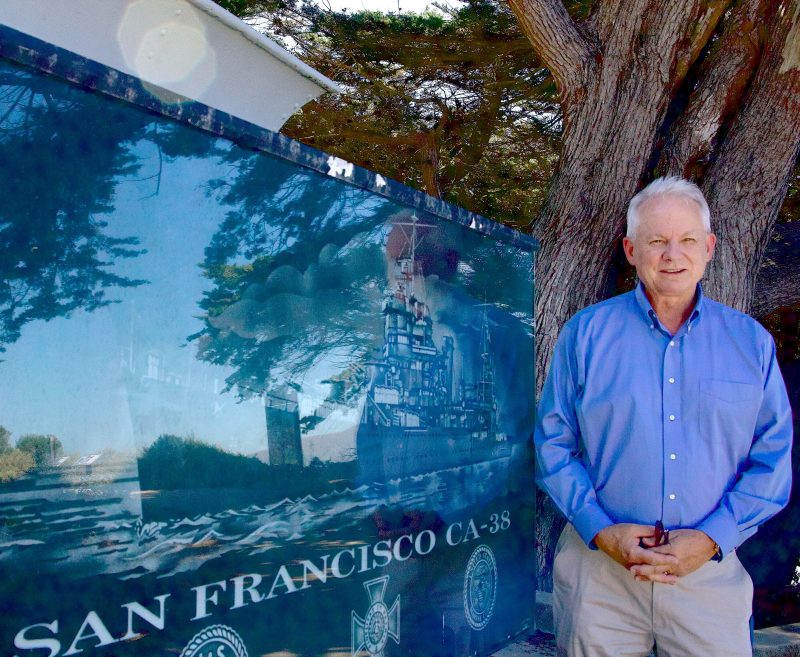
A tarnished silver coin from 1964, likely worth only $10 to any dealer, reminds Richard Lyons Corriea of an experience that set his sights on a life of contributing to his community.
After a 35-year career at the San Francisco Police Department – from patrol officer to commander of the Metropolitan Division then Airport Bureau, he’s been giving back. He’s a consultant for attorneys, an activist on neighborhood issues, and a guide to seniors like himself – he’s now 70 – in navigating the twists and turns of aging.

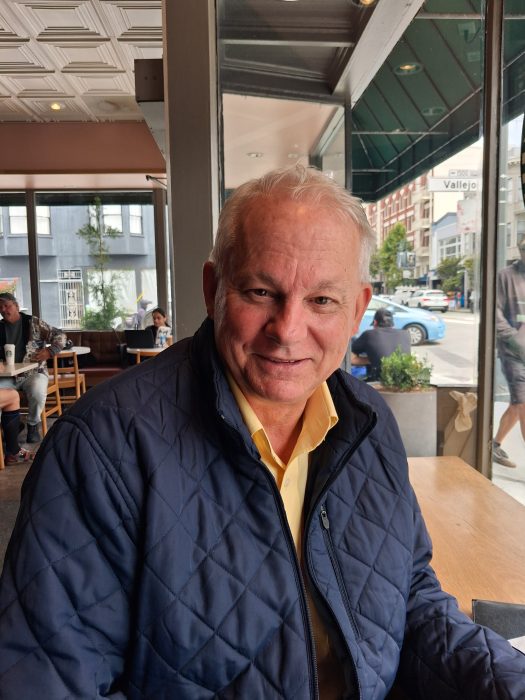
Waiting for his hot coffee to cool in a Polk Street café recently, Corrriea slid an aged, yellow envelope across the table, and from it came one of the first John F. Kennedy half dollars, issued in 1964 shortly after his assassination. Although rare samples can be worth thousands, worn circulated coins like Corriea’s might bring in around $20, mainly for their 90 percent silver content.
For Corriea, its value is in meaning not money. It was given to him in 1967 by Alice Brophy, an older woman he helped as a young boy.
“I was 10 years old and I delivered newspapers throughout Jordan Park in the Richmond, the neighborhood where I was born and raised,” said Corriea, who now lives in the Outer Richmond, near Ocean Beach. Brophy was on his regular route and she very much wanted that newspaper but had difficulty navigating the steps to her front door. So, she devised a way to have it hoisted up to her.
Connected by string
“She threw a string over the bannister and then called down to me to tuck the newspaper into the loop that she had made. After a while, she and I would just appear at the same time and I would handle this task without a word spoken. I watched her unloop the paper and put the string back on the bannister for the next day. We worked together every day like this for years.”
Along the way, she gave him that coin.
He cherishes it for what it got him to thinking, even at that age: about young and old working together; mindful aging – and most importantly, the nobility in selfless giving. “It refreshes my passion to help make a difference and to do the hard work that involves giving back to my community.”
Corriea has continued to act as a public servant since retiring in 2014, getting involved in issues that affect his neighborhood. He was the champion of “No on K,” effort, opposing the ballot measure to create a city park by barring traffic along the Upper Great Highway paralleling the ocean west of the Sunset and Richmond districts.
He organized the campaign, rallied volunteers and contributed added value wherever he could to keep 14,000 vehicles from being diverted each day to already clogged neighborhood roadways. Nearly 16,000 signatures were gathered. “The Great Highway is for Everyone!” was his slogan.
Despite Measure K’s passage, he led the successful recall of Joel Engardio, the District 4 supervisor who promoted it. Sunset Dunes Park has been mildly popular, but there are those, particularly in the nearby neighborhoods who still bristle at losing access to the highway. A new ballot measure is headed to voters in November that would reopen the Upper Great Highway to cars on weekdays.
The Great Highway battle
“I became involved with the GH question because I saw a small group of closure proponents as forcing their vision on entire communities; a vision that excludes many seniors, and the disabled,” he said. “I’ve come to believe that the battle over how to use GH roadway is really driven by a deep distain for people who need to or want to drive cars.
“I dream of the day that donors direct their money to very real problems encountered by seniors, children, people who need mental health services,” he said, “and reduce suffering.” More than a million was spent on the campaign, the majority by proponents.

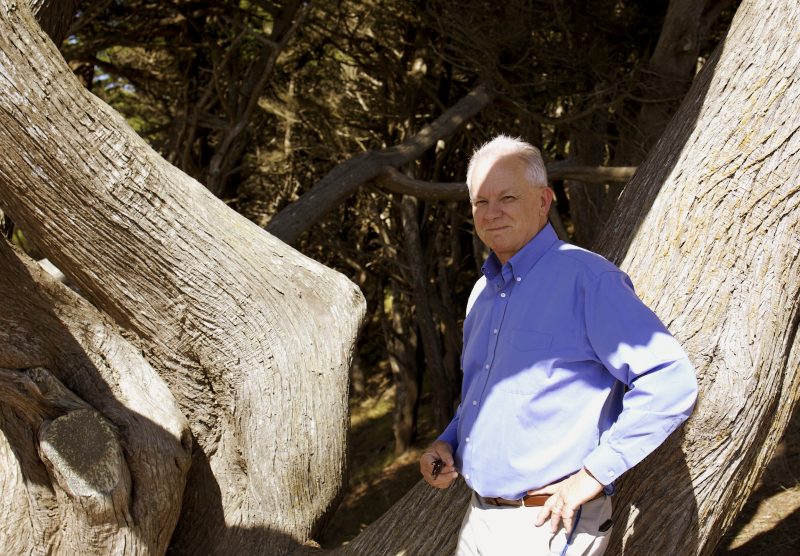
Corrriea is now in the midst of developing a consultancy for seniors who want to stay in their homes well into their retirement. It’s all about planning with purpose; aging with confidence. Through personal experience, he came to understand what our later years may include. “In my 30s, I found myself the caretaker for my aunt, who was 90 years old and had dementia, and a few years later it was my parents.”
Teaching is what’s kept him connected to his public safety background and desire to do good. From 2018 to 2022, he was director of the University of San Francisco ‘s Institute of Criminal Justice Leadership. In January, he will be sharing what he’s learned in a Fromm Institute class, “Aging Your Way 11: Turning Plans into Reality – Building Support, Navigating Transitions, and Protecting Your Independence.”
According to Corriea, what makes a good teacher is also what makes a good cop, whether it’s a stationhouse backroom, Zoom, or a university classroom: a desire to help people, liking people, and having good judgement. “It’s always about teaching and learning; when you’re teaching, you’re also learning.”
He also consults and sometimes works closely with attorneys, dipping into the breadth of his law enforcement experience – dealing with sexual assault, homelessness, and juvenile crime; aviation and transit security; and police training – as well as his law and business expertise. He has a master’s degree in Business Administration.
A noble livelihood
He started his law enforcement career in 1978 as a deputy sheriff in Marin County, moving to the SFPD a year later. Over 35 years, Corriea moved up the ranks from patrol officer to commander, Metropolitan Division and then in 2012, Airport Bureau. In between, he took leave to study law at Golden Gate University. He earned his law degree in 1988. For a time, he had his own practice and worked for another firm, mostly on civil matters such as trusts, wills etc.
But after about a year, he returned to policing, which he said it felt more like his calling, a more noble livelihood. A decision, he said, he never regretted, and perhaps bolstered by life full of adventure with four siblings growing up in the ‘50s through ‘70s in the Richmond District.

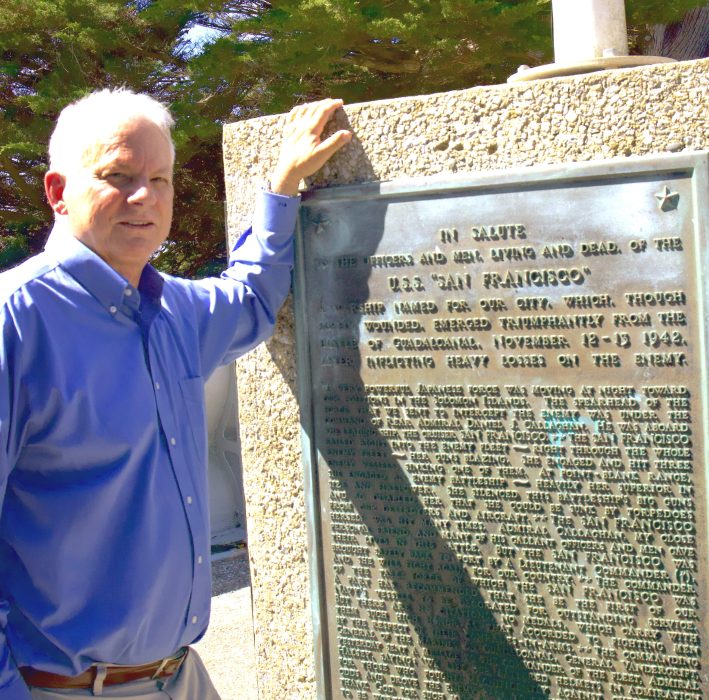
There were also plenty of life lessons – and grief.
When he was in his 30s, his two older brothers died, one from illness. His oldest brother was murdered while living in Oklahoma. A drug addict and his girlfriend who stole his car and credit card were arrested.
Oklahoman detectives kept him apprised during the investigation and two criminal trials. The accused was sentenced to life without parole. His partner, who testified against him, was given a few years in jail. Corriea had no qualms with the sentencing; he is adamantly against the death penalty, which is legal in Oklahoma. “It never solves anything,” he said.
Corriea met with some members of the jury after the second conviction. They apologized for what had happened to his brother in their community. It was a powerful, moving moment, he said.
His parents never recovered from their losses, he said, but his grief has morphed into good memories over the years. And he and wife, Maria, are enjoying lots of family dinners with his two sons and two grandchildren and season tickets to Giants baseball, which they attend 11 or 12 times a year. They’re also looking forward to traveling to Europe.
Carriea spends time with friends and acquaintances as well as family, reads a lot, and takes a four-mile walk on Ocean Beach every week. He also spends as much time as he can with his four-year old grandson, Bobby.
“I bring him many places with me. I am intent on making sure he has a good steeping in the folks who came before him,” he said. “My wife, Maria, says I stalk my kids … I don’t think I’m that bad.”
Contact the author at MyraKrieger@sfseniorbeat.com

