

Former art galley president helps people craft their deepest feelings in ‘lasting letters’ to loved ones
Looking out at Monterey Bay from Santa Cruz early one morning last year, a pair of silhouetted trees against water, distant mountains and mist immediately reminded Frish Brandt of Japan, which she had visited several years before. Rousing herself from reverie, she padded into the kitchen, opened her laptop to check email, and was surprised to see one from Japan.
“You probably won’t remember me …” it began. The sender was Kiyoka Tabesh.
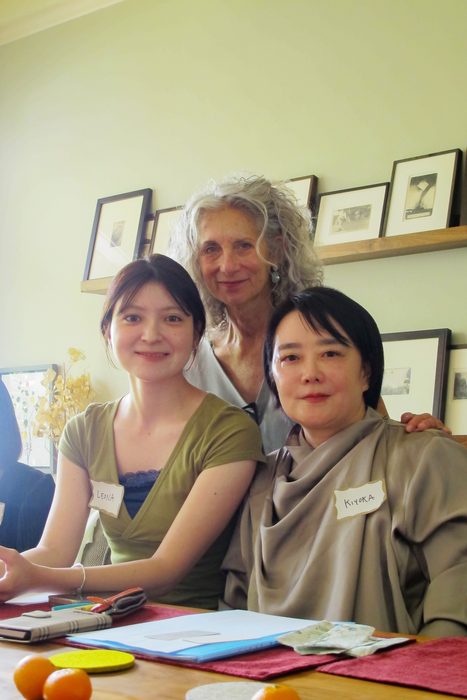
“I had goosebumps.” Brandt recalled. “I knew exactly who she was! Ten years ago, I helped her husband write his last letter to their young daughter.”
Brandt, 72, calls herself a “letter midwife.” She’s on a mission to help people write the things they want to say while they can, now and for all time. Writing letters that people want to keep, she said, is a most powerful way to address unfinished business of the heart. “Whether one is facing the end of life or simply seeking to live more fully.”
Why letters when so much these days can be digitalized? “Letters are time capsules and time machines, they’re intimate and doable,” she said. “You don’t need batteries, you don’t need a manual, you just can do it.
Midway through her 40-year career as director, partner, and president of the Fraenkel Gallery in San Francisco, Brandt turned her attention to helping people write lasting, heartfelt letters. Begun in 2014, it’s become her calling, producing well over 700 letters and this year a book, “Unfinished Business: Writing the 5 Essential Letters of Your Life.” Her debut book talk will be on Oct. 29, two days after its publication, at Book Passage San Francisco.
Her website Lasting Letters describes the book and the process she uses in workshops and with individuals of all ages and circumstances seeking to express gratitude, love, regret, remembrance, forgiveness, and connection. It’s a practice she developed while volunteering with palliative care and hospice patients.
After a 2020 fellowship at Stanford’s Distinguished Careers Institute and retiring as Fraenkel Gallery president in January 2024, Brandt’s letter-writing practice has grown to include speaking engagements, a course at Stanford University School of Medicine, workshops at the De Young Museum, Harvard Divinity School, Sun Valley Center for the Arts, and numerous other organizations.
‘I need to tell you something’
Brandt is typically the one to write the letters when it’s for someone in a hospice or hospital setting. Yet when a friend-of-a-friend approached her to help her write a “love letter for all time” to her husband, she said she realized that “this is for everyone. While mortality is a catalyst, it’s our deepest feelings that are catalysts, if we let them be,” she said.
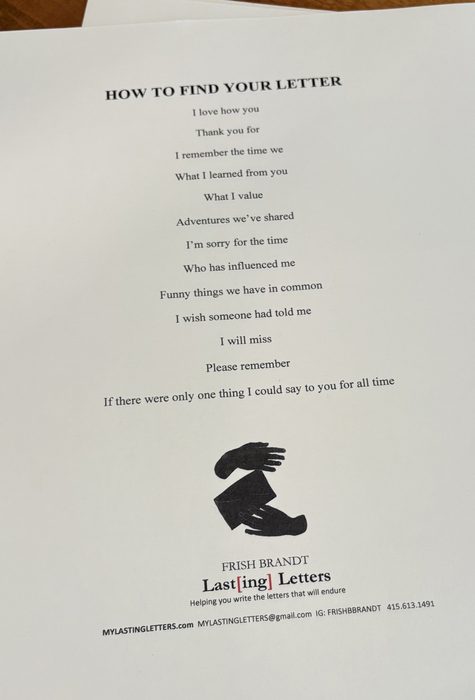
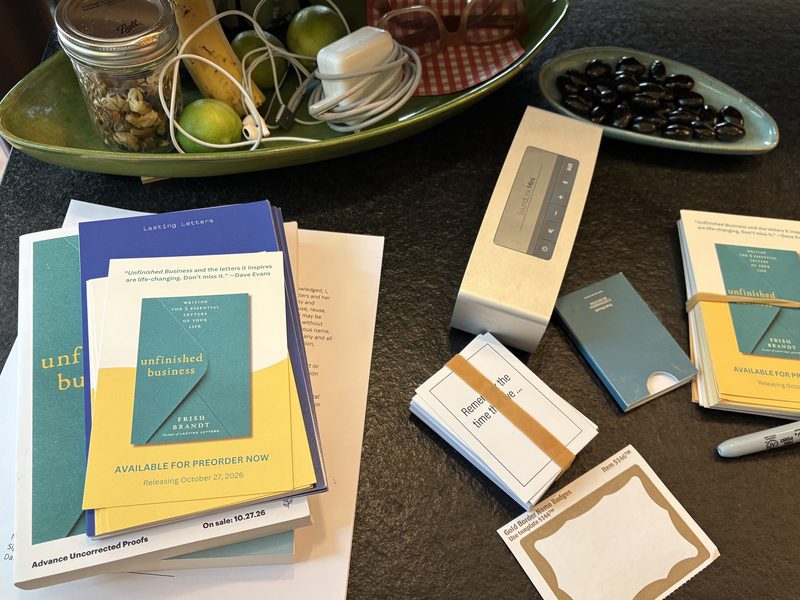
Her job is to help people with “how to, when to, why, and what” the message may be: thank you, I’m sorry, I miss you, I love you, I need to tell you something, please remember, and or goodbye.
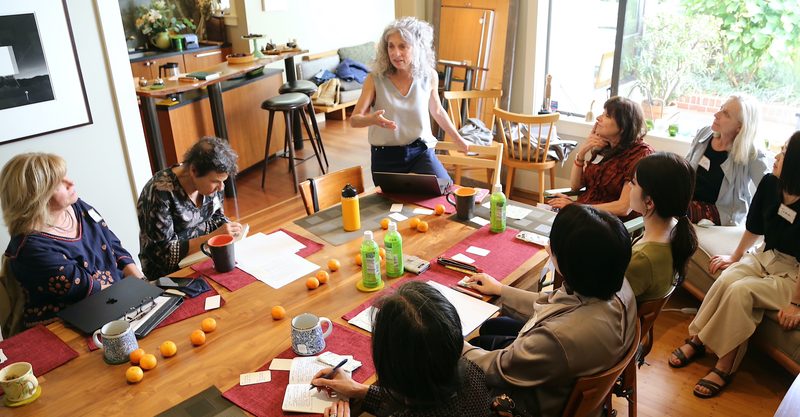
Slim, petite and soft-spoken, Brandt radiates warmth as she welcomes workshop participants into her Mission District home on a sunny afternoon in August. Her goal is to help writers find the right words to convey their thoughts.
Her process involves asking questions, listening carefully, then teasing out the most important parts. “Then, when I send them their letter, I say, ‘This is what I hear you saying … and it is your letter. You can change it. This is yours.’”
When Tabesh and her daughter Leona introduce themselves to the group, Brandt shared that this day was special for her because she had met Tabesh and her husband, Reza, 10 years ago when they came to San Francisco for treatments at the University of California Medical Center. Brandt’s letter-writing practice had been recommended to them.
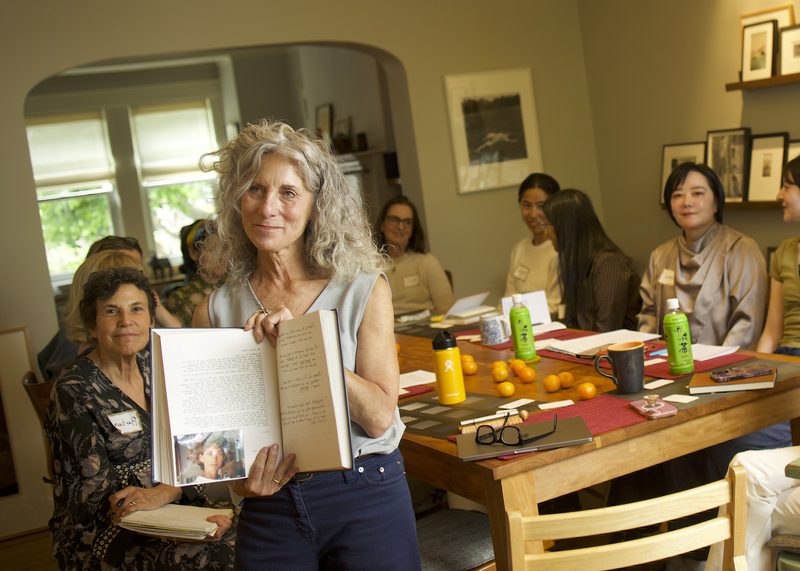
“I’d worked with a number of people at that point, and he was the closest to the mortal coil of anyone. He was speaking so quietly, I wasn’t sure I could hear him. I got very, very close to him. He spoke in a whisper, and as I listened to him, I took down his words,” using them to compose a letter to his young daughter, Leona, before he died.
“Kiyoka wrote me later to say that they had felt surrounded by angels,” she told the group. “She said they had met many amazing people during their time in San Francisco, and I am honored to have been considered one of them.”
“So, that was then,” Brandt continued. “Last year, I woke up on Thanksgiving to find Kiyoka had written to say she’s now studying at Sophia University’s Institute of Grief Care in Tokyo, and she would like to bring my Lasting Letters process to Japan.” The institute was the first in Japan to include professional training for grief care counselors, following a major 2005 accident on the Fukuchiyama rail line and in 2011, the biggest recorded tsunami in modern Japanese history.
A father’s goodbye
Leona, now 20, told the group that her father’s letter means the world to her. She was five when her father became ill, and 10 when he died.
Whoever the recipient of the letters may be, Brandt said, they are not the only beneficiary, Brandt said. “From the very beginning. I thought the letters I was helping people write were for the recipient—and they are—but the fact is, the first person that is served by the letter is the letter writer. Even people who were riddled with symptoms of their illness felt energized. They were doing something creative for the future, something woven with love and care.”
The letter-writing practice, she came to realize was not unlike her work at the gallery, where “people would come in and we’d talk about this or that artist and ultimately about life and love, loss and grief, beauty and wonder, justice and God knows what,” she said. “About 20 years into my gallery work, I began to feel that there was a deeper conversation that I was called to.”
Her Aha! moment was reading “At the End, Offering Not a Cure but Comfort,” a 2009 New York Times article about palliative care. “I recognized immediately that palliative care and mortality was the conversation I wanted to be in. Central to what I’ve always done is the conversation.”
Palliative care was officially recognized as a medical subspecialty in the United States in 2006 by the American Board of Medical Specialties and now includes fellowships, hospital departments and medical school courses aimed at relieving the pain, symptoms, and stress of serious illnesses or the side effects from treatments.
Not sure what it was she could do, Brandt began talking to palliative care doctors and looked seriously at an interfaith chaplaincy program. Then one day in Tucson, while waiting to take part in an arts panel presentation, she said, “It came to me like a calling: You could help people write letters. I thought, ‘Well, I could do that, but what the hell does it mean?’ ”
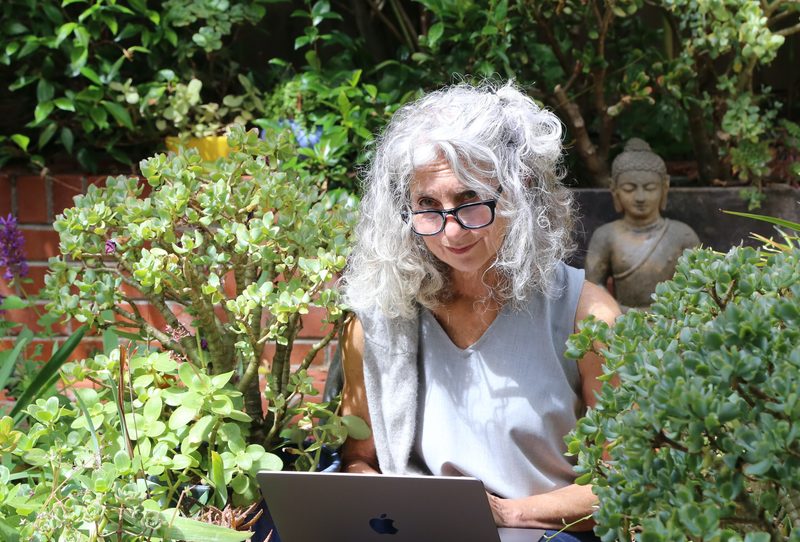
Back in San Francisco, she set about researching her idea with people in the palliative care field, including Doctor BJ Miller, at that time director of the Zen Hospice Project, the first place she volunteered. Before that, one of the people she had reached out to was Dawn Gross, a hospice and palliative care physician at UCSF, who called Brandt a few weeks after their initial conversation to say she had recommended Brandt and her letter-writing process to a 34-year-old mother dying of cystic fibrosis, with two young children.
“Nobody needs these letters more than young children who lose their parents,” said Brandt, who helped the mother writer a letter for her children. “There will come a time when they want to know ‘What did my mom sound like? What words did she use? What did she care about? What did she want me to know?’”
Walking toward death
After that first letter, Brandt was asked to help a man with ALS. She found she felt uniquely suited to the work. “In my life, when death was in the room, I could walk towards it, not away from it,” Brandt said of a process is very special, very intimate. And each voice is so unique.”
Brandt remembered that when she first began her letter midwife practice, her friend Doris who was in her 90s, revealed that she was in hospice. Brandt asked her, “So, have you written your letters?” Without missing a beat, Doris said yes,” recalled Brandt. “Most people respond to that question with, ‘What letters?’ So, I was surprised at her response.”
Doris told Brandt that she’d written three letters 20 years before, after she’d had a cardiac event. She had opened one recently, read it, and thought to herself, “You know, I wouldn’t change a thing.” Brandt believes it’s because such letters provide an essential message—something for all time, as much for the letter writer as anyone.
Having helped birth so many lasting letters for others, has Brandt written one for herself? In fact, she has written letters to her son, August, who’s about to turn 35, his entire life – and saved copies. She has also organized them sequentially by year and bound them in books along with mementos that hold meaning for her.
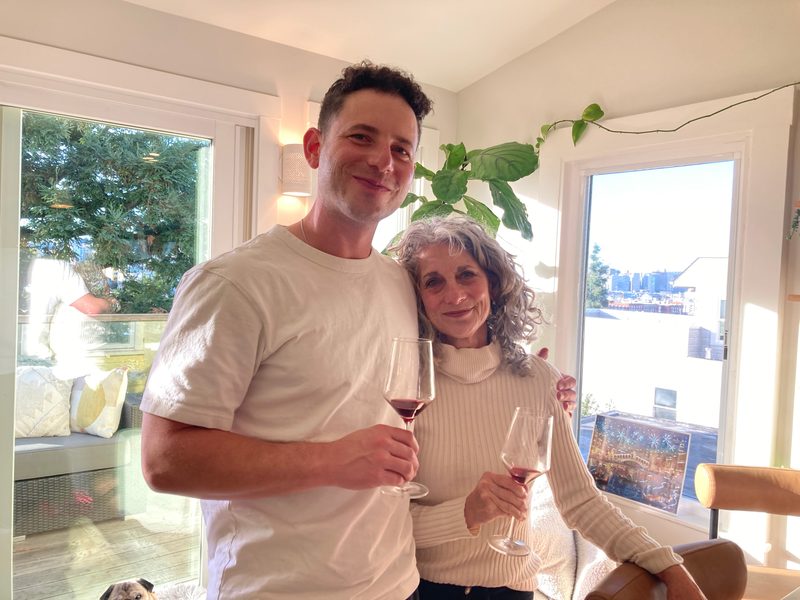
“Raising my son mostly as a single mom—his dad is in San Francisco and we’re friends—I wanted to be sure that I would raise a good man.” Her letters share, among other things, her hopes that he would value friendship, loving relationships, art, and travel. “And that’s what we’ve got.” He’s three years married now and the couple have been together for 12 years. “He’s curious, purposeful, and he is my very good friend,” she said.
Everyone has a letter in them, Brandt asserts. “You may or may not get to give that letter to the person you wrote to, but what it does give you is the opportunity to articulate your thoughts and feelings.”
Brandt, who “gets to dabble in the vicariousness of other people’s love,” said she’s ready to focus on her own. She’s about to marry a man she’s been with for five years. It was in her fiancé’s home that she experienced the déjà vu view of Japan. “I will say that for all the fullness of my life, I often thought, ‘I wonder if I will have a deep love in this lifetime?’”
Open to the unexpected
She says the future looks a lot like the present, just deeper. “You know, when I was 30 years old, 72 sounded friggin’ ancient—but it’s our job to demonstrate that it’s not over till it’s over, and that hopefully if we’re lucky, it might actually get better.”
It takes putting expectations to the side and being open to the unexpected, to serendipity, to the chance meeting of someone walking their dog, or to the person in the cafe line.
One example, an encounter with a Lyft driver. In the short distance from Potrero Hill to Brandt’s home in the Mission District, he asked her, “What do you do?” She said, “I’m a letter midwife.” “You do what?” he responded, and in the next breath asked Brandt to help him write a letter to his mother in Tunisia.
“What do you want to say?” she asked, and “He just launched right into ‘I want to tell her that no matter how much I thank her, it is just a thimbleful to what I need to thank her for.’”
When they arrived at Brandt’s house, she asked him to wait. She ran inside, got her laptop, and together in his car, they wrote the letter. As he waited, she ran back in to print it out.
As she handed him the envelope with his letter, Brandt told him what she’d learned to be true: “Send this very soon to your mom. She needs to be able to touch this letter at night when she’s missing you.”





Peter
Thank You SF Senior Beat for sharing Frish Brandt's "Letters of Love"