



John Ignatius Rigoli has served in the military, launched and operated over six businesses, bought and sold significant real estate, and contributed to the canon of consumer law. But in the background, his abiding interest has been religion – specifically the history of Christianity.
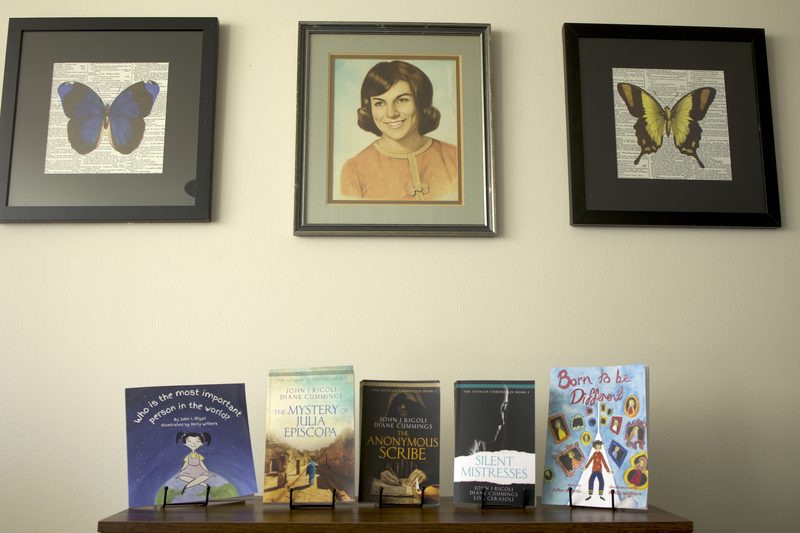
A lifelong Catholic, he spent 20 years studying its formative years, attending conferences and seminars, reading archaeological and historical publications, and taking courses on the early church. The result are three historical mysteries, with female characters as protagonists.


The first, “The Mystery of Julia Espiscopa” (2021) explores the erasure of women as leaders in the formation of the church. The story pits modern day archaeologists against the Catholic Church as they research and reveal the story of Julia, a first-century Christian noblewoman who fears for her life after discovering Catholic bishops had made false claims about the faith. It is loosely based on the biblical character Junia, an early Christian female apostle noted in Romans 16.1.
“My interest in the role of women in the church began during a lunch with two friends who were Catholic nuns,” said Rigoli. “I was surprised to learn that, despite holding advanced degrees in theology and history, they were serving as domestics for a parish priest. Why were these educated women not more visible in leadership roles within the church?
“From that point, my journey began,” he said, digging into books such as “Women Officeholders in Early Christianity,” which points to evidence of women with religious authority, including those Jesus welcomed into his closest discipleship.
Sex and scandal
In addition to several children’s books, he followed up “Julia” with two novels in the so-called “Vatican Chronicles.” In “The Anonymous Scribe” (2022), an ex-Mossad agent and two archaeologists search for a scroll, a diary penned decades before the gospels, that supposedly challenges the belief that Jewish elders were collaborators in the execution of Jesus. Published last year, “Silent Mistresses” charts the dilemma of a nun sent to modernize Vatican Bank systems who discovers a web of hidden accounts paying for the mistresses and children of high-ranking priests.

Confidential financial agreements—often referred to as clandestine settlements or non-disclosure agreements (NDAs)—have been used by Catholic entities and individual priests regarding children born to clergy throughout history and into the modern era,” Rigoli said. While current Vatican guidelines dictate that the well-being and truth of a child’s identity override institutional reputation, he said “advocacy groups report that informal, off-the-books cash arrangements still occur at local levels.”
Rigoli, now 85, and co-author/editor Diane Cummings have been presenting and giving away his books through talks and slide shows at casual gatherings, community centers, and Rotary and Lions clubs in San Francisco and San Diego.
“So far, I’ve given away about 1,000 books,” he said, even though they’re on sale through a number of online booksellers. “I want to share the stories; it makes me feel good.”
Vietnam then IBM
Rigoli grew up in Buffalo, New York, and was the first son of a manager of a factory that made men’s suits. His mother was a homemaker. His younger brother joined the priesthood and has been with this calling for over 50 years.
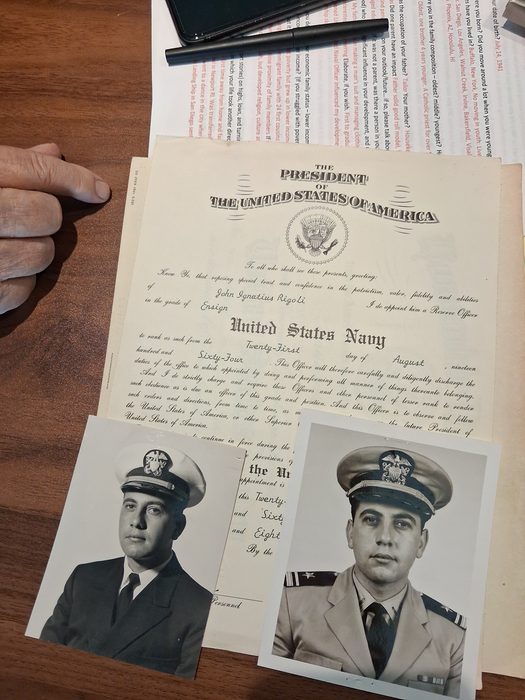
He joined the Navy after graduating from Kent State with bachelor’s degree in industrial engineering. After Officer Candidate School in Newport, Rhode Island, he was transferred to Treasure Island in San Francisco.
He met his wife, Delphine, at a dance in early 1965. They married about six months later, but he spent most of the next three years of their marriage as first lieutenant aboard a landing ship during the Vietnam War, helping deliver supplies to Marines in Da Nang and Chu Lai under combat conditions.
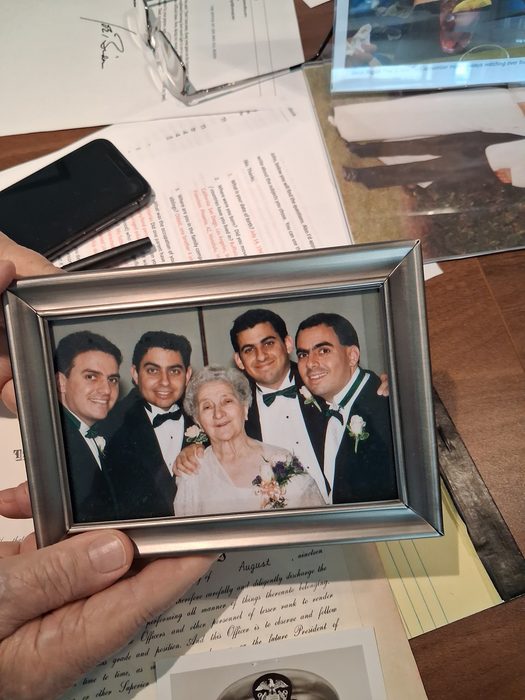
They eventually had four sons that they raised in San Jose. His wife, “Del,” died suddenly in 2015 of a sepsis infection. He moved to San Francisco the following year. One of his four sons now lives with him in his Pacific Heights apartment. The others are in Virginia, California and Florida, married with children. “I have four grandsons who are in college now,” he said.
Rigoli left the Navy work for IBM, selling computers to businesses. He lived in San Jose but mainly worked in Bakersfield and Visalia managing Fortune 500 accounts, quickly become one its tops salesmen.
He left IBM in 1978, turning to real estate with his wife, a certified property manager. They bought and sold apartment buildings in Visalia, Calif., and Phoenix, Arizona, where they also own a 120-car parking lot. In addition, the managed two properties involving about 1,000 units.
Ever entrepreneurial, Rigoli also bought a plum orchard and a candle factory, later sold at a profit, and opened two computer stores in San Diego in 1978, at the height of the high technology boom.
Hard times
But his successes took some hits.
The rise of superstores eclipsed his computer business. “I had to close and lost everything including my mortgaged home. I was 45 and had three children.”
In the 2008 recession, he lost a 35-unit building apartment building “even after financing a major rehab.”
In 2014, a real estate purchase in Arizona led to a highly contentious lawsuit, Rigoli v 44 Monroe. The Rigolis had placed down payments on two condominiums whose developer defaulted on its construction loan. The Arizona Supreme Court affirmed buyers’ rights to fully recover their deposits.
While the suit helped improve consumer law, it happened during his wife’s health crisis, prompting Rigoli to retreat from real estate. He sold all their holdings, six months before his wife’s death.
Life is much simpler now, though he’s taking medication for prostate cancer, likely a result of his exposure to Agent Orange in Vietnam. He socializes in support groups like SF Village and NEXT Village and the Universal Unitarian Church.
He’s continuing to research women’s roles in spreading Christianity and believes his trilogy has helped re-ignite the conversation about how women are currently regarded in the Catholic Church.
He thinks they should have no less access than men to any of the ordained positions, from deacon to bishop and priest – even Pope.
“The Church’s promise of equality will ring hollow until it recognizes the unique gifts women bring to faith and allows them ordination,” he said.
You can reach the author at myrakrieger@sfseniorbeat.com

