


He helped corner a killer tiger, guarded and chauffeured the mayor, made innumerable arrests, investigated murders, and was one of the first African Americans to rise to a senior position in the San Francisco Police Department at a time when the force was still emerging from its discriminatory past.
“It was a white Irish job in those days,” he said. Nonetheless, his time on the force “was the best job I ever had. If I were young enough, I’d do it again.”
Leroy Lindo’s 32 years as a police officer were prologue to a second career of service to the community. He delivers bags of groceries to neighbors in the Ingleside District, served as a housing commissioner, tutored students in reading, and serves with several organizations that extend aid to the families of police officers in crisis.

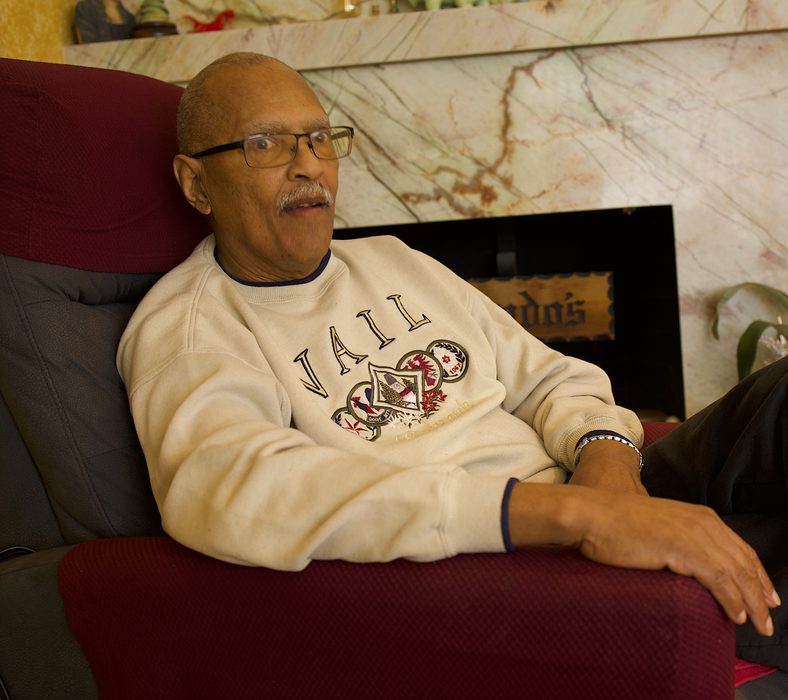
He was raised by his grandparents in a family that included five boys and five girls. The family struggled financially at times, and Lindo, now 73, recalls volunteers bringing boxes of food to the home. “I remembered that, so when a neighbor told me about the food program here I thought, ‘this would be a good way for me to give back.’”
He was a recipient of the Community Living Campaign’s Good Neighbor Award in 2019. “Leroy’s efforts, in particular, making our community a No Hunger Zone, reflect his lifelong commitment to the OMI community,” the award stated. Lifelong is not an exaggeration. Lindo and his wife, Narrisa, have lived in the home they own in the Ingleside since 1986, just a few blocks from the home where Lindo grew up.
Lindo’s choice to become a cop wasn’t motivated by any particular desire to serve or be part of the criminal justice system. He wanted a steady job and a career. “I can’t live with my grandmother the rest of my life,” he said he realized.
A ‘lightbulb came on’
While a student at City College of San Francisco, a counselor suggested he take an introductory class in criminology. “When I took that class, the light bulb came on. This is something interesting, and I ended up taking more (related) classes. Maybe this wouldn’t be a bad thing to do.”

He went on to earn a sociology degree with an emphasis on juvenile delinquency from San Francisco State University in 1976.
He learned there was a shortage of African American men willing to mentor youth. The call prompted him to volunteer with the Big Brothers program. “I got assigned a kid named Brandon Andrews,” Lindo said. “He was like nine or 10 years old, and I’d pick him up every Saturday, and we’d find something to do. To this day, we stay in contact with each other.”
By the early 1970s, the San Francisco Police Department was coming under pressure to change its discriminatory hiring and promotion practices. In 1973, a group of minority and female San Francisco police officers, along with an organization called Officers for Justice, sued the department. In 1977, the federal government also filed a suit against the department alleging discrimination.
Encouraged by these actions, Lindo joined the force in 1977. He knew that some members of the black community would object. “There are those who hate the police, but I got beyond all that stuff.”
Despite the systemic racism in the department, Lindo said he got along with his fellow officers. “When we went out on a call, we would act as one.”
His neighbors were startled to see a Black officer when he answered calls in the Ingleside, then a heavily Black neighborhood. But they soon adusted as did his grandmother. “At first, she didn’t want me to become a police officer. She worried about my safety.” But before long, “she was as proud as she could be and let everybody know that her grandson was a police officer.”
By 1979, the department was operating under a federal consent decree, and opportunities for minorities and women increased. Lindo rose from patrolman to sergeant, to lieutenant, and was eventually promoted to commander by Chief Heather Fong, the first woman to head the department. Over the years, he worked on patrol, the gang task force, the housing task force, homicide, the mayor’s security detail, and more.
On Christmas Day in 2007, Lindo was visiting a relative in Oakland when he got the call: There’s a tiger loose in the San Francisco Zoo. He drove to the rear entrance where he thought he saw the tiger. Recounting the incident, he chuckles and recalls. “That was a ceramic tiger.”
There was nothing funny about the rest of the incident. Tatiana, a 350-pound Siberian tiger, climbed out of the moat surrounding her enclosure and fatally attacked a 17-year-old zoo visitor and injured two others. Police cornered her; when Tatiana charged, they shot and killed her.
Lindo also served in the domestic violence unit. One of the many calls he answered one stands out: Claire Tempongko, a 28-year-old mother of two, was stabbed to death in front of her children by an ex-boyfriend. Police had been to the Richmond District home multiple times, but even though her assailant had already gone to jail once for abusing her, no new charges of assault were filed.
The 2000 case was “an eye opener,” Lindo said. “I had had some cases where the victim wanted to kill the aggressor, but I had never had a case where somebody came back and killed the victim.”
He and his colleagues came to refer to their unit as “the homicide prevention unit.”
Lindo was a homicide investigator for a while, but the hours were difficult. “No one dies between 9 and 5. People are always murdered at 2 in the morning,” he said. Guarding Mayor Willie Brown was interesting. Asked what he thought of His Honor, Lindo smiled and said only, “Money hangs with money.”
He thinks the George Floyd protests were warranted. “That man should not have died,” he said. And as to ICE, he supports the city’s position on non-cooperation.
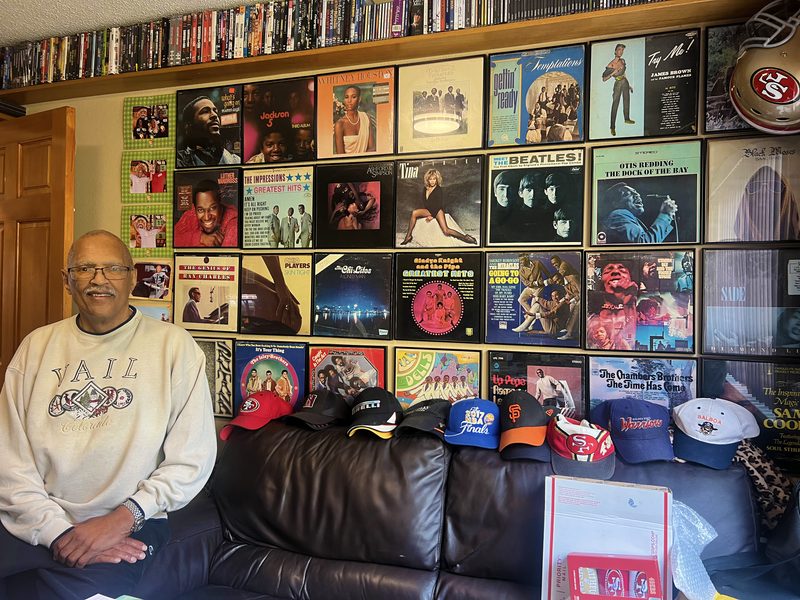
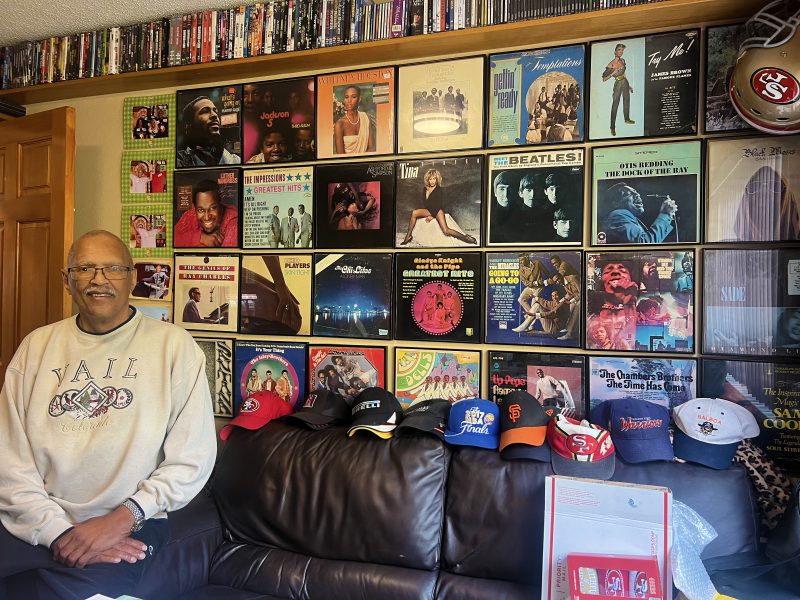
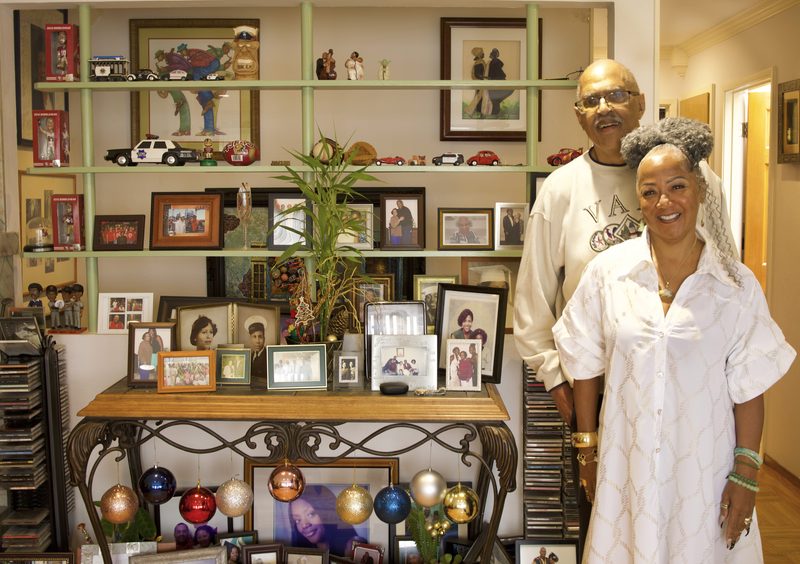
Lindo retired in 2009. The living room of his small Ingleside home is lined with shelves containing family photos and models of police cars. One wall of his “record room” is decorated with 28 album covers, including early work of stars like Ray Charles, the Beatles, and Otis Redding. He loves sports, and there’s a collection of sports caps under the albums. “I love the Giants, but I love the 49ers more,” he said.
He and his wife travel regularly to Hawaii and often go to Sacramento to visit their daughter and two grandchildren. More travel is likely when he resolves a health issue that has curtailed some of his activities.
He stays in touch with his former colleagues and is active with the Bay Area Law Enforcement Assistance Fund and The San Francisco Police Widows’ and Orphans’ Aid Association. He’s a bit annoyed by the current tendency of officers to wear beards and appear more casual. “We are a paramilitary organization, and we should look that way,” he said.
Looking back at his career, he said, “We saw the underbelly of society.” But his exposure to evil did not make him cynical. “The driving force is that we are of different cultures, but we are all people. I chose to stay positive.”

