

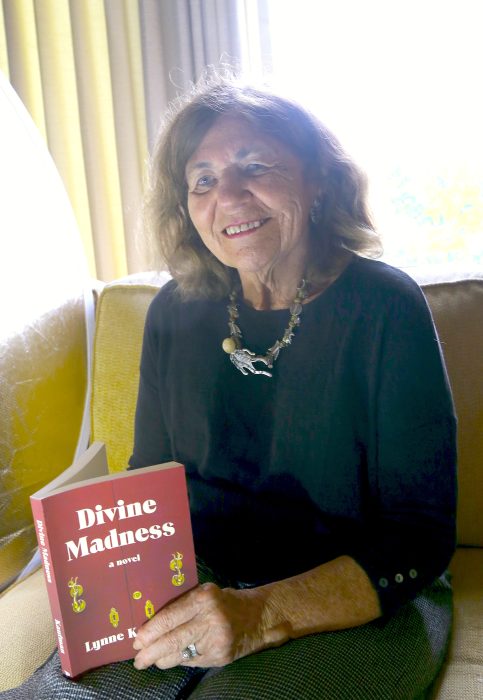
Playwright Lynne Kaufman, the author of two dozen plays and five novels, is still going strong, despite some hiccups
The day after Lynne Kaufman retired in 2005, she woke up in tears. “What had I done?” she remembers thinking. “I lost my purpose in life, my direction, my identity.”
For decades, Kaufman had balanced two successful careers. She was a prolific playwright and author, while also serving as director of travel and study at the University of California Extension in San Francisco, where she created educational programs for adults and led academic travel experiences around the world. Suddenly, all of that structure was gone.
Now 89, Kaufman looks back on that moment as one of the most difficult transitions of her life. Yet it ultimately became the catalyst for a remarkable reinvention.
Seeking direction, she enrolled in a seminar at the California Institute of Integral Studies (CIIS) called “What Matters to You?” One exercise asked participants to draw concentric circles representing their priorities.
Circles were the key
“My inner circle was family and friends,” Kaufman said. “The second was writing. The third was my connection to the university. Then I set out to pursue all three.”
Those circles became the blueprint for her retirement.
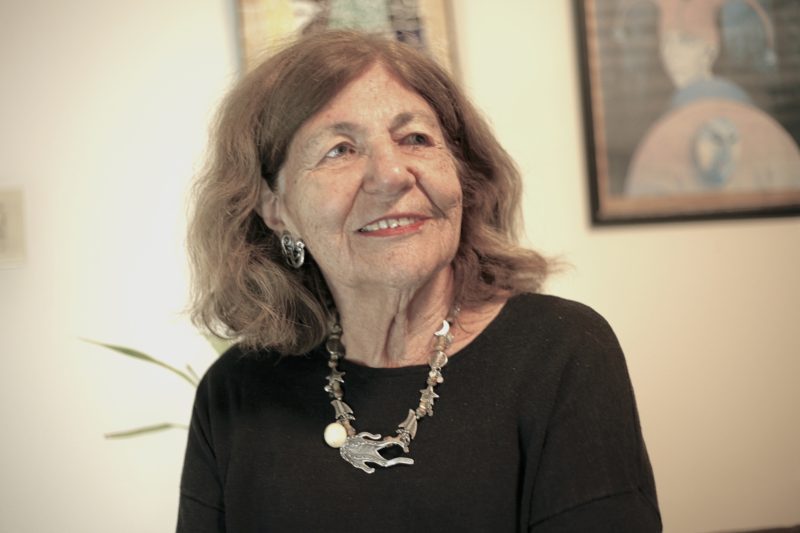
She married Steve Kaufman when she was 20. He went on to become a pediatrician, and the couple recently celebrated 69 years of marriage. They arrived in San Francisco in 1958 and settled in Ingleside Terrace, where they raised a daughter and son, both of whom became successful technology executives. The couple has three grandchildren.
Retiring, she realized, had an important benefit: “I now had more time to be with friends and family and reach out to set up dates,” she said.
Writing had been a lifelong passion. As a student growing up in the Bronx, New York, Kaufman was known as the classmate whose hand was always raised because she knew the answers—especially in English and American literature. She once imagined earning a doctorate and teaching literature at a university.
Her life, while not exactly what she imagined, followed a similar, literary-focused path. Today, she is the author of five books and 24 produced plays. Her honors include the NEA/Kennedy Center Fund for New American Plays, TheatreWorks’ Best New Play in California, and the San Francisco Critics Circle Award for Best New Play.
Retirement gave her the opportunity to focus even more intensely on writing. “My goal after leaving Berkeley Extension was to get my plays produced,” she said.
As theaters increasingly favored younger playwrights, Kaufman developed a co-producing relationship with The Marsh Theater in San Francisco, where she could select the actors and directors for her work and bring new productions to the stage. Her next play, “The Secret Museum,” a work about startling revelations regarding sex and the sacred discovered in an archaeologic dig, is scheduled to open in November.
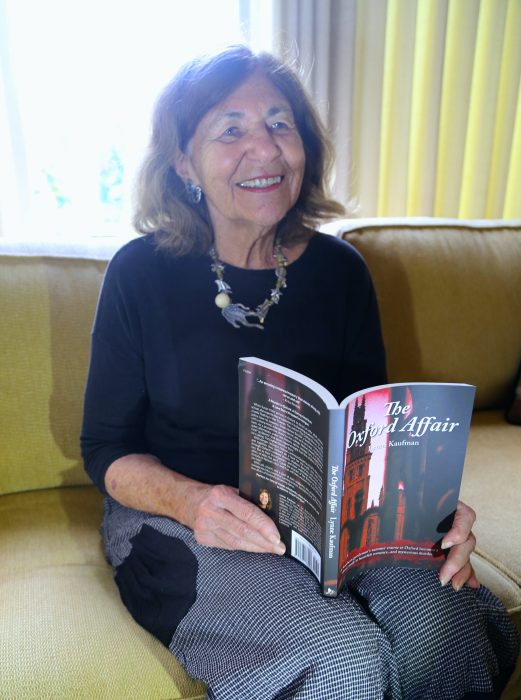
She continued writing novels. Her latest, “The Oxford Affair,” is a murder mystery that draws heavily on the atmosphere of the Oxford/Berkeley summer programs. “I had 25 years of observation and participation and some research to back it up,” she said. “I also had the unique benefit of working with and hanging out with the faculty, the staff, and the students.”
She joined the board of CIIS, organizing conferences and leading educational travel programs, including one focused on Mexico’s “Day of the Dead” celebration. She has also been teaching at the Fromm Institute. During her most recent class, “The Art of Creativity,” she presented a staged reading of her newest play, “Mark Twain in Love.”
The university world had not disappeared from her life. It had simply evolved.
Long before retirement, Kaufman had built an impressive career in theater.
While at Berkeley Extension, she created a curriculum for adults that included dramatic arts, psychology, personal development, playwriting, and public speaking. One of her favorite responsibilities was recruiting distinguished lecturers – “activists, writers, designers, playwrights, and philosophers who were icons in their fields.” Among them were science-fiction author Arthur C. Clarke, child psychologist Bruno Bettelheim, and writer Susan Griffin.
Academic travel program
She also led a series, from 1982 to 2005, called “Travel with Scholars.” Programs explored topics ranging from London theater to Southeast Asian religions and Mayan culture and traveled to some of those destinations.
One of her most influential collaborators was mythologist Joseph Campbell, whom she met at the Esalen Institute in the 1970s. “He was my major influence,” Kaufman said. “His guidance to ‘follow your bliss and doors will open where there were no doors’ played out as a transformative message for me over the years.”
That philosophy became especially important during one of the lowest points of her writing career.
Kaufman’s first major play, “The Couch,” which explored the relationship between Carl Jung and Sigmund Freud, opened at San Francisco’s Magic Theatre in 1985 to strong reviews. It won the Glickman Award for Best New Play in the Bay Area.
The success felt like validation. But her next play, “Roshi,” inspired by a scandal involving the powerful abbot of the San Francisco Zen Center in the 1980s, received a dramatically different reception.
“The Chronicle’s review with the little man sleeping in the chair hit me hard,” she recalled. “Through tears and a churning stomach, I was devastated. It must have been a mistake.”
The criticism was so painful that she stopped writing for an entire year.
A hard lesson about critics
Eventually, she turned to the advice of a seasoned director: If you believe them when they say you’re good, you’ll believe them when they say you’re bad. The lesson stayed with her.
“No matter what ‘they’ said, I was going to continue to write plays,” Kaufman said. “All that truly matters is to write the next one.”
Today, Kaufman continues to teach, write novels and plays, and nurture the relationships that matter most to her.
She still loves reading novels, short stories, and plays. More importantly, she has remained faithful to the priorities she discovered during that difficult first year of retirement.
“So, I continue to see friends and family, write plays and novels, and teach at the Fromm Institute,” she said. “For me, those three circles make a full and rounded life.”