

S.F. protest’s Tin Man has a history of making good trouble on behalf of empathy and kindness
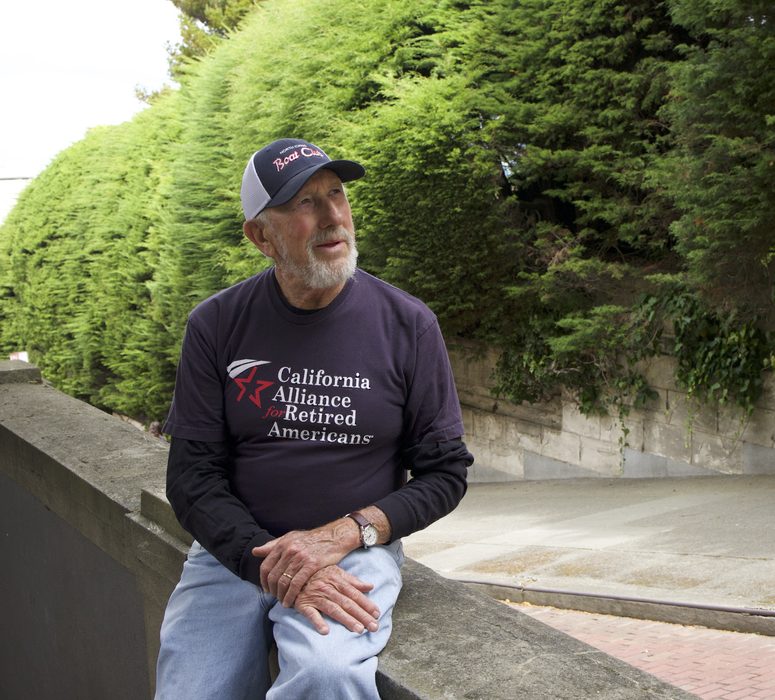
Arthur Persyko loves to make trouble. The good kind, that is.
As a young man, he protested the Vietnam War, moved to British Columbia, where he fought the use of carcinogenic herbicides, became an anti-nuclear power activist in San Joaquin County, and helped organize one of the first Earth Days on his college campus.
He organized support for the Occupy Movement in San Francisco and participated in the demonstrations against the World Trade Organization in Seattle. He became a truck driver and fought to make his union, the Teamsters, more democratic and progressive.
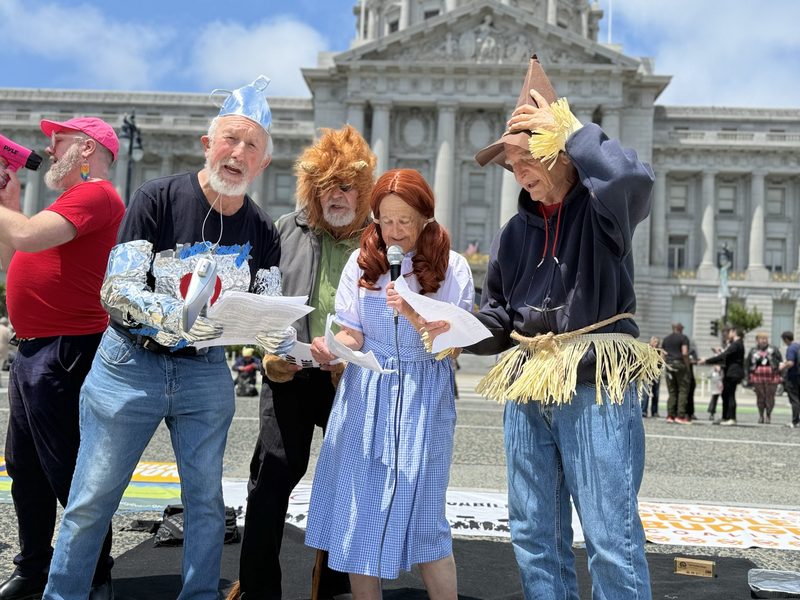
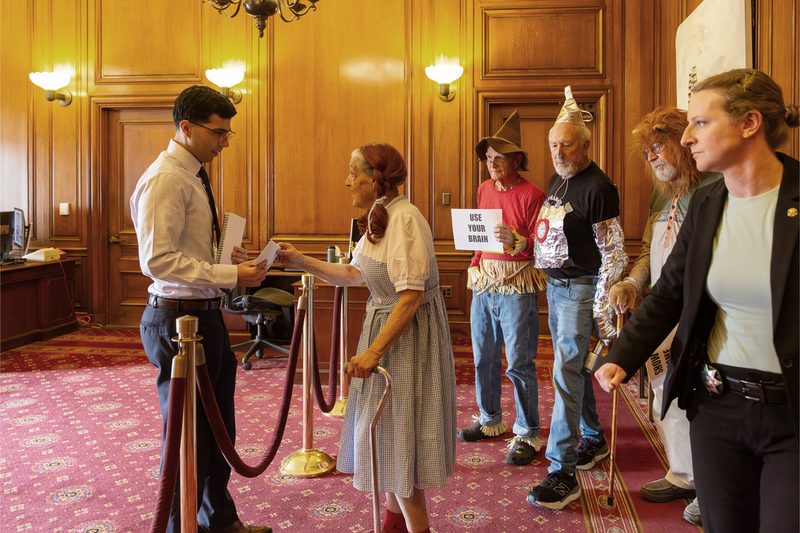
Now 76 and retired, he’s still making good trouble. You might have seen him dressed as the Tin Man – from the “Wizard of Oz” – when hundreds rallied at San Francisco City Hall to protest the mayor’s cuts to programs benefiting seniors and the disabled. It was one of a series of protests organized by the California Alliance of Retired Americans (CARA), the Community Living Campaign and the People’s Budget Coalition. Their efforts eventually led to the restoration of more than $28.5 million in proposed cuts over the two-year life of the new budget.
Persyko’s performance was the first time he played a speaking role since he acted in an elementary school play. He loved it: “I think there’s a ham inside me trying to get out,” he said, adding that he “wanted to be involved to be sure that programs for seniors and the disabled are fully funded.”
‘Accountable’ is his motto
He’s also active with a bevy of organizations “fighting fascism, racism and supporting voting rights” and standing up for seniors. When he talks politics, he frequently uses the term “accountable.” Politicians and labor leaders, he said, “need to be held accountable.”
His leftish bona fides notwithstanding, Persyko does not come across as strident or dogmatic. “Kindness and empathy in our personal life and political life should be our greatest values,” is the sentiment he strives to live by.
He’s stocky and balding, congenial and easy to speak with. But he gets impatient if a caller or visitor is even a few minutes late for an appointment. As a truck driver he got used to being right on schedule, he said, so he is in the habit of being time conscious.
Persyko is the only member of his immediate family who did not live through World War II. He was born in 1950. His parents were Polish Jews who fled Warsaw when the Nazis invaded, finding refuge in the Soviet Union. His father, a doctor, was forced to serve as a medic in the Red Army; his mother worked on a circus train, feeding the animals. Persyko’s two-year-old brother helped out.
The family emigrated to Sweden after the war, and shortly after Persyko was born they sailed for the United States. “We lost family members and property. But I was lucky my family and I found refuge in the U.S., a country which gave my family and so many others sanctuary, and which seemed to uphold human rights of all kinds, including the right to vote in a democracy,” he wrote in a Workers Circle essay.
“Having parents who were Holocaust survivors automatically forces you to make a choice,” he said. “You may embrace it and act on it or ignore it.”
Progressive upbringing
The family settled in Southern California and participated in Jewish life. Persyko attended Jewish youth summer camps and remembers singing progressive folk songs. “That gave me a consciousness that was different from other (non-Jewish) kids.”
There’s a long history of labor and political activism among Eastern European Jews who settled in the United States. Persyko embraced it. “I understood that there are good, principled people in the world, but there are others who would oppress people. Sometimes that’s the boss and even union leaders if they are not held accountable,” he said.
His father was a Zionist and Persyko grew up admiring Israel and the idealism of the Kibbutz movement. But Israel has changed, he said, and has become “addicted to military power.”
While he doesn’t want to be identified as a public critic of Israel, he said, “I’m happy that (New York Mayor Zohran) Mamdani and (Michigan senatorial candidate Abdul) El-Sayed won, and I’m happy to see them as part of a full-throated progressive movement.”
Persyko and his family moved to Stockton by the time he was in high school, and he attained a degree in social psychology from the University of California-Davis in 1973. His brother and sister-in-law, a civil rights activist, were major influences, and he visited them in Canada, spending time in the Gulf Islands of British Columbia, where he was active in the environmental movement.
Teamsters insurgent
While there, he met his future wife, Luita. They moved to San Francisco in 1978 and have been married for 48 years. They had two children: a son, a teacher, and a daughter, who died of cancer in her 30s. The romance led to an unexpected career path for a middle-class university graduate: at the behest of his soon-to-be father-in-law, a trucking industry consultant, he became a truck driver, a career he pursued for more than 20 years.
He hauled loads around the Bay Area for most of his career, and was a member of the Teamsters Union, whose national leadership at the time was widely criticized as undemocratic and faced extensive investigations and allegations of corruption and organized-crime influence.
Persyko became a member of an insurgent caucus within the union called Teamsters for a Democratic Union. He was his local’s delegate to the San Francisco Labor Council, serving for more than a decade. As a union activist, he participated in the fair-trade movement and fought to make labor rights and environmental standards part of trade agreements, like NAFTA.
Over the years, he’s worked at well over a dozen blue-collar jobs, from fast food to cannery work and loading airplanes, before landing a long-term job driving delivery trucks. He did have one brush with the movie industry, appearing as an extra in two films: “RPM” and “Raid on Entebbe.” “Hanging with the other extras and seeing the stars was fun,” he said. But inner ham notwithstanding, he wasn’t inspired to pursue acting, though he did get his first taste of a chorizo burrito.
Staying optimistic
Since retiring in 2003, he’s been a familiar presence at rallies and marches. He’s attended the No Kings rallies in San Francisco and participated in a human banner event at Ocean Beach. His advice to activists: “We’ve got to be in streets in massive numbers.”
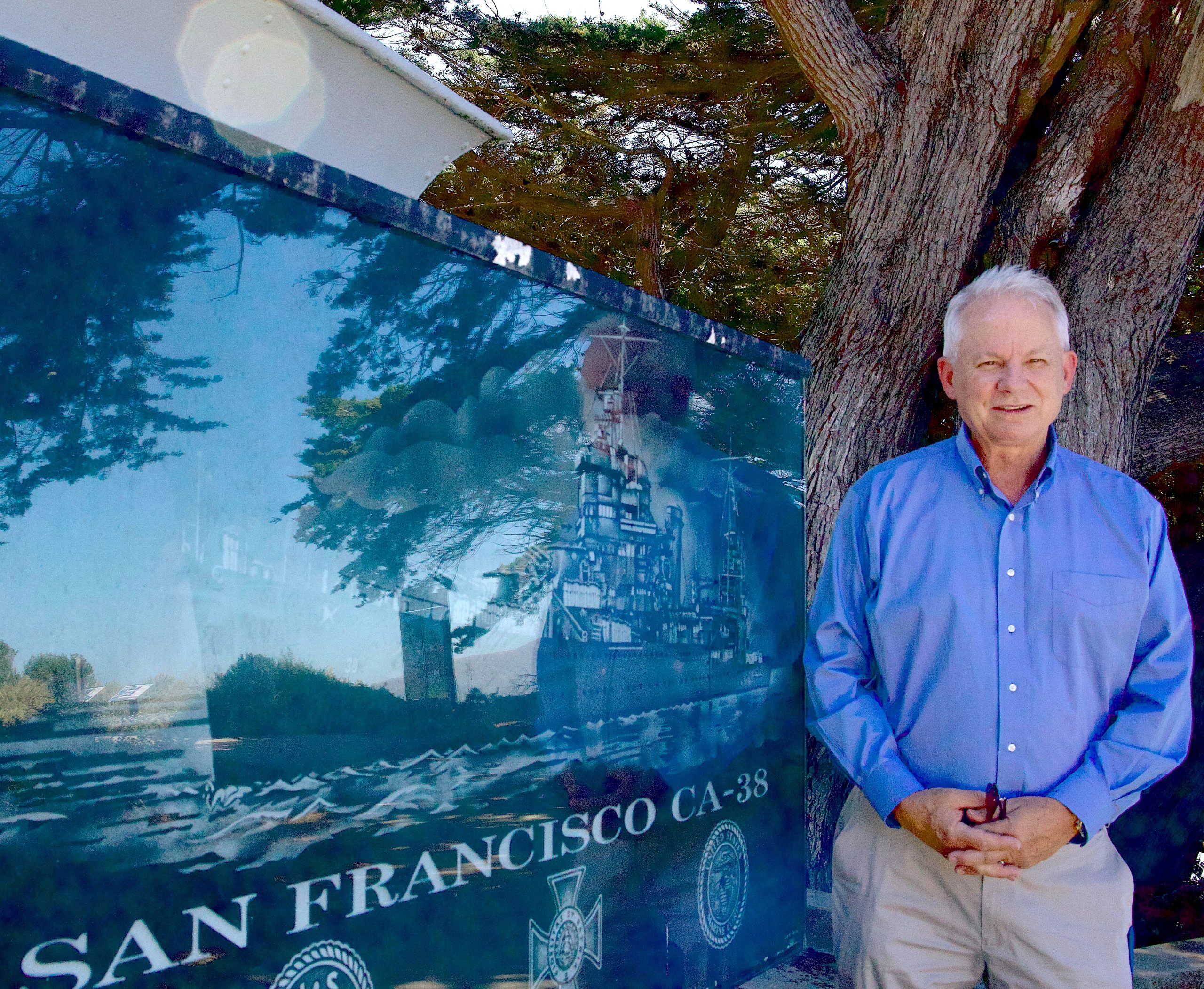
His retirement is comfortable. He and Luita live in an apartment across the street from Lafayette Park with a view of Alcatraz and the Bay. Eager not to sound too posh, he quickly notes that he can afford the toney residence thanks to income property inherited from his father.
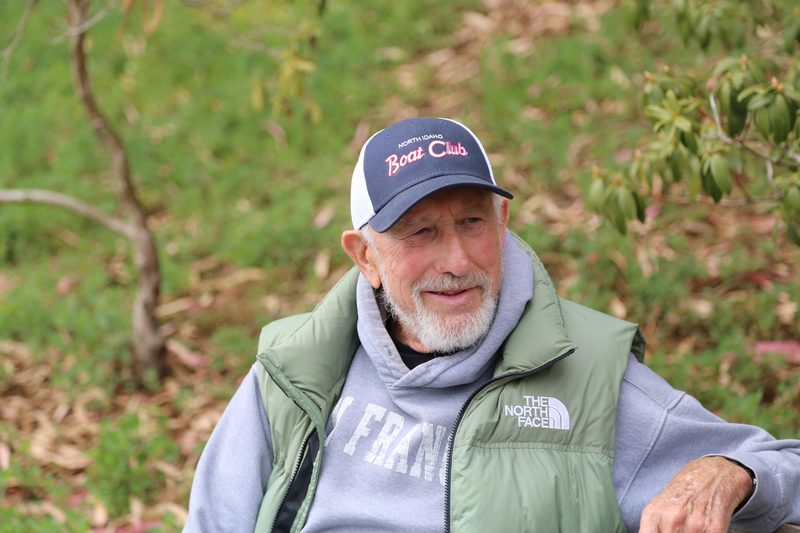
He’s struggled a bit with angina but plays tennis when he can and takes walks around the neighborhood he’s lived in since 2003. Something of a local history buff, he’s quick to point out places of interest, like the plaque on nearby Gough Street commemorating the Freeway Revolt of the late 1950s and ‘60s.
While showing visitors around Lafayette Park, he proudly points out a small, grassy open space, informally known as “Mime Troupe Meadow.” Occasionally used for performances, the meadow now includes three rows of stadium seating that he and other neighbors convinced the Recreation and Parks Department to install.
But making good trouble is still a preoccupation. Persyko spends hours phone banking to support progressive candidates, is a leader of CARA, a former board member of the Gray Panthers, a member of the Workers Circle, and finds time to volunteer with the Friends of Lafayette Park, a neighborhood group near his Pacific Heights home.
He listens to jazz and classical music, occasionally plays the washtub bass, and drove to Cotati on a recent weekend to catch the Accordion Festival.
Like many on the left, he’s been encouraged by recent elections and polls that show Trump’s popularity sinking. “Maintain an optimistic view,” he counsels. “As you can see, change is coming.”
You can reach the author at billsnyder@sfseniorbeat.com