


Couple’s script for their own movie? Shared creative passions and a bent for banter
“I’m Chiquita Banana, and I’m here to say, bananas have to ripen in a certain way,” Margot Breier sings, tossing her chin-length auburn locks then a sly smile at her audience.
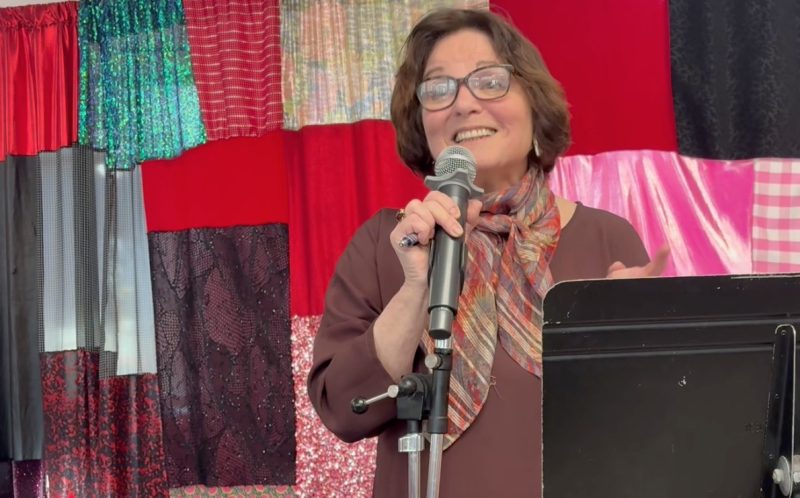
It’s the beginning of a riff she performed recently at Gen Blend Open Mic, a monthly salon at Ruth’s Table in the Mission District where young and old share poetry, personal stories, music and more. Called “Bananas,” her piece was inspired by Carmen Miranda, the Brazilian singer of the ‘40s known for her fruit-topped hats. “When I was a kid, I loved the ‘Chiquita Banana’ jingle,” Breier stopped to explain, noting she only discovered later that Miranda was not the original singer.
Picking up her performance, she rolls out weird facts about the fruit, such as peanut butter and bananas being Elvis Presley’s favorite sandwich, and that smoking banana skins was once rumored to get you high.
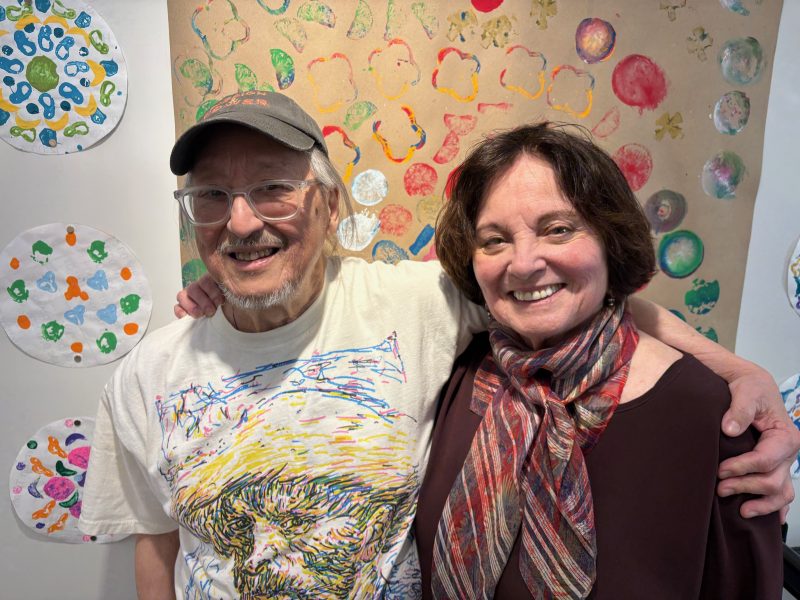
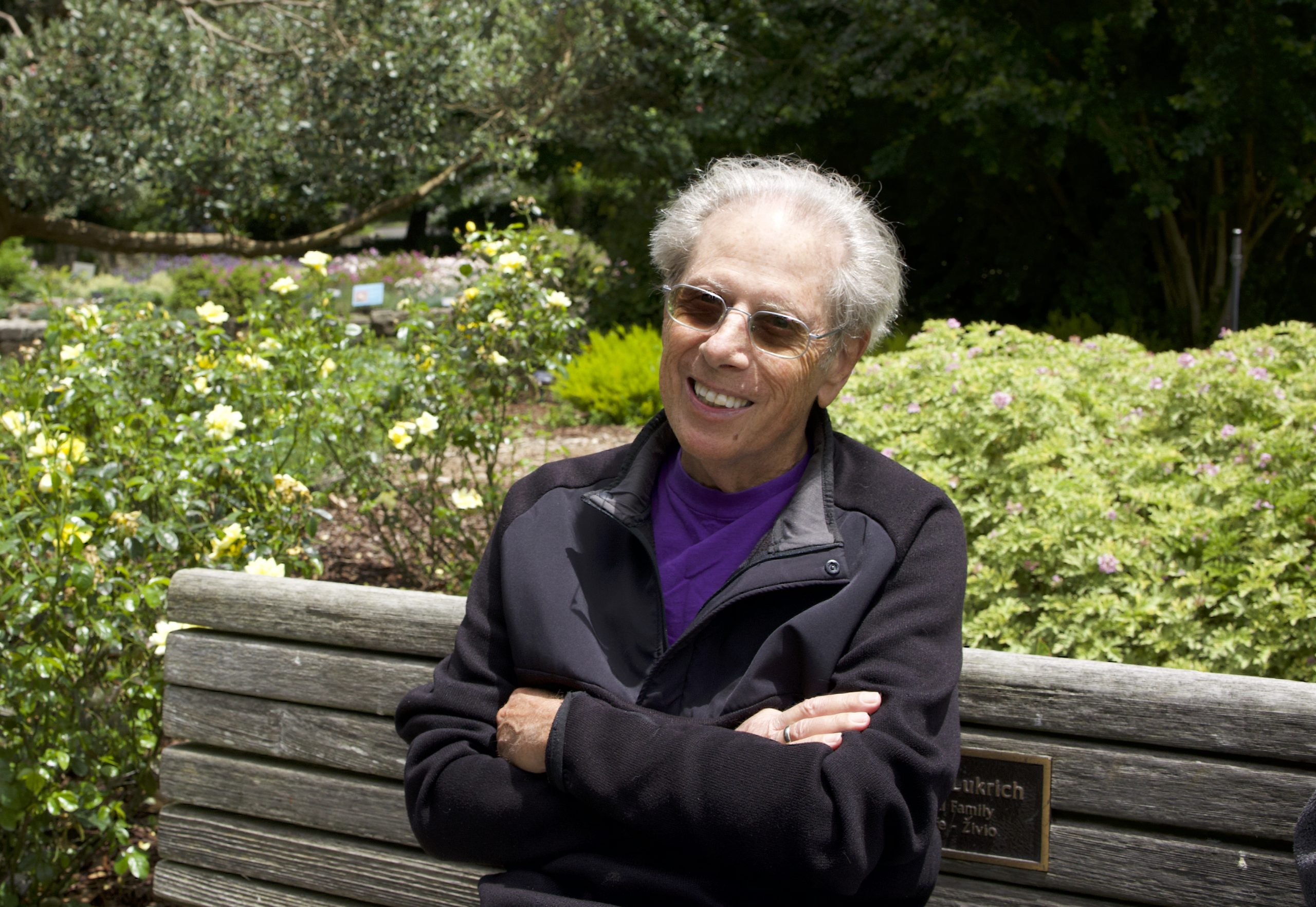
Amidst laughter, claps, and cheers, she eases back into the audience next to her husband, David Liu, sporting a Vincent van Gogh T-shirt, his long silver ponytail trailing below a cap titled “Passion & Power,” swag from his time as executive producer of the 2007 documentary on the history of vibrators.
It’s just one of the cultural events that the couple – she’s 84 and he’s 90 – thrives on. It’s part of a 60-year partnership of shared creative passions, particularly theater and film – and humor – that’s defined their lives and work.
The beginning
A steady stream of banter infuses conversations with these cultural connoisseurs who have encyclopedic knowledge of directors, filmmakers, and authors. They drop names, make references in unison and contradict each other with laughter, rolled eyes and head shakes. They even disagree on how they met.
“He claims we were introduced at a party,” said Breier, “where he danced with me and his impression of me was this little round Jewish girl.”
“I did not say that,” Liu protested.
She says they met at a film screening. “I was with Naomi Levine – one of the first underground filmmakers – and she introduced me to David.”
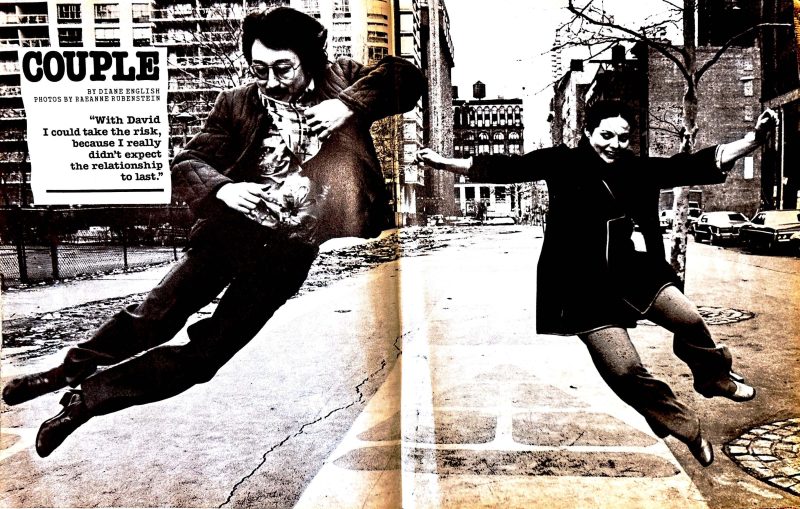
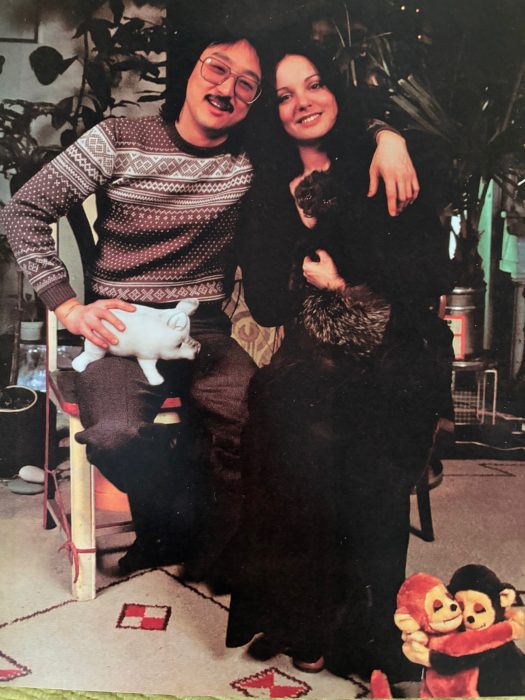
What they can agree on is that they met in 1969 in the midst of New York City’s legendary underground cultural scene. Breier moved into Liu’s NoHo loft in 1970. “I tend to grab on like a bulldog. I pursued all the men in my life, including David,” she joked. “He was the first one I ever caught.”
Liu was a draftsman. Breier was working with Jonas Mekas, a central figure in ‘60s avant-garde cinema who collaborated with artists like Allen Ginsberg, Andy Warhol, John Lennon and Yoko Ono.
From then through the ‘90s, they immersed themselves in the world of New York television, film, and theater, working with visual artists, musicians, directors, and dancers challenging established forms—and creating connections that would shape their lives.
“We were involved in making experimental films and theater then termed ‘underground,’” said Liu. “And while the words today are ‘independent’ film and ‘avant-garde’ theater,” Breier added, “These are the same kind of people we seek out, those who are stretching boundaries.”
Marriage and a move
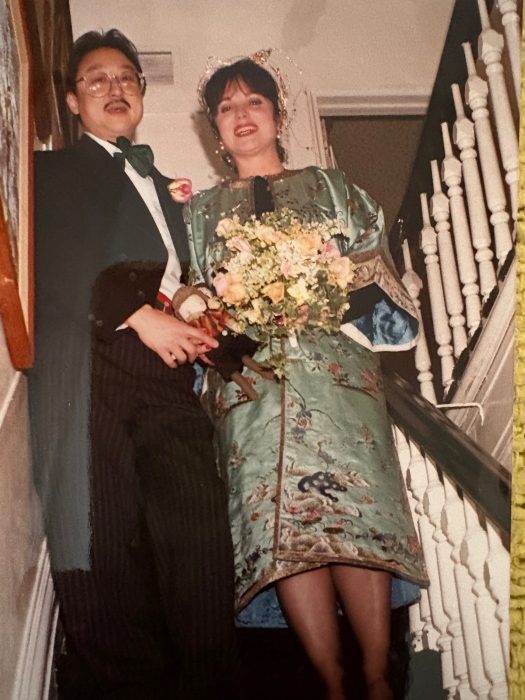
They married in December 1990 after living together for 20 years. They’d attended the wedding of a friend who told them they should get married, and they figured, why not?
In 1997, they moved to San Francisco, buying a house in the Castro District when Liu’s employer, the Independent Television Service (ITVS), a co-producer and funder of documentaries for public television, moved its headquarters to the city. As a founding board member of San Francisco’s Asian American Telecommunications Association, now The Center for Asian American Media (CAAM), Liu had been in and out of San Francisco since 1980.
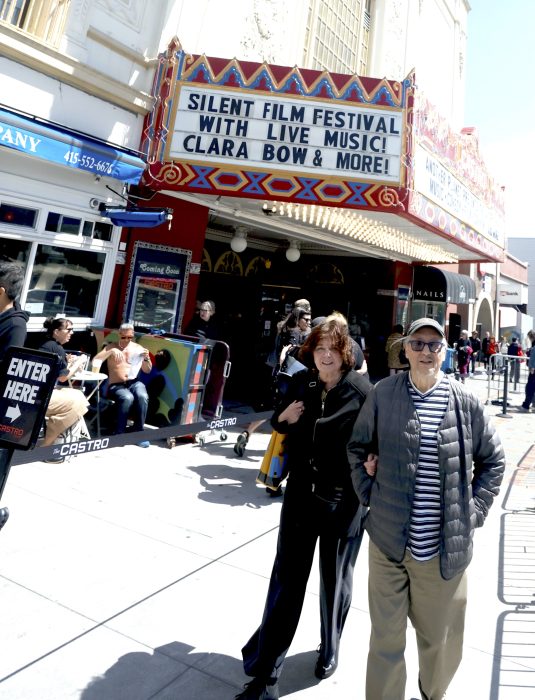
Liu, an executive in charge of program development for ITVS, was traveling constantly to meet with filmmakers around the country, while Breier, a founding member of New York Women in Film & Television, moved back and forth between coasts. She got involved with San Francisco’s artistic communities, directing staged readings at the Eureka and Aurora theaters and researching locations for a PBS documentary on Annie Oakley among other film work. She also mentored young filmmakers at San Francisco’s Film Arts Foundation.
They continue to pre-screen submissions for the annual San Francisco International, International LGBTQ+, and Berlin and Beyond and Jewish film festivals.
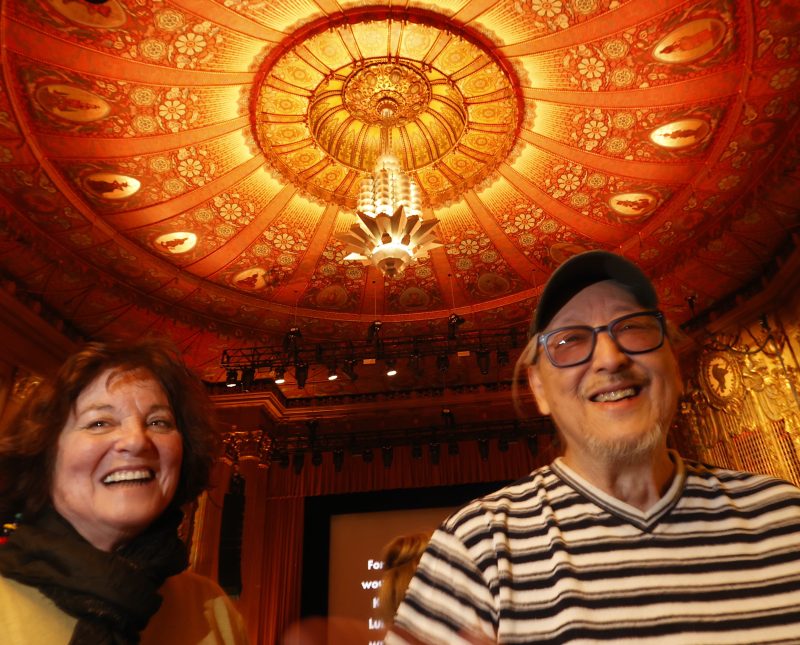
“If you’re pre-screening 30 or 40 movies, you must watch the whole film, 90 minutes on average, then maybe another hour to write up a synopsis for each film with your opinion of the work and its relevancy to this festival,” said Liu.
“If you love movies, though, it’s worth it,” he added, then exclaimed: “It’s unbelievable; our lives are tied to the movies.”
Their childhoods didn’t necessarily point in that direction. Liu was born in Shanghai in 1936 but spent his early years in Rome and Germany, where his father, Liu Wen-tao, was China’s ambassador. Back in China, his father served as a member of the Chinese Nationalist Party parliament. When it was defeated by the Chinese Communist Party in 1949, Chiang Kai-shek took his government to Taiwan.
His father went, too, but his mother was able to emigrate with their five children to Philadelphia.
After studying architecture at Chicago’s Illinois Institute of Technology, Liu was drafted into the Army, stationed in Texas. Completing his service, he traveled to Japan and taught English, “lucking into” a job as a photographer for the 1964 Tokyo Olympics, the first time the Summer Games were hosted in an Asian city. After that, Liu, returned to New York City and soon met Breier, the self-proclaimed “ambitious one.”
Sitting in the front room of their Victorian flat, the couple point to walls and tabletops covered in artwork and framed photos, many of family going back generations. While Breier jumped up to collect a sampling for closer inspection, Liu remarked, “I sometimes can’t sleep at night, remembering all the twists and turns in my own life and that of my family’s.”
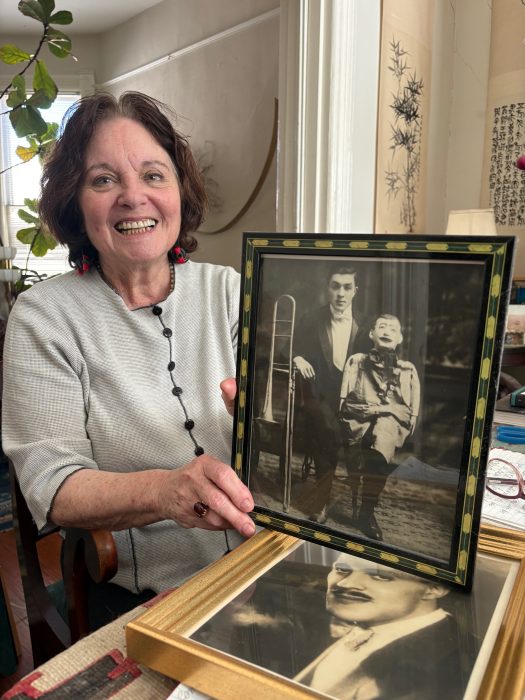
Breier was born on Manhattan’s Upper West Side in 1941 and grew up in New Jersey. Holding up two photos of her grandfather, the 1920s bandleader Nat Martin, whose orchestra provided the music for the Marx Brothers’ Broadway show “I’ll Say She Is.” “I come from a theatrical family, not just my grandfather,” she said. “My mother was a painter, and her sister was a professional singer who toured with the USO. We all sang and danced at home; we were a stagestruck family.”
After majoring in French at college, she dropped out and traveled around Europe for months. “I was determined to work my way around the world. I went to Germany to visit my pen pal. I learned to speak German and then some Spanish, Italian, and Hebrew, a lot of languages.”
Colluding careers
Returning to New York City to study at the American Musical and Dramatic Academy, she left after a semester to find a job and began acting in underground film and theater. “Off-off-off-off Broadway,” she laughed. She also worked for documentary filmmaker Bill Jersey. Through connections she got Liu, by then a freelance filmmaker, hooked up with an NBC TV crew looking for a Chinese speaker to help in its documentary “The Forbidden City.” For that, she likes to say she’s “responsible for David’s whole career.”
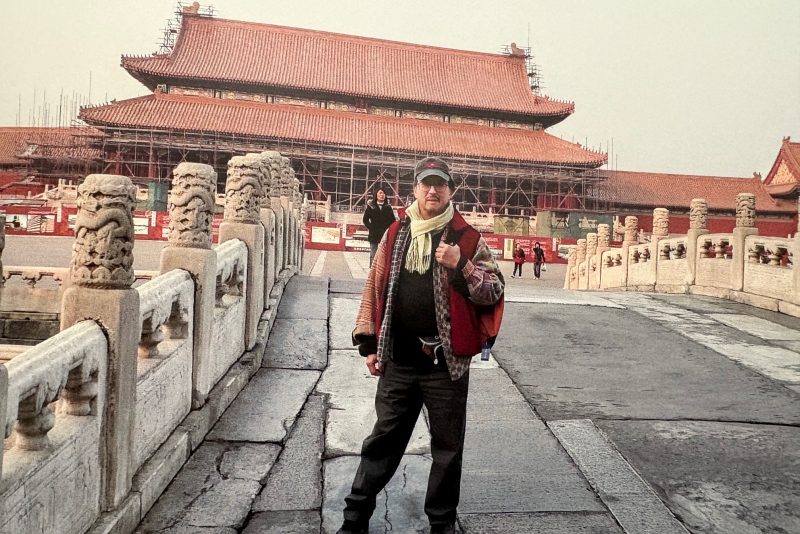

It was the first American production shot in China after President Richard Nixon’s historic visit in February 1972, and after it aired, Liu became the go-to producer for anyone filming in China —traveling 17 times over the next decade. In one of many collaborations, Breier joined him as he scouted locations for NBC’s “Big Bird in China.” It won the 1983 Emmy for Outstanding Children’s Program and earned her a researcher credit – “well deserved, and unpaid,” she said.
Not to be outdone, Liu inserted, “I also got her a great job: associate manager at Compton Advertising for the Procter & Gamble daytime productions ‘Search for Tomorrow,’ ‘As the World Turns,’ and ‘The Guiding Light.’ “
“You didn’t get me that job,” Breier insisted.
“I was called for a reference because I was a director at Lifetime and I gave you this glowing review and you got the job,” Liu explains, adding “Later, when I came to meet you for lunch, your boss discovered we were living together and boy did he get mad.’”
Their different backgrounds never caused much tension between their families, which they attribute to them being “atypical, having lived in so many different worlds,” said Breier. “It helps that we’ve always been very open and very talkative.”
“It’s really a matter of how you accept yourself,” Liu rebutted, “and then it doesn’t matter what other people think.”
Focus on friends
They’ve gotten older, maybe a little slower, but their passions haven’t subsided. Nowadays, they say, it’s more about making new, creative friends. “When we first moved to San Francisco, we found a surprising number of our New York circle had moved here, too.”
But around the time she turned 80, “some friends had passed, some friends had left the city, and somehow I was that senior sitting home, watching way too much TV,” she said. “I realized if I’m to continue aging well, it’s up to me to rise to the occasion. I’m a social being. I’m creative. I love to host dinners.”
Someone recommended she join the San Francisco Village.
Breier began attending many Village events and is back to taking charge of her and Liu’s network of old and new friends and activities with the goal of making the most of San Francisco’s offerings in an increasingly expensive city. “As artists, we’ve always been frugal, we’ve been lucky, and for most of our lives we’ve been rich in friends, interests, and art.”
Although Breier insisted she’s always been ready to leave the relationship at any time, in the next breath, she described her husband as “a real prince, secure in his abilities. He can do just about anything, even draw.”
She believes they’ve never experienced any big crisis in the relationship because they share so much common ground. “If we argue, it’s mainly about David’s stacks of books and six months’ worth of “The New York Times” piled up in the kitchen and front room.”
“Wait,” he interrupts, “those are my files.”
“The problem always springs from the same source, my frustrations,” she concedes. “I have a very low level of tolerance. To this day, while I’m always ready to walk out, the thought of it stops me. Nobody would come close to David,” then adds with a chuckle, “I’ve much preferred to wait around for David to change and become exactly the way I want him to be.”
His response: “I’m waiting for her to turn into my ideal mate. Ha ha! That’s the secret of our longevity.”






Marian Brischle
Love the whole story and to think we were SF neighbors for so many years before I moved back to the Northwest. I miss you both.
Mary Willis
What a wonderful way to revisit two people my husband and I loved (my husband worked with David) !
MATTHEW KLEIN
Hi Margot! So glad you made it.
Robert K. Liu
Great; very informative; as his younger brother, this is a nice summation of their live. We were a family of 5 kids; only David and I are left, as well as my kids/grandkids, having lost my wife 6 yrs. ago.