

Following in the footsteps of heroes: My visit to the cradles of Civil Rights
SF SENIORBEAT COLUMN – March 17, 1886. A date you probably never considered. Carroll County, Mississippi. A place you’ve probably never visited or even heard of. But on that day, a terrible crime was committed there.
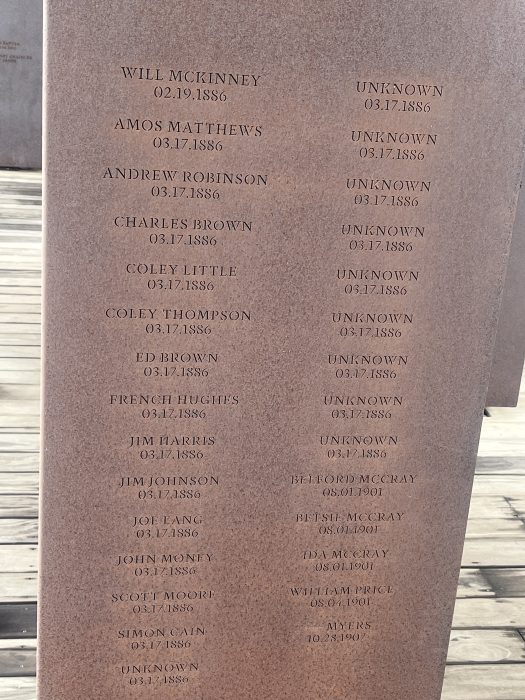
A white mob, enraged by the effrontery of two black men who dared to accuse a white man of assault, attacked the courthouse where the trial was held and killed 23 of the black residents who were in attendance. No one was ever held accountable.
I learned about this atrocity during a recent visit to The National Memorial for Peace and Justice in Montgomery, Alabama. The memorial is often called “The Lynching Museum,” a striking structure atop a grassy slope.
A roll of shame
More than 800 steel tablets are suspended from the roof, hanging at eye level. Each tablet represents a county where a lynching took place. The names of the victims are engraved in the steel, more than 4,000 in all. Carroll County’s tablet memorializes a few dozen of those victims.
The interior is densely packed with steel tablets that evoke gravestones and gallows. Walking among them is akin to strolling through a graveyard, but without the greenery and sunshine that can make a cemetery visit seem pleasant.
The site was part of a week-long tour devoted to the Civil Rights Movement. Organized by two adult education groups — Road Scholar and the Osher Lifelong Learning Institute — a group of 15 Bay Area seniors traveled to Atlanta, Georgia, and three cities in Alabama that played key roles in the movement: Selma, Montgomery, and Birmingham.
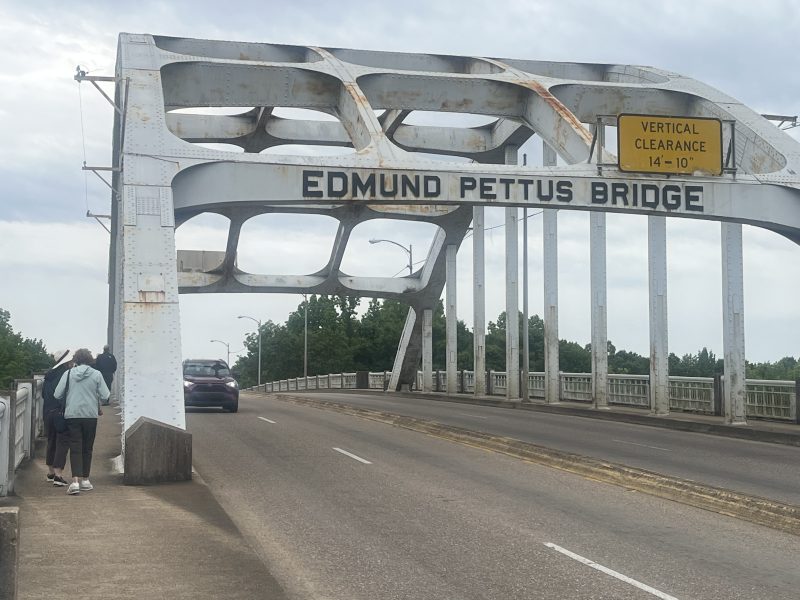
We met veterans of the movement, visited museums and memorials dedicated to the struggle. We visited the church in Montgomery where Dr. Martin Luther King preached, walked across the infamous Edmund Pettus Bridge, and stopped at the church in Birmingham where four little black girls were killed in a racist bombing.
Memories are alive
Whether the Deep South has come to terms with the past is a question I certainly can’t answer on the basis of a short visit. But what struck me was this: The Civil Rights Movement has not been forgotten in the cities where it blossomed, and holds lessons for a new generation of activists.
Heading to downtown Atlanta from the city’s enormous airport, I noticed major roadways named after civil rights heroes John Lewis and Andrew Young. There are plaques and murals everywhere. Dr. King’s childhood home is a tourist site. His papers are displayed at the Martin Luther King, Jr. National Historical Park & Preservation District. There’s a small museum in Montgomery dedicated to the freedom riders, there are tributes everywhere to Rosa Parks, and a museum dedicated to her struggle.
Well-planned action
Parks, by the way, didn’t refuse to give up her seat on that city bus in Montgomery in 1955 just because she was tired after a long day working as a seamstress. She was, I learned, a dedicated civil rights activist who studied at the Highlander Movement School in Tennessee, a training center for generations of activists.
Parks wasn’t alone. The Montgomery bus boycott was a community effort that lasted for a year and ended with the bankruptcy of the bus company and a United States Supreme Court ruling that segregation of public transportation was illegal. When the city cracked down on black cab drivers who aided the boycott, churches and other groups organized carpools to get people to work.
I’m not a fan of organized religion, but there was a lesson here for me: It’s hard to overestimate the positive role churches played in the Civil Rights Movement; not necessarily because of religion, but because they helped build community.
I didn’t know that young people, even children, marched and struggled and were jailed and beaten.
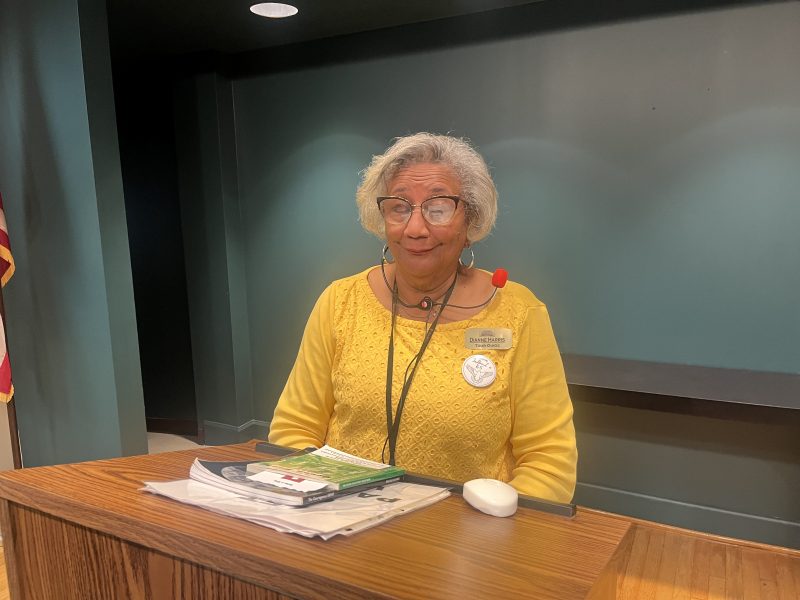
Dianne Harris was our guide in Selma; she proudly calls herself a “foot soldier.” At 15, angered when her mother was twice barred from registering to vote, she joined the march on Bloody Sunday. She never made it to the Pettus Bridge. She was near the back of the march when the police attacked. She was struck in the shoulder with a cattle prod wielded by a horseback-riding cop. “I will never forget the searing pain the cattle prod sent through my body,” she recalls. She and her younger brother were arrested and spent several days in jail.
She wasn’t deterred, and neither were hundreds of children in Birmingham, where they waged the “Children’s Crusade,” another facet of the struggle I’d never heard of. On May 2, 1963, more than 1,000 students skipped classes and marched from the 16th Street Baptist Church to downtown. Hundreds were arrested. The young people returned the next day and were met with police dogs (you’ve seen the photos) who tore at their bodies and firefighters who sprayed them with high-pressure hoses.
Photos are powerful, but an exhibit at the National Center for Civil and Human Rights in Atlanta gives a visceral feel for the struggle. The center has recreated a lunch counter, modeled after the segregated ones where demonstrators sat.
I donned headphones and was subjected to nearly two minutes of recorded verbal abuse and the sounds of beatings. It’s just a simulation, but as the recording progressed, I found myself cringing with unease.
The Legacy Museum in Montgomery, like the lynching memorial, is a project of the Equal Justice Initiative (EJI) and is built on the site of a cotton warehouse where enslaved Black people were forced to labor. It tells the story of slavery in America and its legacy through interactive media and first-person narratives. Perhaps most striking are a series of narrow “slave pens,” each containing a ghostly hologram of a person that tells a story or sings a spiritual.
I knew that racial lynching was prevalent, but the toll documented by EJI is stunning: 4,084 in 12 Southern states between the end of Reconstruction in 1877 and 1950, and that number is most likely an under count. There were at least 300 lynchings in other states, the group discovered.
Slavery’s tentacles extended far beyond the Deep South, the museum emphasizes. Northern banks, insurance companies, and manufacturers had substantial investments in the South and in slavery. I was surprised to learn that one in five households in New York City in 1800 owned an enslaved person.
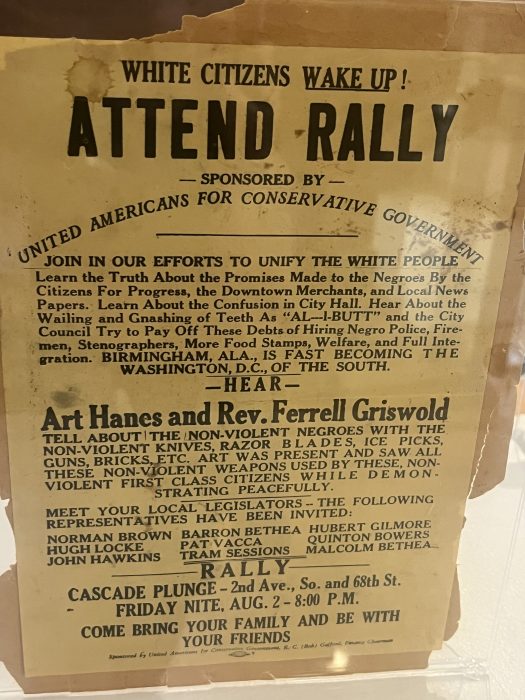
Segregation after Reconstruction was brutal, arbitrary, and sometimes petty, with Blacks and white forbidden such harmless inter-racial activities like checkers. But whites took the rules seriously and organized to enforce them. The point of the racist social structure, said Barry McNealy, a historian with the Birmingham Civil Rights Institute, was maintaining power for whites. “It was more about elevation than separation,” he told us.
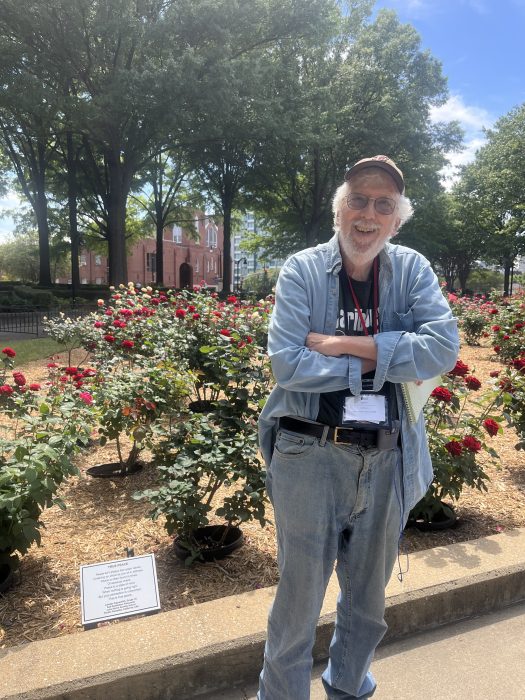
With the exception of the tour leader and the bus driver, everyone in the group was white. Some had been anti-war and anti-draft activists during the Vietnam era. Many of the exhibits we saw and stories we heard were horrifying, but the tour was not for them an exercise in white guilt.
“I’m energized, exhilarated, and remembering what it felt like when I was 20 years old,” said Corey Weinstein, 81, a retired homeopathic physician and one-time activist who lives in San Francisco’s Ingleside district.
White guilt, said Barbara Scheifler, a retired middle school teacher from Berkeley, “is an excuse for not confronting racism,” she said, likening the trip to a visit she made to Dachau.
Anne Warner-Reitz, a retired healthcare educator from Marin, wrote to the tour group shortly after she returned, inviting us to a party at her home aimed at mobilizing voters. “I was so inspired by the courage, smarts, and perseverance the Movement embodied,” she wrote.
The memorials and museums are meant to preserve memory. But memory alone is only a beginning. Dianne Harris was 15 when she was struck with a cattle prod for demanding the right to vote. I’m active in my union. I march. I vote. Still, leaving Alabama, I found myself thinking: I could do more.